Rubio Urges Global Alliance Against Far-Left Extremism as Critics Cry Foul
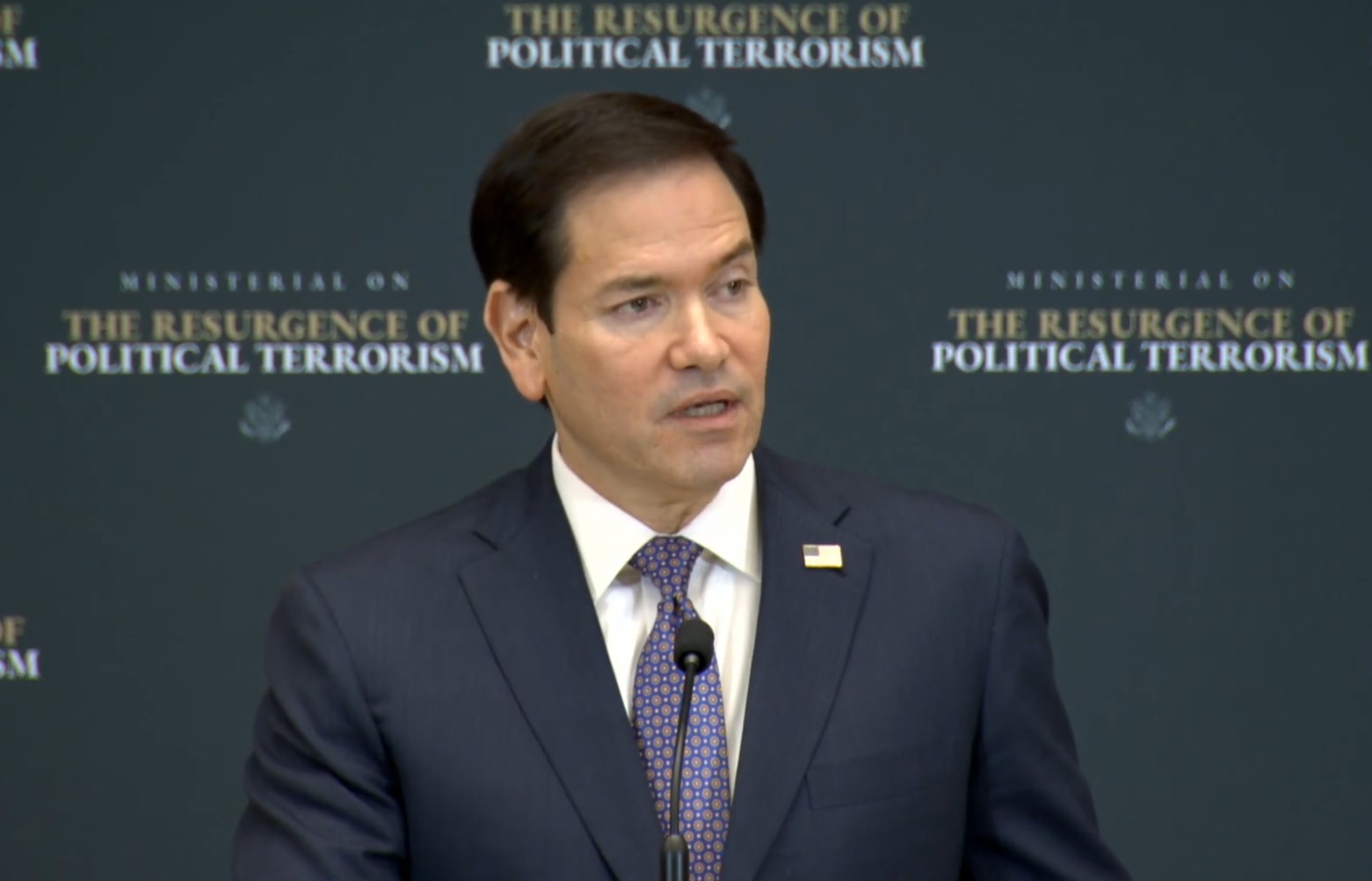
U.S. Secretary of State Marco Rubio is calling on nations around the world to join forces against what he describes as a rising danger: far-left extremism. The appeal, made during a high-profile gathering in Washington, has drawn both international attention and sharp criticism at home, where opponents accuse the administration of turning national security into a partisan weapon.
The debate cuts to a difficult question — how do you confront political violence without blurring the line between genuine threats and legitimate dissent?
A Global Call to Action
The Trump administration brought together representatives from more than 60 countries in the U.S. capital for the initiative. During the session, officials framed left-wing political violence in stark terms, describing it as a distinct form of evil driven by deep hostility toward civilization itself.
Rubio pushed for a coordinated global response, urging participating nations to share intelligence and treat far-left extremism as a cross-border threat rather than a purely domestic one.
The guest list reflected that international ambition. According to reporting, invitations went out to officials from most European nations, several Latin American countries, and a handful of Asian democracies including India, Indonesia, and Singapore.
Fitting Into a Broader Agenda
The effort dovetails with one of the administration’s stated priorities: confronting left-wing movements, with particular attention on Antifa. Short for “anti-fascist,” Antifa is a loosely organized network rather than a formal organization, which has long complicated efforts to define or track it.
The administration has already taken the significant step of designating Antifa as a domestic terrorist group. At Thursday’s meeting, that hard-line posture was on full display. White House deputy chief of staff Stephen Miller characterized those on the left as fundamentally driven by envy, hatred, and jealousy.
New Restrictions and Foreign Designations
The gathering wasn’t limited to rhetoric. On the same day, the State Department rolled out fresh visa restrictions aimed at individuals it links to what it calls far-left terrorist and aligned groups, including people allegedly involved in economic sabotage.
Washington has also extended its focus beyond U.S. borders. Four European groups now carry the label of Foreign Terrorist Organizations:
- Antifa Ost, based in Germany
- The Informal Anarchist Federation and International Revolutionary Front, based in Italy
- Armed Proletarian Justice, based in Greece
- Revolutionary Class Self-Defense, also based in Greece
Together, these designations signal an attempt to build a formal international framework around the threat the administration describes.
Democrats Push Back
Not everyone is convinced the effort is grounded in objective analysis. A striking omission stood out to critics: officials made no mention of countering far-right threats during the session, focusing their energy entirely on the left.
That imbalance prompted eleven Democratic lawmakers to write directly to Rubio, raising concerns that the campaign could end up targeting lawful protests and political opponents rather than actual violent actors.
In their letter, the lawmakers urged the department to refocus on a mission they described as apolitical, data-driven, and grounded in reality. They went further, suggesting the State Department was effectively rubber-stamping the political goals of extremists operating within the administration itself.
The core worry running through their message is straightforward — that labeling broad political movements as terrorist threats risks criminalizing dissent in a democracy that depends on it.
What the Research Actually Shows
Underneath the political sparring lies a genuinely complicated body of evidence. The data on far-left and far-right extremism in the United States doesn’t point neatly in one direction.
A 2025 report from the Center for Strategic and International Studies found that left-wing terrorism had, for the first time in more than three decades, surpassed far-right terrorism in frequency. But the same report added an important caveat: incidents from both sides remained relatively low overall.
Complicating the picture further, the U.S. Justice Department last year quietly removed a 2024 internal study from its website. That study had indicated far-right extremists were responsible for the majority of ideologically motivated killings — a finding that sits uneasily alongside the administration’s current emphasis.
Taken together, the research suggests neither side of the political spectrum holds a monopoly on political violence, and that trends can shift depending on the time frame and the metrics used.
Why This Matters
The push to combat far-left extremism raises questions that extend well beyond any single administration. When a government singles out one ideological camp while staying silent on another, it invites scrutiny about motive, method, and fairness.
Supporters argue the administration is simply responding to a real and evolving threat, backed by at least some recent data showing a rise in left-wing incidents. Critics counter that ignoring far-right violence — and burying inconvenient findings — reveals a political agenda dressed in the language of security.
Several tensions sit at the heart of the controversy:
- Whether counterterrorism policy is being shaped by evidence or by political priorities
- How to define loosely organized movements like Antifa without sweeping up peaceful protesters
- What it means for international partners to sign onto a framework that critics call one-sided
The Road Ahead
With more than 60 nations now drawn into the conversation, Rubio’s initiative could reshape how governments coordinate on extremism for years to come. Yet its long-term credibility may depend on whether it can answer the charge that it sees danger only on one side of the political divide.
For now, the administration appears committed to its course, framing far-left extremism as a transnational menace demanding urgent global cooperation. Whether allies embrace that framing — and whether domestic critics can force a broader, more balanced approach — remains an open and consequential question.
Author