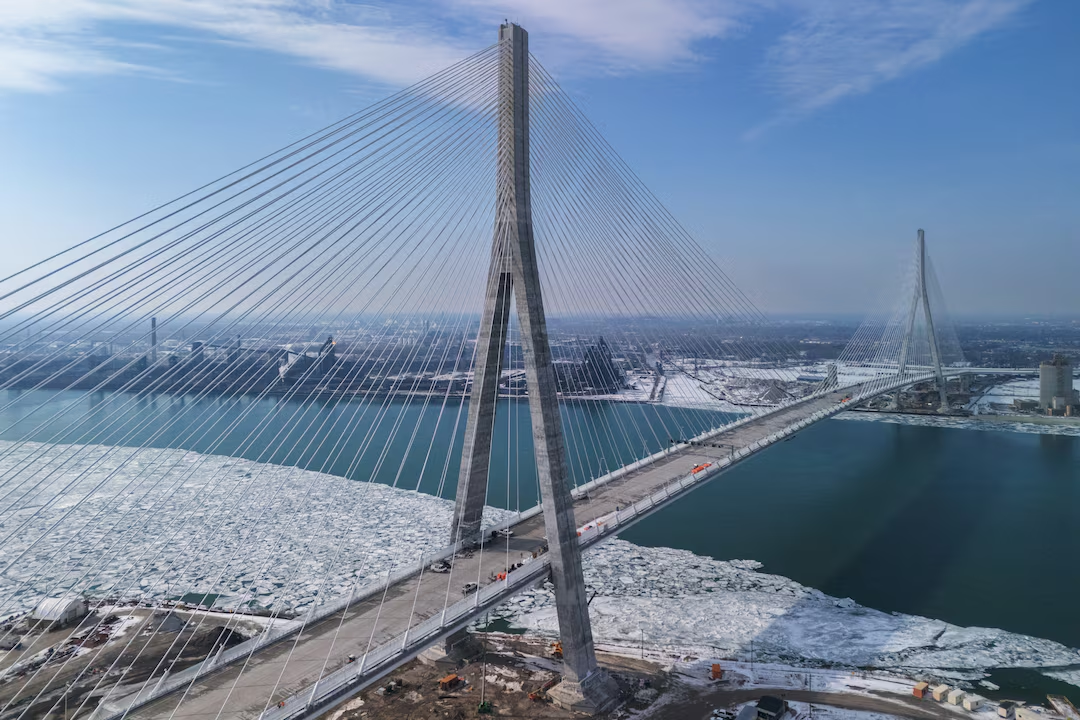
The Gordie Howe Bridge ceremony scheduled for Friday was supposed to be the kind of event that writes itself: two countries, one span, decades of negotiation finally producing something you can drive across. Instead, it has become a Canada-only affair, and the reason has nothing to do with the bridge.
Americans were disinvited. Politely, according to three sources, but disinvited nonetheless.
What Happened
President Trump signed an executive order on July 20 threatening to raise tariffs on Canadian imports from 25 percent to 50 percent, covering a wide range of goods — wine, cement, and hockey sticks among them — beginning next month.
Two sources involved in bridge opening discussions on the American side, speaking without authorization, identified that order as the direct cause of the ceremony’s transformation.
The timing was almost comically bad. A celebration of cross-border partnership scheduled days after a doubling of trade barriers presented an optics problem nobody could solve.
Canada’s Response
Ottawa did not pretend otherwise.
A spokesperson for Canadian Housing and Infrastructure Minister Gregor Robertson stated that in light of the trade action threatened earlier in the week, proceeding with a celebratory event between the two countries would be inappropriate.
Prime Minister Mark Carney went further, characterizing the tariff threat as a direct violation of the existing U.S.-Mexico-Canada free trade agreement. Canadian officials by all accounts were furious.
The Windsor-Detroit Bridge Authority subsequently posted notice of “A Canadian Celebration of the Gordie Howe International Bridge,” set for Friday, July 24 at 11:30 a.m., with Robertson attending.
No comparable American event has been announced.
The Bridge Opens Anyway
Lost in the diplomatic wreckage is the fact that the actual infrastructure is proceeding on schedule.
The $4.7 billion span connecting Detroit to Windsor, Ontario opens to traffic Monday, July 27.
That distinction matters. The ceremony collapsed. The bridge did not.
Who Paid and Who Owns It
The absence of a U.S. event is not entirely surprising, and understanding why requires knowing how this project was financed.
Canada paid for the bridge up front. The arrangement, struck in 2012 and approved by the Obama administration, established joint ownership between Canada and Michigan.
That structure has always given Canada the stronger claim to celebrating it. When the relationship soured, the party simply stayed on the side that funded it.
A Delay Already Once
This is not the first complication.
The bridge was originally scheduled to open last month. That timeline collapsed when the Trump administration raised questions about what the United States should receive in exchange for permitting its use.
Negotiators eventually produced a deal:
- Half of profits above operating costs go to a U.S.-side economic development fund
- That calculation may come after Canada’s principal and interest obligations on financing
- American officials gain input on significant toll rate changes
The agreement cleared the July 27 opening. It did not resolve the broader trade tension that has now claimed the ceremony.
The Legal Question Underneath
Trump justifies the new tariffs as a response to Canadian retaliatory measures on U.S. autos, alcohol, and cheese — themselves a response to his 2025 tariff increases on Canadian goods.
The legal mechanism this time is different, and deliberately so.
He is relying on a statute permitting tariff increases when another country unfairly discriminates against American goods. That provision has never been used in this manner before.
But it may rest on firmer ground than his previous approach. The Supreme Court found the national emergency justification underlying earlier tariffs legally insufficient, reversing them. Building the new action on a different statutory foundation appears designed to avoid a repeat.
Michigan’s Exposure
Few states have more at stake in U.S.-Canada trade friction than Michigan.
Gov. Gretchen Whitmer expressed dismay over the tariff announcement on July 21, noting that Michigan’s economy faces distinctive vulnerability to unpredictable shifts in trade policy.
Asked whether she feared another delay to the bridge opening, her answer was brief and revealing: she sure hopes not.
That is the position Michigan occupies — deeply dependent on a trading relationship being renegotiated by forces well outside state control.
The Counterpoint
Not every American voice matched the chill.
U.S. Rep. Debbie Dingell of Ann Arbor described Canada as a neighbor, friend, and indispensable partner, and said she looks forward to the bridge opening Monday for the benefit of both Michiganders and Canadians. She framed the opening as a lasting reminder of the ties binding the two countries.
That sentiment reflects how border-region politics often diverge from national trade positioning. Communities that live on both sides of a crossing tend to view the relationship differently than capitals do.
What This Actually Signals
Ceremonies are symbolic by definition, which makes their cancellation informative.
Canada could have proceeded with a joint event and swallowed the awkwardness. Choosing not to was a deliberate diplomatic signal — a refusal to supply imagery of partnership while trade barriers double.
The bridge will still carry vehicles Monday. Trucks will move goods across it regardless of what tariff rate those goods face.
But the photograph that was supposed to accompany the opening — two governments standing together on a span built by both — will not exist. In diplomatic terms, that absence says more than any statement either side issued.
Sometimes the most telling thing about an event is who chose not to attend.
Author
-
Lucienne Albrecht is Luxe Chronicle’s wealth and lifestyle editor, celebrated for her elegant perspective on finance, legacy, and global luxury culture. With a flair for blending sophistication with insight, she brings a distinctly feminine voice to the world of high society and wealth.