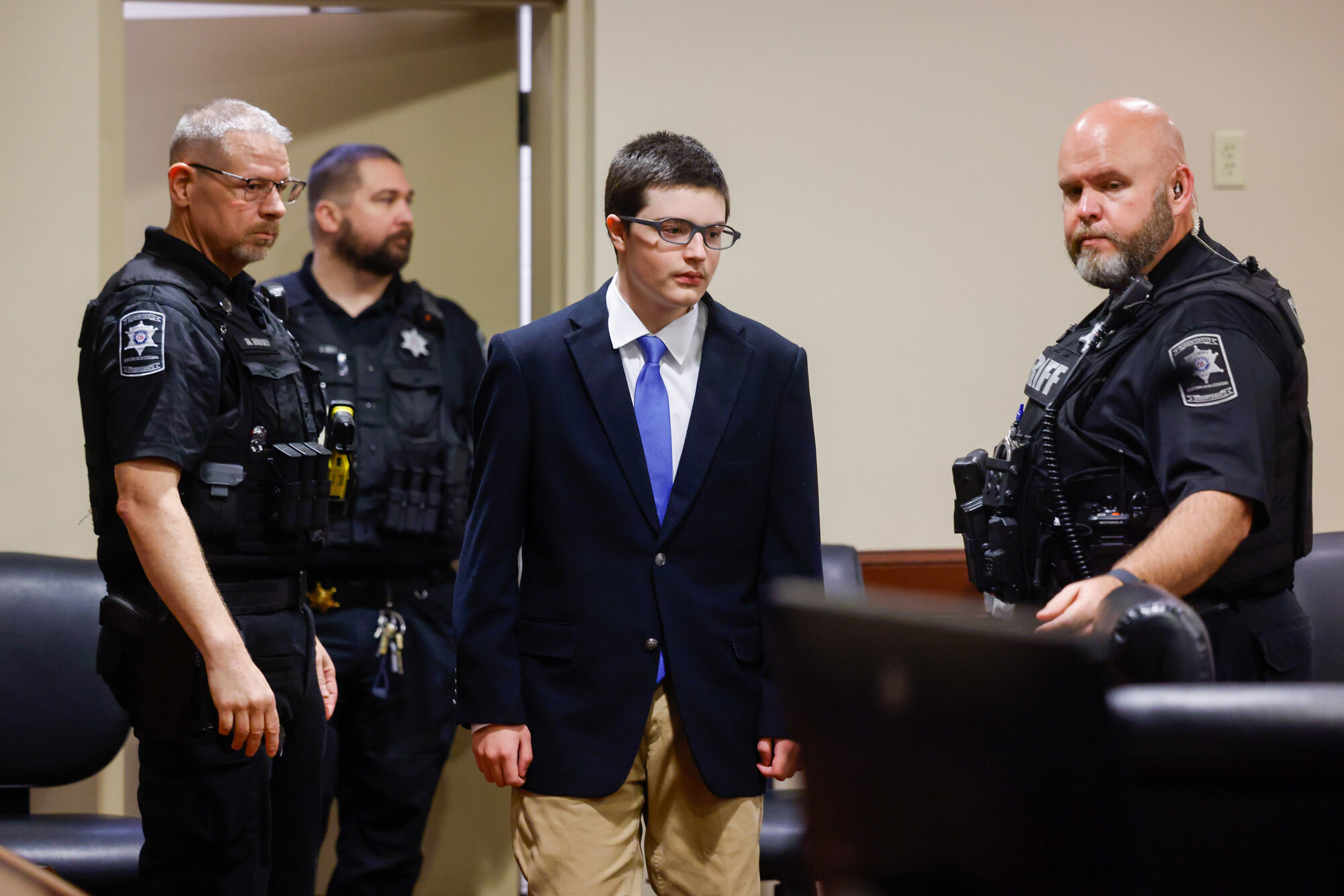
The Apalachee High School shooting guilty plea arrived Friday morning in a Georgia courtroom filled with families who have waited nearly two years for this moment — and it opened the door to a sentencing hearing that has already proven wrenching for everyone inside.
Colt Gray, now 16, admitted responsibility for the September 2024 attack at his school in Winder, Georgia, that killed two teachers and two students and left nine other people wounded. He pleaded guilty to four counts of murder along with dozens of additional charges.
What He Admitted
Gray acknowledged that he brought an AR-15-style rifle onto campus when he was 14 years old and opened fire inside a math classroom and then in a hallway.
The plea removes any question of guilt from the proceedings. What remains unresolved is the sentence. The judge is now weighing whether Gray will serve life in prison with the possibility of parole or life without it — a decision that will be informed by the evidence and testimony presented across multiple days of hearings.
Prosecutors began laying out their case on Friday afternoon. That evidence included notebooks in which Gray had written about his intentions before the attack, portions of which were read aloud in court, along with statements he gave to investigators in the immediate aftermath. Both sides are expected to continue presenting material on Monday.
Survivors and Families Speak
The most difficult stretch of the day came when survivors and relatives of those killed delivered victim impact statements.
Several people who were shot that day described how the attack reshaped their lives — physically, emotionally and in ways that continue years later. Family members of the four people who died spoke about what was taken from them and what daily life has become in the absence of a child, a spouse, a colleague, a parent.
Some addressed Gray directly rather than speaking to the court. One survivor told him plainly that they hated everything about him.
That kind of statement is not unusual in these hearings, though it rarely loses its force. Victim impact testimony exists precisely so that the human consequences of a crime enter the official record, rather than remaining abstract behind charge sheets and evidence exhibits. For many families, it is the only opportunity they will ever have to speak to the person responsible with the court obligated to listen.
An Apology From His Mother
Gray’s mother also addressed the courtroom, offering an apology on behalf of herself and her son. She said the two of them were beyond sorry for what happened.
Her presence highlights a dimension of these cases that often goes unexamined. When the person responsible is a child, the question of adult responsibility inevitably surfaces — how a teenager obtained a rifle, what warning signs existed, and who was positioned to intervene. Those questions have shadowed the Apalachee case from the beginning and remain part of the broader legal aftermath.
The Weight of the Sentencing Decision
The choice facing the judge is not simply between two labels. It concerns whether a person who committed a mass killing at 14 should ever have an opportunity to argue for release decades from now.
Courts across the country have wrestled with this question since a series of Supreme Court rulings restricted the harshest sentences for juvenile offenders, requiring judges to weigh a young person’s capacity for change alongside the severity of the crime. Those rulings did not eliminate life without parole for juveniles in every circumstance, but they raised the threshold and demanded individualized consideration.
That means the material presented over these hearing days matters enormously. Prosecutors are working to establish premeditation and the depth of planning. Defense attorneys will typically present evidence about background, mental health, developmental factors and the circumstances that preceded the attack. The judge must hold both accounts in view.
Neither outcome offers what families most want, which is unavailable through any court.
A Community Still Carrying It
Winder is a small city northeast of Atlanta, the kind of place where a school serves as a central institution rather than one option among many. When violence enters that space, the effects ripple outward through every connection in town.
Students who were in that math classroom are now years older. Some have graduated. Others returned to the same hallways where the shooting occurred, walking past the spot each day. Teachers who survived went back to teaching. Emergency responders who arrived that morning carry their own version of the memory.
Research on school shootings consistently shows that the circle of harm extends far past the official casualty count. Anxiety, avoidance, sleep disruption and difficulty concentrating are common among students who were present but physically unhurt, and those effects can persist for years without support.
The victim statements delivered Friday reflected that reality. Injuries that healed did not end the experience of being shot at fourteen or fifteen years old.
What Happens Next
Proceedings resume Monday, with both prosecution and defense presenting additional evidence for the judge to consider. There is no jury involved at this stage, since the plea resolved the question of guilt.
Once both sides conclude, the judge will issue a sentence. The timing is at the court’s discretion and may not come immediately after arguments close.
For the families of the four people killed and the nine who were wounded, Friday represented a marker rather than an ending. The formal admission of guilt closed one chapter that had remained technically open for almost two years. What follows is the part no legal process addresses — the ordinary days that continue without the people who should be in them.
If this coverage brings up difficult feelings, particularly for anyone who has experienced violence at a school, support is available through crisis counseling services, and reaching out to a trusted person or professional can help.
Author
-
Lucienne Albrecht is Luxe Chronicle’s wealth and lifestyle editor, celebrated for her elegant perspective on finance, legacy, and global luxury culture. With a flair for blending sophistication with insight, she brings a distinctly feminine voice to the world of high society and wealth.