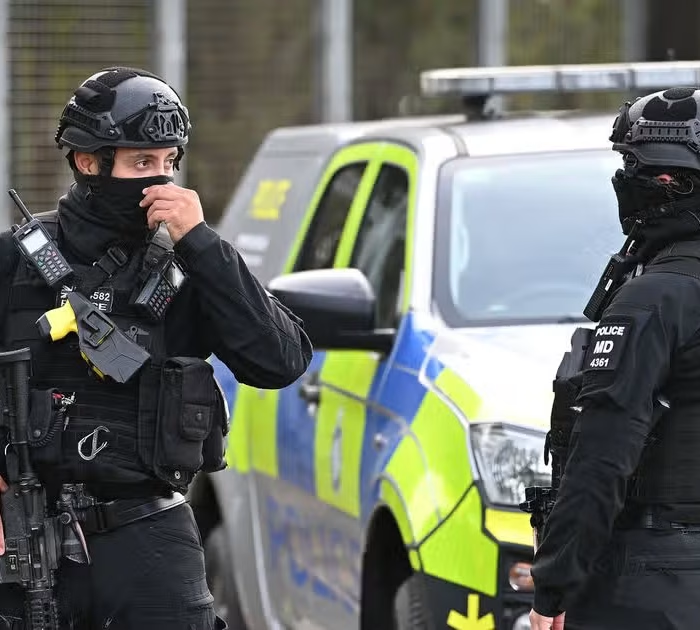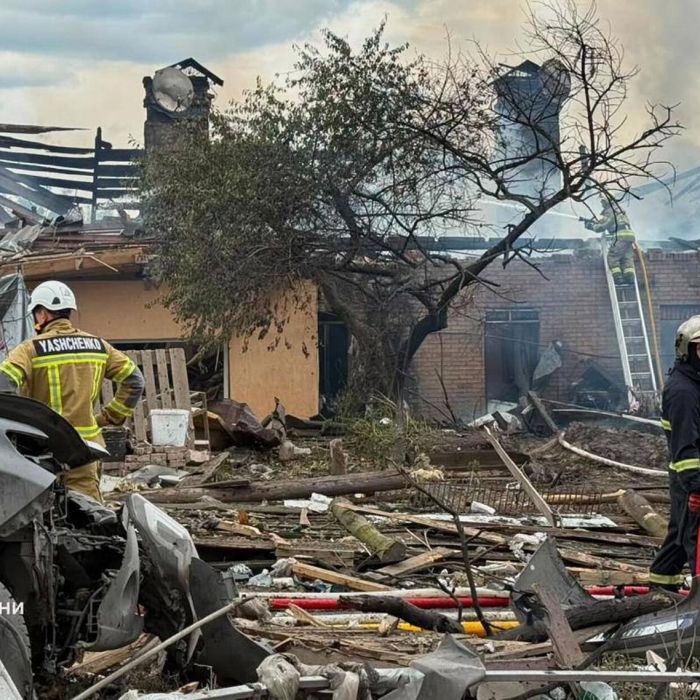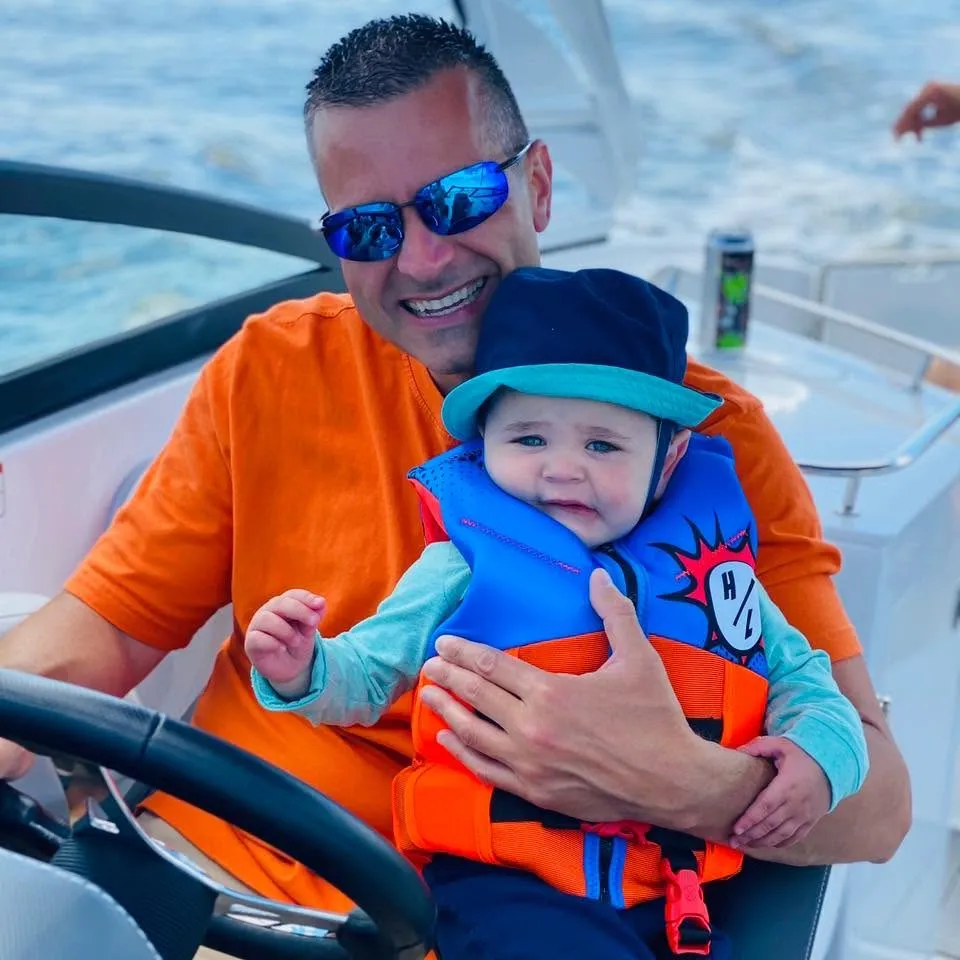
Boating under the influence charges have been filed against a New Jersey man following a July collision that killed two young children on the Intracoastal Waterway.
Stephen Schneider, 63, of Bayville, surrendered to authorities on Friday. According to New Jersey State Police, he faces two counts of second-degree reckless vessel homicide, along with single counts of operating a vessel under the influence and reckless operation of a vessel.
What Happened That Night
The incident occurred on July 19 at approximately 9:09 p.m.
State police say a 30-foot Tidewater Custom 280 struck a channel marker while underway. The impact threw a 9-year-old girl and a 7-year-old boy from the vessel into the water. Neither child survived.
Channel markers exist to guide vessels safely through navigable water. Hitting one at speed means, almost by definition, that the boat was somewhere it should not have been, or moving in a way that made avoidance impossible.
The Charges Explained
Second-degree reckless vessel homicide is a serious offence in New Jersey, carrying substantial potential prison exposure. The charge requires prosecutors to establish that a death resulted from conduct that disregarded a known and significant risk.
Two counts have been filed, one for each child.
The accompanying charges of operating under the influence and reckless operation address the alleged conduct itself rather than its outcome, and together they form the foundation for the homicide counts.
Where the Case Stands
State police describe the investigation as ongoing.
As of Saturday, online court records did not yet reflect the case, and it was not clear whether Schneider had retained legal representation able to comment publicly on his behalf.
That absence matters for fairness. Charges are allegations, and no defence position has been presented. The evidentiary case will be tested in court rather than in the initial announcement.
Why Nighttime Boating Is Uniquely Hazardous
The timing of this crash, just after nine in the evening, places it in one of the most dangerous windows on the water.
Boating at night removes most of the visual references operators rely on during daylight:
- Depth perception collapses without a visible horizon or shoreline detail
- Channel markers can be difficult to distinguish against shore lights
- Distance to fixed objects becomes almost impossible to judge accurately
- Other vessels are identified only by navigation lights, which reveal little about speed
- Familiar routes look entirely different in darkness
Alcohol compounds every one of these problems. It slows reaction time, narrows attention and impairs the judgment required to reduce speed when visibility drops.
There is also a factor specific to boating that many recreational operators underestimate. Extended exposure to sun, wind, engine vibration and motion produces a condition sometimes described as boater’s fatigue, which intensifies the effects of alcohol well beyond what the same quantity would produce on land.
The Passenger Safety Question
The children were ejected on impact, a detail that speaks to how boats differ from cars in a collision.
Vehicles are engineered around occupant restraint, with seatbelts, airbags and crumple zones designed to keep people inside during a crash. Boats offer almost none of that. There is typically nothing securing a passenger in place, and open decks provide no barrier when a vessel stops abruptly.
For children, the risk is amplified by lower body weight and a higher likelihood of standing or moving around while underway.
Safety guidance for recreational boating consistently emphasises:
- Properly fitted life jackets worn at all times by children, not simply stowed aboard
- Seated positions for all passengers while the vessel is moving
- Reduced speed in darkness, restricted channels and unfamiliar water
- A designated sober operator, with the same seriousness applied to driving
Enforcement Realities
Impaired boating has historically received less enforcement attention than impaired driving, partly because waterways are harder to patrol and partly because alcohol has long been culturally normalised as part of a day on the water.
That gap has narrowed in recent years. Most states now treat operating under the influence on water with penalties comparable to those imposed on roads, and prosecutions following fatal incidents have become more common.
Cases like this one tend to accelerate that shift, because the outcome is impossible to abstract away.
The Human Cost
Beneath the charges and the legal terminology are two children, aged seven and nine, who went out on a boat on a summer evening and did not come home.
Their families now face a court process that will unfold over months, revisiting the details repeatedly. Whatever the eventual verdict, the proceedings cannot restore what was lost that night on the water.
Author
-
Lucienne Albrecht is Luxe Chronicle’s wealth and lifestyle editor, celebrated for her elegant perspective on finance, legacy, and global luxury culture. With a flair for blending sophistication with insight, she brings a distinctly feminine voice to the world of high society and wealth.