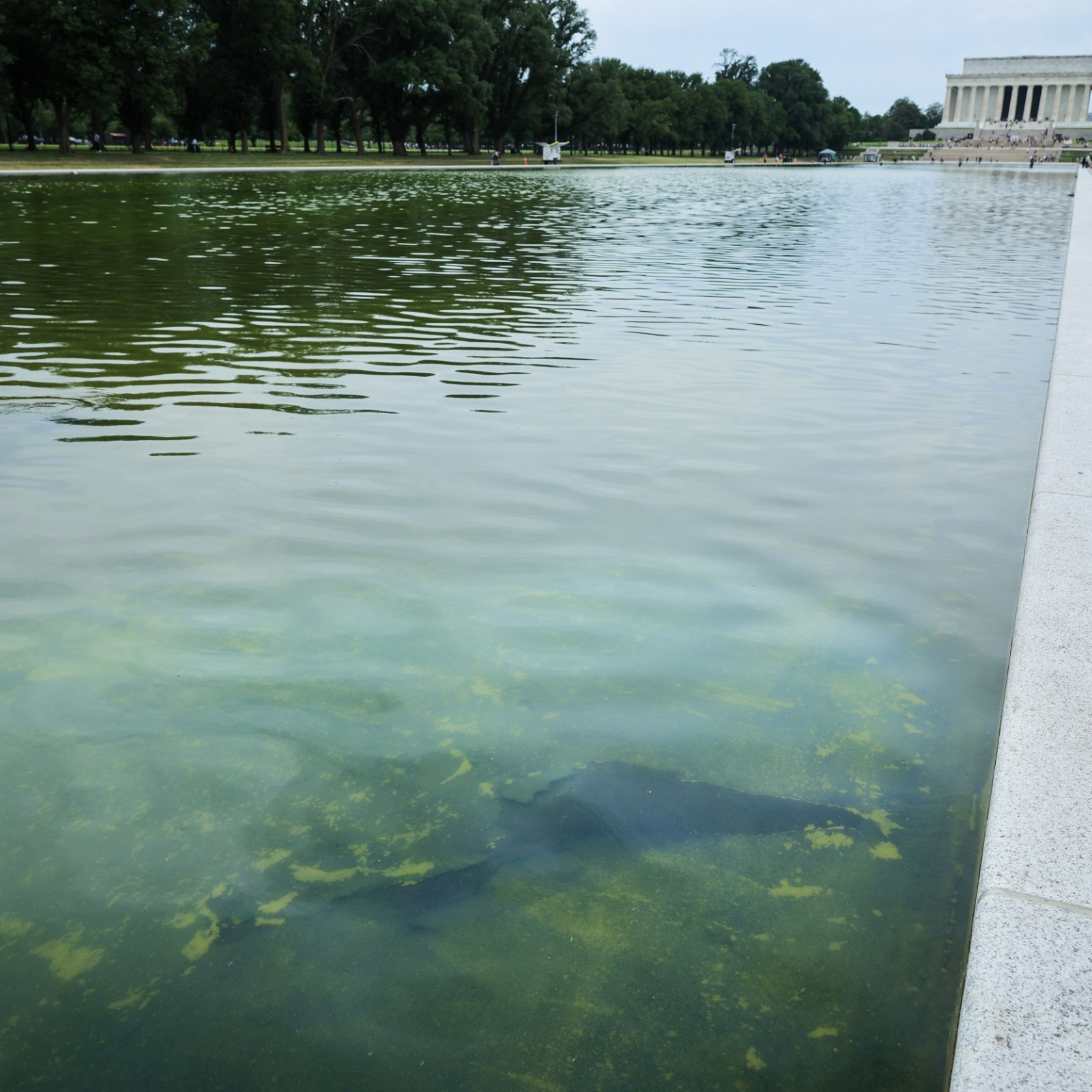
The ozone nanobubbler at the heart of the Lincoln Memorial Reflecting Pool project has become one of Washington’s most closely watched experiments, blending cutting-edge science with political controversy. This $1.7 million system promises to deliver crystal-clear water to a landmark that has resisted cleanliness for decades, but whether it can actually pull that off remains an open question.
A Bold Bet on Untested Technology
At its core, the device works by firing an astonishing 500 million microscopic bubbles into every single teaspoon of water. The oxygen packed into those bubbles is designed to oxidize, or essentially break apart, the algae, bacteria, and other unwanted chemicals lurking in the pool.
The Trump administration has championed the system as “state of the art.” To run the effort, officials turned to a small company out of Brookfield, Ohio, one of the very few firms in the country working with this kind of technology. The challenge they accepted was steep: clean a 6.5 million-gallon national landmark that has long defied every attempt to keep it clear.
Here’s the catch. The technology is only five years old and has never been formally used or studied on a pool before. That makes the Reflecting Pool both a showcase and a gamble.
A Company Thrust Into the Spotlight
Greenwater Services, the firm responsible for the pool’s water quality, didn’t expect to become a national talking point. Yet as President Trump’s broader renovation project ran into trouble, the company found itself center stage.
The wider effort has been plagued by setbacks, including a peeling pool bottom and accusations of vandalism. With scrutiny mounting, Greenwater even brought on a crisis communications firm to help it navigate the unfamiliar political pressure while staying focused on its actual job: the water.
When asked whether the company’s portion of the project had gone as planned, president and chief operating officer Chas Antinone gave a one-word reply: “Yes.” He was quick to distance himself from the politics swirling around the project, saying he holds no political affiliation either way and doesn’t much care about that side of things. His stated goal was simply to bring in a technology capable of keeping the Reflecting Pool looking the way it should. A review of campaign finance records, both federal and in Ohio, turned up no contributions from Antinone.
A Race Against the Clock
Greenwater walked CNN through a detailed account of its work, and that timeline revealed just how much improvisation the tight deadline required. The administration wanted the pool refurbished in time for the July Fourth celebrations marking America’s 250th birthday, and that pressure shaped nearly every decision.
The permanent system wasn’t ready when the pool was refilled, so the company improvised. On June 6, just two days after refilling, crews placed four standalone mobile machines directly into the water. These temporary units, visible to the naked eye, sent up small white plumes of bubbles as they pushed nanobubbles into the pool. The company said they ran at the same power level the permanent system would eventually reach. At first, the water looked clear and everything seemed to be working.
Then came a curious interruption. On June 12, the National Park Service reportedly asked the company to pull the temporary equipment, offering no explanation. The units were taken offline and removed. Soon after, algae bloomed, captured both by a source close to the project and by CNN’s cameras that afternoon. During that same 24-hour stretch, the administration hosted a high-profile UFC photo op on the National Mall. The next day, the temporary machines were reinstalled.
How the Permanent System Is Supposed to Work
Unlike the temporary units, the permanent nanobubbler doesn’t sit inside the pool itself. Instead, it lives in a small pump house tucked into the US Park Police stables nearby.
The process follows several stages:
- Municipal water enters the system and is filtered again
- An oxygen concentrator pulls in air and uses an electrical current to split oxygen molecules, creating ozone
- That ozone is injected through patented nozzles into a master water pipe under pressure
- The master pipe feeds into smaller existing pipes ringing the pool, letting treated water flow in
There’s a significant vulnerability built into this design. The system depends on those older pipes being functional, and the Interior Department has acknowledged that thousands of feet of piping have been in disrepair for years. Antinone said some pipes are viable but admitted he wasn’t sure how many actually work, noting that the Park Service plans to test them. If algae returns, he said, the piping would be one of the first things to examine.
Promising Science, Real Uncertainty
Experts who have studied the technology see genuine potential. Heather Raymond, water quality director at Ohio State University’s College of Food, Agricultural, and Environmental Sciences, has researched Greenwater’s system for years.
She explained that its real strength lies in how long the ozone stays active in the water, reacting for potentially days rather than quickly rising to the surface and fizzling out like earlier versions did. According to Raymond, the technology delivers a “one-two punch”: it directly oxidizes harmful chemicals while also encouraging bacteria that consume those same chemicals. Her studies have shown effectiveness rates in the 90th percentile, and she described the approach as both clean and green. She wasn’t involved in the Reflecting Pool project, and her research wasn’t funded by the company.
There’s one important caveat. Raymond noted the technology works best when installed during cooler months, getting ahead of algae before heat and sunlight create ideal growing conditions. Ideally, she said, you’d launch in fall or winter, not summer. But the July deadline left no such luxury.
Questions Over the Contract
The project’s politics extend to how Greenwater got the job. Like the company hired to resurface the pool bottom, Greenwater received a no-bid contract in April, skipping the competitive bidding usually required for government work.
The company’s co-owner, J.J. Cafaro, is a longtime Trump donor who lives near Mar-a-Lago and pleaded guilty in 2001 to conspiracy to bribe a congressman. Both the Interior Department and the White House insisted they played no role in selecting the contractors, attributing the choice to expertise and the demanding timeline. Greenwater, for its part, has worked to distance Cafaro from daily operations, describing him as an investor with no involvement in day-to-day work.
What Comes Next
For now, the permanent system is running on its own, and early signs look encouraging. The company tests the water daily and expects to stay through the July Fourth holiday at least. If the green water returns, Antinone said additional units could be added or spot treatments deployed.
Still, his closing thought captured the lingering uncertainty perfectly. The water looked good, he said, before adding a sober reminder: it’s going to be 100 degrees next week. Whether this novel technology can hold the line against a Washington summer remains very much to be seen.
Author