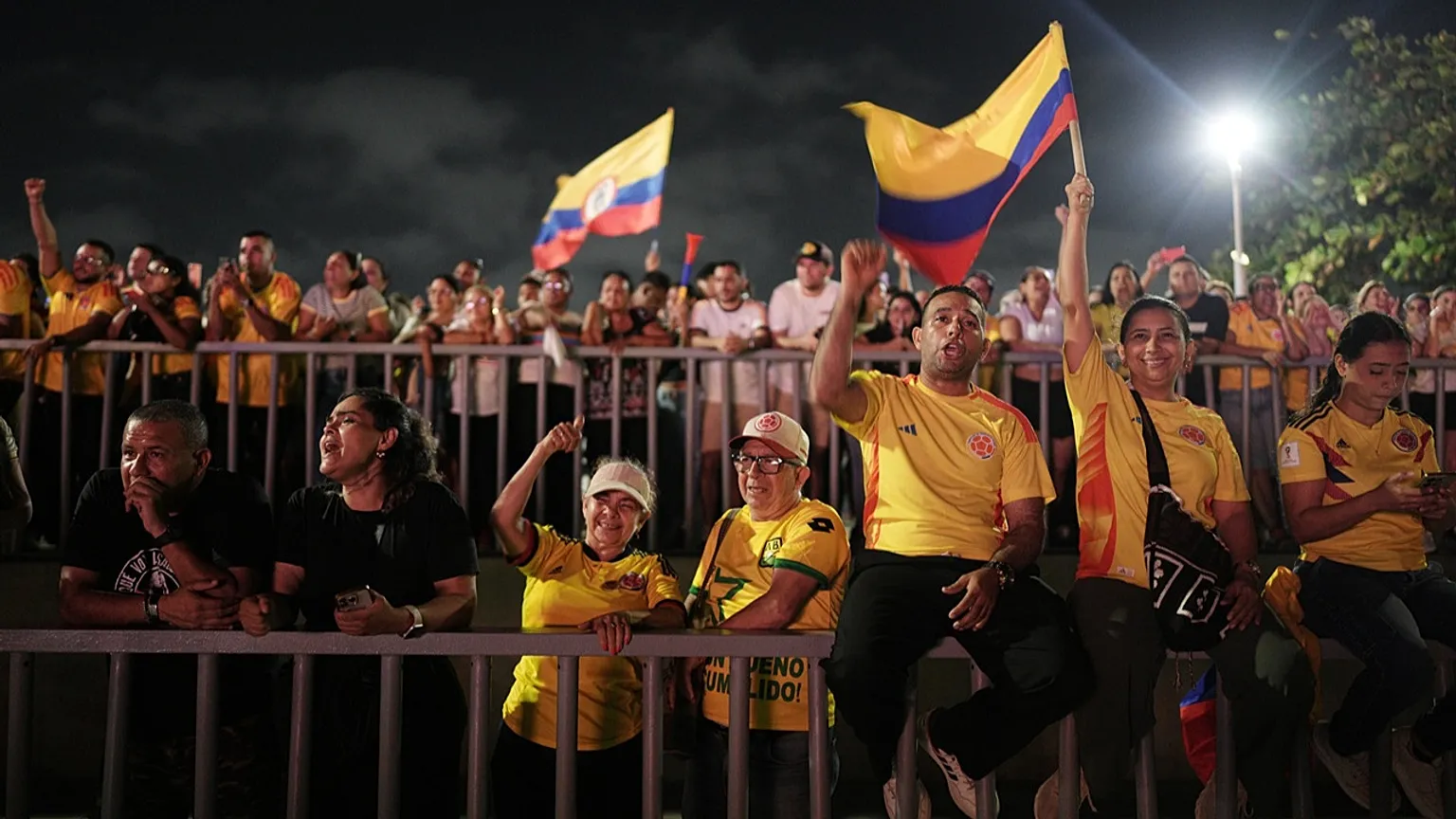
The Colombia election runoff is set after Sunday’s first-round vote produced no outright winner, but the results have been clouded by claims of irregularities from the country’s outgoing president. With his preferred candidate trailing a pro-Trump rival, President Gustavo Petro has cast doubt on the integrity of the vote, sparking concern both at home and abroad.
What should have been a straightforward step toward a decisive second round has instead become a flashpoint in an already tense political climate.
A Close First Round
Neither candidate crossed the 50% threshold needed to win outright in Sunday’s first round. With all votes counted, the standings revealed a narrow but meaningful lead for the right-wing contender.
- Abelardo de la Espriella, running under the banner of Defensores de la Patria, a party he founded, led with more than 43% of the vote.
- Iván Cepeda, of the incumbent Pacto Histórico party and endorsed by Petro, trailed at just over 40%.
The result sets up a head-to-head runoff between two candidates with starkly different visions for Colombia’s future.
Petro Refuses to Accept the Count
Rather than accepting the preliminary results released by the country’s electoral authority, President Petro openly challenged them. He declared he would not recognize the count, arguing that some of the software used by private companies to tally votes was flawed and that the results were not binding.
Petro went further, alleging that 800,000 IDs had been added to the software, supposedly representing individuals who were not on the official census. He offered this as grounds for questioning the legitimacy of the outcome.
Cepeda Also Raises Questions
Petro was not alone in expressing skepticism. Cepeda himself suggested the count contained errors, claiming in a speech in Bogotá that millions of votes had been miscounted.
He asserted that his campaign had secured 10 million votes that were improperly tallied across Colombia and pointed to a discrepancy he said he wished to verify. The dual challenges from both the president and his favored candidate added weight to the controversy surrounding the vote.
Officials Defend the System
The doubts raised by Petro and Cepeda stand in contrast to assurances from electoral officials and outside observers. The country’s electoral body, the National Civil Registry, releases preliminary results ahead of the final, official tally.
The head of that office had noted earlier in the year that the preliminary count for this year’s congressional elections reached 99.8% precision, described as a historic high, when compared with the final results.
International voices echoed that confidence. The Americas director of Human Rights Watch described Colombia’s electoral system as independent and trustworthy, calling it regrettable that the president was sowing unjustified doubts. She insisted that the results must be respected and urged the international community to rally behind the National Civil Registry.
Two Very Different Candidates
The runoff pits two figures who could hardly be more different. On one side stands Cepeda, a left-wing senator who played a role in negotiating Colombia’s landmark 2016 peace deal with the FARC guerrillas.
On the other is de la Espriella, a lawyer and political outsider who has aligned himself with U.S. President Donald Trump and vowed to crack down on crime. After advancing, he struck a triumphant tone, declaring that he would defeat tyranny and absolutism and crediting the more than 10 million Colombians who, in his words, answered “the roar.” He frequently refers to himself as “The Tiger.”
The runoff is scheduled for June 21.
A Conservative Contender Falls Short
The race had once seemed open to a third possibility. Paloma Valencia, a candidate for the conservative Centro Democrático party and a protégé of former President Álvaro Uribe, had pitched herself as a centrist capable of building coalitions and was forecast as a potential runoff contender.
Instead, she captured less than 7% of the vote, knocking her out of the contest. Following the results, Valencia endorsed de la Espriella, potentially channeling her supporters, many of whom opposed Petro’s left-wing mandate, toward the right-wing candidate in the second round.
A Vote Shadowed by Violence
Sunday’s election, widely seen as a referendum on Petro’s policies, arrived a decade after Colombia signed its historic peace pact with the FARC. That agreement once offered hope of ending the country’s long cycle of conflict between rebel groups and the government.
Yet violence has surged back in the years since, intensifying in the lead-up to the presidential race. Criminal groups have increasingly turned to drone strikes and armed attacks, and the campaign was scarred by tragedy when a 39-year-old presidential hopeful was fatally shot at a political rally last June.
The U.S. Factor
The election has also become entangled in Colombia’s relationship with the United States. Petro, a former Marxist revolutionary and the country’s first modern leftist president, has frequently clashed with Trump, often using those feuds to bolster his own image.
The two leaders appeared to reconcile during a closed-door Oval Office meeting in February, after which Petro left with a red “Make America Great Again” cap and a signed copy of Trump’s book. Trump said afterward that the two had gotten along very well.
Despite that thaw, some U.S. officials have worked to elevate de la Espriella while suggesting that a vote for Cepeda would be a mistake. Among the most vocal:
- Senator Bernie Moreno of Ohio called the elections pivotal and warned about the direction the country might take, even referencing recent military action in Venezuela. He announced plans to serve as an international observer for the vote.
- Representative Maria Elvira Salazar of Florida formally endorsed de la Espriella ahead of the election.
- Several lawmakers, including Representative Carlos Giménez of Florida, congratulated de la Espriella after he led the first-round results.
Petro pushed back against this involvement, urging Moreno to stick to his electoral oversight role and warning that political statements about the citizenry’s vote amounted to illegal interference in the people’s free decision.
A Tense Path to June 21
As Colombia heads toward the runoff, the contest carries enormous stakes, not only for the country’s domestic future but for its place in the broader region. With the president questioning the results, his favored candidate alleging miscounts, and international figures weighing in on both sides, the path to June 21 promises to be fraught.
The Colombia election runoff will ultimately decide between two radically different directions for the nation. But before voters return to the polls, the country must first navigate a swirl of doubt and disputed claims, with observers urging that the integrity of the process, and the will of the people, be respected above all.
Author