CIA doubts about the intelligence that prompted President Donald Trump to secretly switch aircraft while leaving Turkey last month have surfaced in new reporting, raising questions about how the assessment was handled and why it prompted such a dramatic response.
According to the Washington Post, citing current and former US officials familiar with the material, Israel passed along intelligence about an Iranian plot targeting the president’s plane. Analysts at the agency did not find it persuasive.
What the Officials Said
The characterizations attributed to those officials are notably blunt.
One described the intelligence as Israeli-derived rather than US-generated, and said it was regarded internally as low confidence.
A second official offered a different framing, pointing to the security context rather than the analytical one. That person noted the Secret Service has experienced three near misses involving this president and is therefore unwilling to take chances, adding that protective agents did what the situation required.
A former official went further, suggesting the episode fit a broader pattern in which some within the US government view Israeli intelligence reporting as intended to shape presidential decision-making as much as to inform it.
That is a significant allegation, and it is worth noting it comes from an unnamed former official rather than any formal assessment.
The Rubio Detail
One specific data point cited in the reporting cuts against the threat’s credibility.
According to the former official, Secretary of State Marco Rubio received a briefing on the intelligence and nonetheless flew aboard the aircraft supposedly at risk.
If accurate, that decision implies a degree of confidence among senior officials that the plane was safe, which sits awkwardly alongside the extraordinary measures taken to move the president.
The White House Response
The White House declined to address the report directly.
An anonymous US official responded that the president has faced numerous threats to his life, including from Iran, and that every measure is taken to ensure his safety. The official added that the Secret Service’s core mission is protecting the president and that this mission was accomplished.
That statement neither confirms nor disputes the analytical disagreement described in the reporting.
What Actually Happened in Ankara
Trump had travelled to the Turkish capital for a NATO summit.
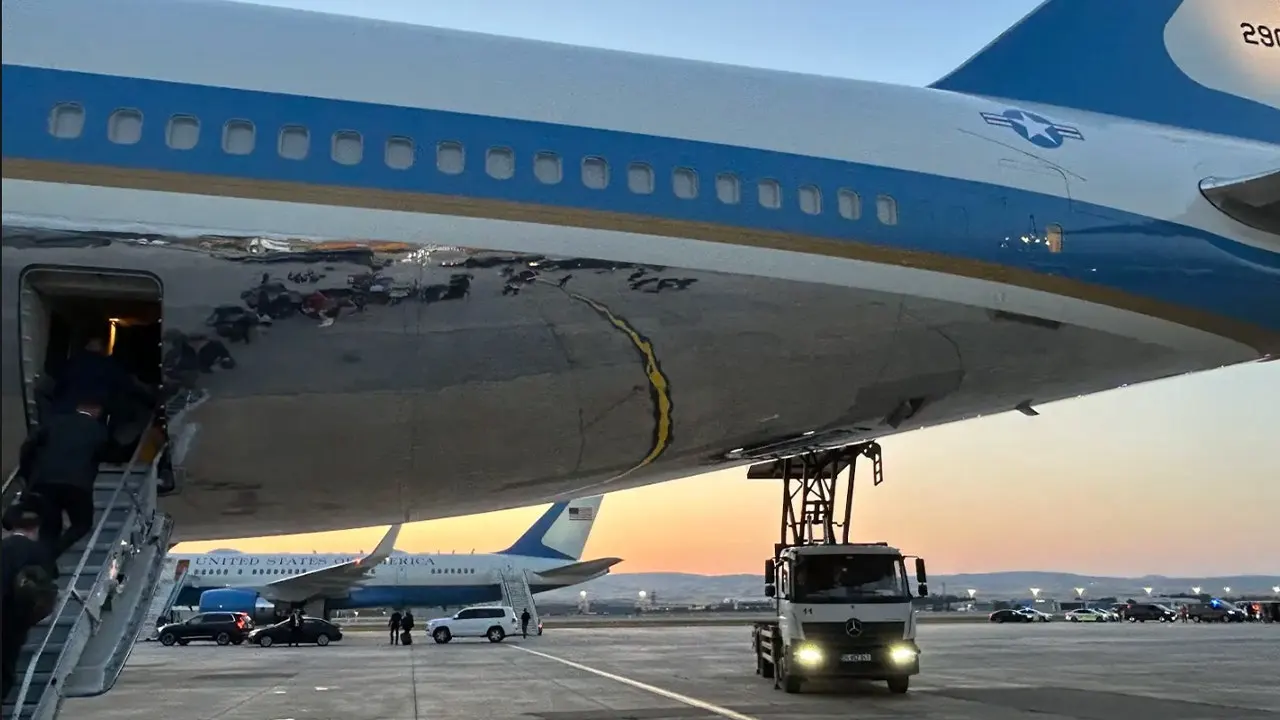
Rather than departing aboard Air Force One as scheduled, he was moved to a military aircraft and taken out of the country quietly.
Reporting from the Wall Street Journal indicated the intelligence originated with Israel and described a plot involving shoulder-fired missiles aimed at bringing down the president’s plane.
The New York Times reported a somewhat different picture, saying US intelligence had multiple sources concerning plans to fire a surface-to-air missile at Air Force One, including a report of an individual with a shoulder-launched weapon near the summit area.
That account, citing two US officials, also stated that Iranian planners had identified Trump’s precise location in Ankara, down to the specific floor of his hotel.
Conflicting Pictures
These reports do not neatly align, and the difference matters.
The Post’s account emphasizes a single foreign-sourced stream that analysts discounted. The Times account describes multiple sources and a specific sighting.
Both can be partly true. Intelligence assessments frequently involve fragments of varying reliability, and confidence levels reflect how well those fragments corroborate one another rather than whether any individual piece exists.
It is also possible that different officials with different access are describing different portions of the same body of reporting.
The Underlying Threat Environment
Whatever the merits of this particular assessment, the broader context is not speculative.
Iran has publicly vowed to kill Trump since the US strike that killed senior general Qassem Soleimani during his first term in 2020.
Calls for his death featured prominently during recent mourning commemorations for supreme leader Ali Khamenei, who was killed in the US and Israeli strikes that opened the current war in late February.
Separately from Iranian threats, Trump has been the target of multiple assassination attempts. Last month eight men were indicted on murder and terrorism conspiracy charges over an alleged plot at a UFC event held at the White House in June. Prosecutors said the intended targets included Trump, Vice President JD Vance, other federal officials, businessman Elon Musk, and additional high-value figures. The group also allegedly discussed killing Israeli Prime Minister Benjamin Netanyahu, who was not present.
Why Protective Services Act on Weak Intelligence
There is a structural reason the Secret Service may respond to information analysts rate poorly.
Intelligence agencies assess likelihood. Protective services manage consequence. Those are different calculations.
An assessment rated low confidence might carry a small probability of being accurate, but the outcome it describes is catastrophic and irreversible. Protective doctrine generally treats such asymmetry as reason to act rather than wait for corroboration.
That logic explains how both things can be true simultaneously: analysts doubting the reporting, and agents moving the president anyway.
The Harder Question
The more uncomfortable issue raised in the reporting is not about this single decision but about pattern.
If some US officials genuinely believe allied intelligence is being shaped to influence presidential choices rather than simply to inform them, that concern touches the reliability of the entire intelligence relationship during an active war.
Nothing in the public reporting establishes that claim. It reflects the view of one former official, offered anonymously, and Israeli officials have not responded to it publicly in the material available.
What to Watch
Two things would clarify matters considerably: whether any formal review of the assessment is undertaken, and whether additional corroborating detail about the alleged plot emerges from US-generated sources.
Until then, the episode stands as a reminder that decisions about presidential security are made under uncertainty, and that the gap between what analysts believe and what protective agents do is often the point rather than a failure.
Author
-
Lucienne Albrecht is Luxe Chronicle’s wealth and lifestyle editor, celebrated for her elegant perspective on finance, legacy, and global luxury culture. With a flair for blending sophistication with insight, she brings a distinctly feminine voice to the world of high society and wealth.