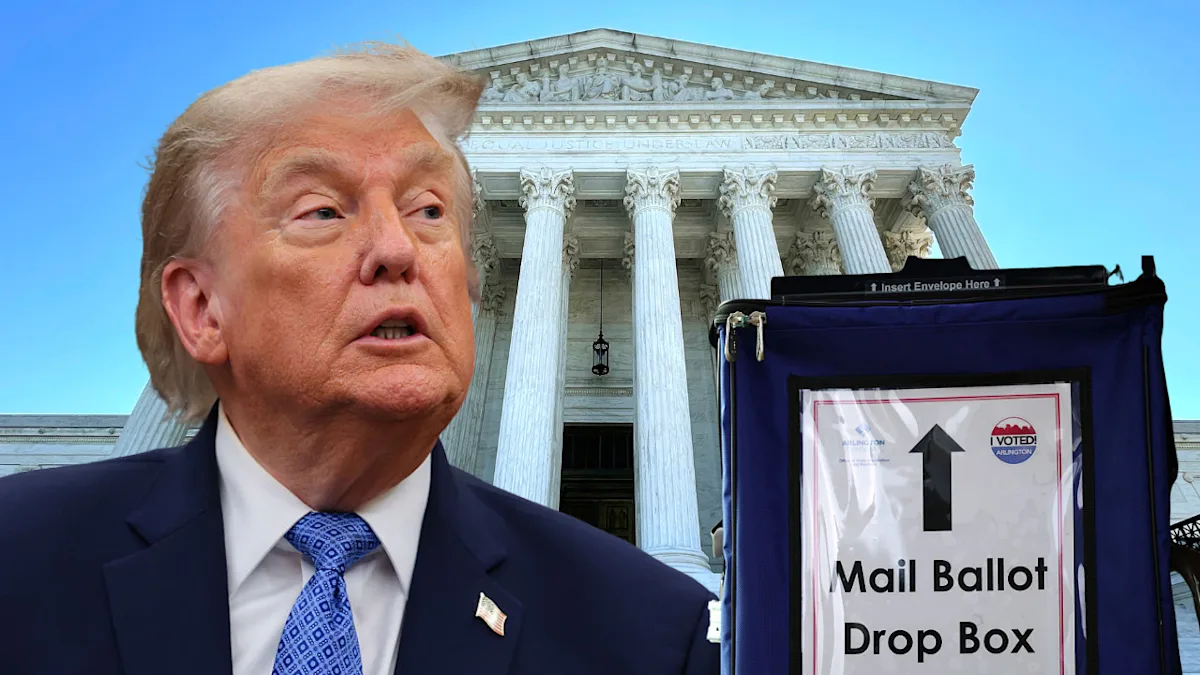
A federal judge has halted a set of mail-in ballot restrictions backed by President Donald Trump, delivering yet another courtroom defeat to the administration’s broader campaign to reshape how Americans vote. The ruling, issued in Washington, DC, hands a significant victory to civil rights advocates who argued the changes would have made it harder for millions of voters to cast their ballots by mail.
The Ruling in Brief
On Wednesday, District Judge Emmet Sullivan sided with the NAACP in its legal challenge against the U.S. Postal Service. At the core of his decision was a 2021 settlement that requires the Postal Service to give mail-in ballots special, expedited handling. Sullivan concluded that the newly proposed rules would likely violate that agreement.
As a result, he granted the NAACP’s request to enforce the settlement, effectively stopping the restrictions in their tracks. In his ruling, Sullivan noted that the NAACP had made a credible case, one the Postal Service did not contest, that the proposed rule was already affecting current affairs even before taking full effect.
What the Proposed Rule Would Have Done
The dispute traces back to a rule the Postal Service introduced in May. On paper, it framed itself as an effort to tighten ballot handling, but critics saw it as a series of obstacles dressed up as procedure.
The rule would have imposed several notable requirements:
- States would have been forced to supply lists of absentee and mail-in voters, and any ballot that did not match the list would be sent back rather than delivered.
- A brand-new envelope design would have become mandatory, with strict rules governing logos and the placement of barcodes.
- Ballots that failed to meet these specifications would simply be refused by the Postal Service.
To the NAACP, these demands amounted to a direct conflict with the earlier settlement, which obligates postal officials to take extraordinary steps to guarantee that election mail arrives on time. Sullivan agreed, pointing out that the settlement specifically committed the Postal Service to prioritizing the monitoring and prompt delivery of election-related mail.
Timing That Raises the Stakes
The decision carries added weight because of the calendar. It arrives less than five months before the November 3 midterm elections, a contest that will determine whether Trump’s Republican Party keeps its grip on both chambers of Congress.
The president has made no secret of what he believes is at stake. Trump has voiced concern that a Democratic takeover of the legislature could expose him to a third impeachment. Against that backdrop, the fight over mail-in voting takes on a distinctly personal and political edge.
A Pattern of Voting Claims
The case also fits into a larger narrative Trump has pushed for years. He has repeatedly promoted unsupported claims that American elections are vulnerable to what he describes as vote rigging, often singling out routine tools like mail-in ballots and electronic voting machines as supposed weak points.
Yet the reality of how elections work in the United States complicates that framing. Under the Constitution, elections are run by state and local officials, not the federal government. The Postal Service’s proposed rule, however, emerged from a wider push by the Trump administration to impose fresh limits on voting from the top down.
The Executive Order Behind the Effort
Much of this traces back to March, when Trump signed an executive order titled “Preserving and Protecting the Integrity of American Elections.” The order instructed the Department of Justice to act against states that, in the administration’s view, failed to follow certain standards for handling mail-in ballots.
Trump went further, accusing states that accepted absentee or mail-in ballots after Election Day of breaking the law. That stance, however, has not fared well in the courts.
Courts Keep Pushing Back
The Wednesday ruling is only the latest in a string of legal setbacks for the administration’s election agenda. Just days earlier, on Monday, the Supreme Court upheld a state law permitting mail-in ballots to be counted even when they arrive after Election Day, provided they were postmarked on or before that date. Lower courts have also blocked the president’s executive order.
Taken together, these decisions paint a picture of a judiciary repeatedly rejecting attempts to narrow access to mail-in voting.
Advocates Celebrate the Decision
Civil rights groups welcomed the ruling and used the moment to warn against continued efforts to restrict voting by mail.
Allison Zieve, director of the Public Citizen Litigation Group, which represented the NAACP, said the court correctly recognized that the Postal Service’s plan to erect barriers to mail-in voting clashed with its duty to deliver election mail promptly. She described the plan as unwise, unlawful, and a genuine threat to the millions of voters who depend on mailed ballots to take part in democracy.
Sam Spital, associate director-counsel of the Legal Defense Fund, which also argued on the NAACP’s behalf, was equally pointed. He characterized the Postal Service’s proposal as a blatant attempt to strip voting access from those who rely on mail-in ballots. The decision, he said, affirms that the Postal Service cannot ignore its legal obligation to deliver every voter’s ballot on time.
What It All Means
For now, the ruling preserves the status quo for mail-in voters heading into a high-stakes election season. It reinforces a principle that has held firm across multiple courtrooms: the machinery that delivers ballots cannot be quietly retooled in ways that disadvantage those who depend on it.
The broader struggle, though, is far from over. With the administration committed to reshaping election rules and the courts just as consistently pushing back, mail-in voting is likely to remain a fierce battleground well past this week’s decision, and quite possibly through the November elections and beyond.
Author