Chicago funeral home remains became the subject of a criminal investigation this week after authorities entered a South Side business and found the bodies of 56 people stored improperly and in advanced states of decay. State regulators moved almost simultaneously, suspending the license of one of the operation’s directors and describing what inspectors encountered as deplorable.
What made the discovery harder to accept for many in the neighborhood was that it did not come out of nowhere. Residents had been raising concerns about the smell for months.
How the Discovery Unfolded
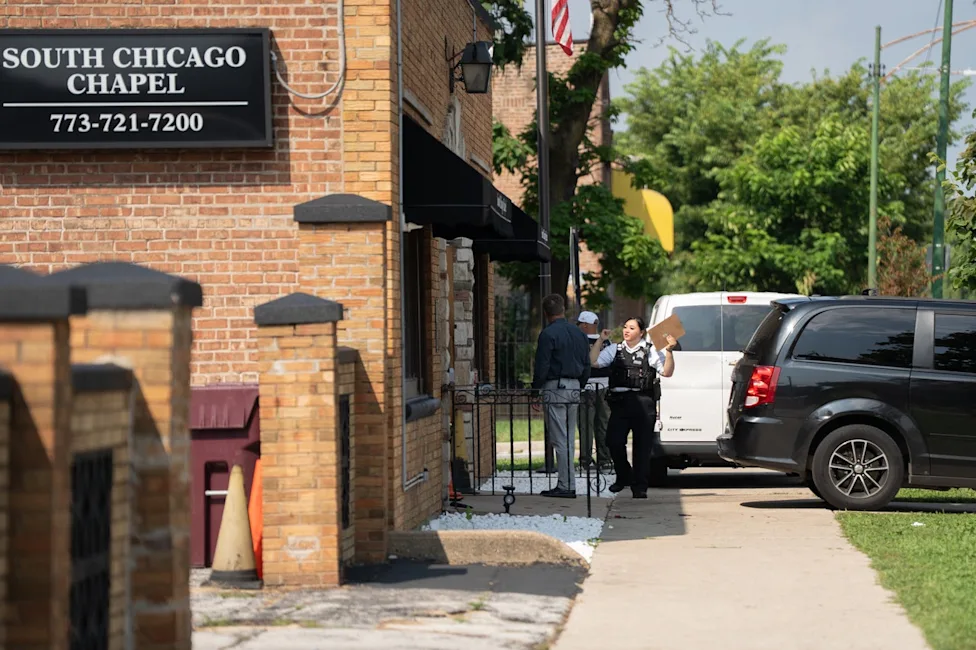
The Cook County medical examiner’s office received word from state and city officials that human remains were being kept in unacceptable conditions at South Chicago Chapel. Investigators and forensic pathologists were sent to the site on Thursday.
What they found were bodies at widely different stages of decomposition, complicating the basic work of figuring out who each person was.
The medical examiner’s office said staff would need to assess the condition of each set of remains while simultaneously searching for identification paperwork and death certificates. That process, officials cautioned, could stretch across several days before anything can be properly resolved. Families will be contacted once identifications are confirmed.
No one has been arrested. Chicago police confirmed detectives are working the case, and separately corrected an earlier statement, clarifying that fire officials had not declared the location a hazardous materials scene as initially reported. Attempts to reach the funeral home by phone and through its website went unanswered Friday.
Families Left Waiting for Answers
By Friday afternoon, a small crowd had formed outside the brick building, which sits on a residential stretch lined with trees, houses and small businesses.
Among them was Latasha Johnson, 55. Her mother’s funeral had taken place at South Chicago Chapel on Thursday, hours before investigators arrived. She learned about the discovery afterward.
Officials informed her that her mother’s body would now require an autopsy, and that she would need to come identify the remains within a day or two.
She described herself as discombobulated, and said her heart was broken.
Blaise Von Bruchhaeuser, a community advocate in the area, expressed a frustration shared by many neighbors. Complaints about a persistent, powerful odor had been filed for months. That the situation was allowed to reach this point before anyone intervened struck her as deeply troubling.
The State Suspension and What Inspectors Found
Illinois business filings show that funeral director Johanna Morgan established South Chicago Chapel in 2022. Her license was temporarily suspended on Wednesday, one day before the medical examiner’s team arrived.
The Illinois Department of Financial and Professional Regulation explained the suspension in unusually specific language. It concluded that allowing her to keep practicing posed a danger to public safety and welfare, citing findings that multiple deceased individuals had been left in an area without refrigeration.
The conditions described in that filing included:
- No functioning refrigeration for the stored remains
- A rodent infestation inside the premises
- Decomposition of the bodies as a direct result
- Maggot infestation on the remains
Refrigeration is not an optional convenience in this industry. It is the baseline requirement that prevents exactly this outcome, and its absence is what turned a regulatory failure into something far worse.
A Second Business, Shut Down for the Same Reasons
State records also list Clark Morgan, identified by officials as Johanna Morgan’s husband, as president of the funeral home. His own funeral director’s license was revoked in 2024 after he was found to have practiced with an expired credential and engaged in unprofessional conduct that regulators did not detail publicly.
The more significant detail emerged Friday from State Comptroller Susana Mendoza. She confirmed that the couple had previously operated a crematory in Chicago Heights, south of the city, which lost its license last year.
The reason for that revocation reads like a preview of this week’s events. Investigators had found bodies stored improperly there as well, along with hundreds of cremated remains that were never returned to the families waiting for them.
Mendoza’s statement opened with two words that captured the sense of repetition: horrified, again. She called the discovery heartbreaking and an abomination, and reminded the public that each set of remains represents someone’s mother, father, sibling, child or friend, all of whom deserved better treatment.
Both Morgans appear as defendants in Cook County court records tied to litigation over Heights Crematory. Messages left Friday at phone numbers associated with the couple, and with an attorney listed as their business agent, went unreturned. Public records place their residence in Evergreen Park, a suburb southwest of the city.
Part of a Troubling National Pattern
The case joins a string of similar discoveries across the country over roughly three years, each involving remains left unattended in conditions no family would have consented to.
Recent incidents include:
- Two men arrested last month in Pueblo, Colorado, accused of mishandling at least two dozen decomposing bodies found behind a concealed door
- Eighteen bodies in varying stages of decay discovered at a Georgia funeral home in 2024
- Close to 200 decomposing bodies located inside a Colorado building in 2023
- Thirty-one decomposing bodies found at an Indiana funeral home, also in 2023
The recurrence raises an uncomfortable question about oversight. Funeral establishments handle families at their most vulnerable, at a moment when nobody is inclined to inspect the facility or verify what happens after they leave. That trust is the entire foundation of the arrangement.
What Happens Next
For now, the work is painstaking and slow. Each set of remains must be examined, matched against whatever documentation can be recovered, and connected to a family who may not yet know they are affected.
The criminal investigation remains open. So does the larger question of how a business already tied to one shuttered operation was permitted to open another, and how months of neighborhood complaints failed to prompt an inspection sooner.
Author
-
Lucienne Albrecht is Luxe Chronicle’s wealth and lifestyle editor, celebrated for her elegant perspective on finance, legacy, and global luxury culture. With a flair for blending sophistication with insight, she brings a distinctly feminine voice to the world of high society and wealth.