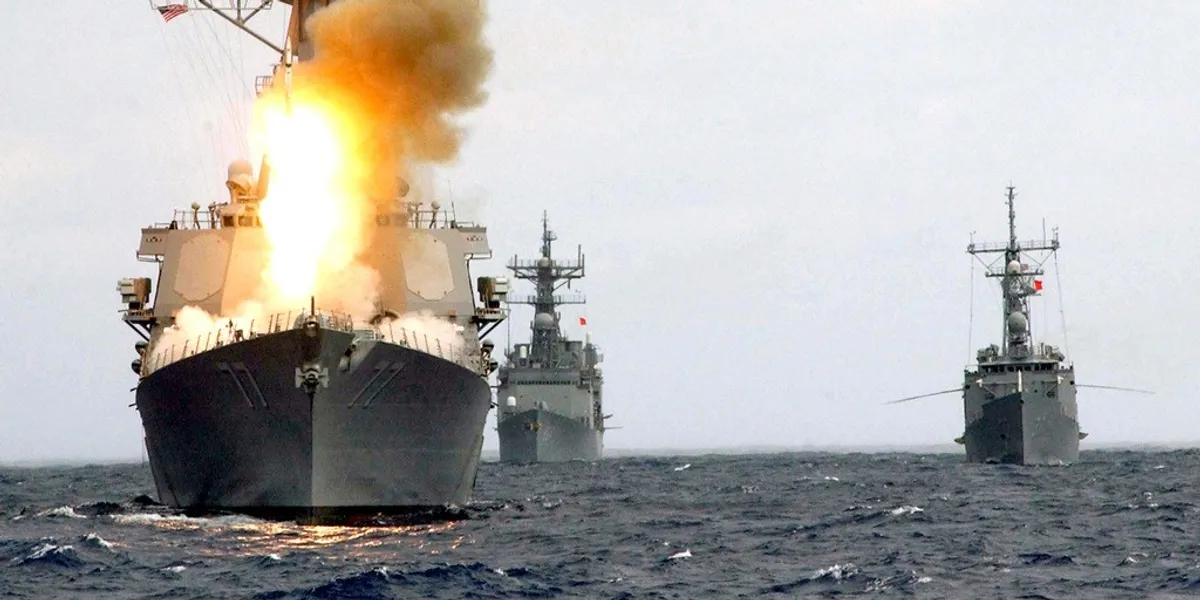
The Red Sea tanker attacks reported early Thursday have pushed an already destabilizing conflict into dangerous new territory. Yemen’s Houthi movement, backed by Tehran, claimed responsibility for striking two Saudi-linked oil tankers, while American forces pressed through a twelfth consecutive night of bombardment inside Iran. Two separate waterways, hundreds of miles apart, are now simultaneously contested — and the global economy is absorbing the shock.
Fuel costs are climbing. Shipping insurance is spiking. Consumer goods that never touch the Middle East are getting more expensive because the routes they travel have become gambling propositions.
A Second Front Opens
The vessels named in the Houthi statement, released through their SABA news outlet, were the Encelia and the Layla. Both reportedly caught fire after being hit.
This marks the group’s first claimed strike on shipping since announcing earlier in the week that it would blockade Saudi-connected traffic moving through the Bab el-Mandeb Strait. The stated justification is retaliatory: the Houthis point to Riyadh’s long-running blockade of Yemen and a recent assault on the airport serving Sanaa, the capital they control.
Saudi state media confirmed damage to the Encelia, citing a transport authority source who described a fire at the vessel’s bow with no injuries reported. The Layla went unmentioned in that account. Britain’s Maritime Trade Operations Center logged a separate report of a tanker hit by an unidentified projectile roughly 80 miles southwest of Al Shuqaiq, again with no casualties.
A senior Houthi figure, speaking without authorization to be named, indicated the shipping blockade would stay in force until Saudi Arabia lifts its own restrictions on Yemen.
Why Bab el-Mandeb Matters So Much
Geography explains the leverage here.
The strait sits at the Arabian Peninsula’s southern tip, the narrow gate linking the Red Sea to the Gulf of Aden. Traffic moving between European and Asian markets funnels through it on the way to or from the Suez Canal.
The volume is staggering:
- Roughly 12 percent of all world trade transits the passage
- About one quarter of global container shipping depends on it
- Alternative routing around Africa adds weeks and enormous cost
Threaten that corridor and you have not attacked a country. You have attacked commerce itself.
Hormuz: The Larger Wound
Meanwhile, the Strait of Hormuz remains effectively shut — and that closure is the real engine driving global economic pain.
In ordinary times, roughly a fifth of internationally traded oil and gas moves through those waters. That flow has been choked off, and the consequences have radiated far outside the region, hitting economies with no stake in the underlying dispute.
Tehran’s position is that it holds the authority to regulate passage and levy fees on vessels using the strait. Before the war, transit was open and free of charge. Iranian forces have targeted ships using an American-supervised corridor deliberately designed to sit beyond Tehran’s jurisdiction.
Washington answered with a renewed blockade of Iranian ports and an expanding aerial campaign across the country.
Escalating Threats Against Infrastructure
The rhetoric has taken an ominous turn on both sides.
President Trump declared on social media that each Iranian strike against shipping in Hormuz — by missile, rocket, drone, or any other means — would be met with the destruction of a bridge or a power plant. The message was written in capital letters and left little room for interpretation.
International legal norms generally forbid attacks on civilian infrastructure unless it is actively serving a military function. Both parties are now edging past that line.
U.S. Central Command framed its operations as an effort to erode Iran’s capacity to endanger civilian sailors and commercial vessels moving through regional waters, with the broader objective of restoring normal shipping.
Iran’s parliament speaker, Mohammad Bagher Qalibaf, who has fronted negotiations with Washington, dismissed the warnings outright, stating that conditions in the strait will not revert to what they were before hostilities began.
Foreign Minister Seyed Abbas Araghchi articulated Tehran’s posture more starkly, describing an eye-for-an-eye doctrine and promising a forceful response to any attack, infrastructure included.
Counting the Cost
The war’s price is becoming impossible to abstract.
Trump appeared at Dover Air Force Base on Wednesday as the remains of four American service members returned home. The previous day, during a contentious Senate hearing, Defense Secretary Pete Hegseth put the financial figure at $37.5 billion spent so far.
Inside Iran, state outlets reported overnight American missile strikes near Ahvaz, Ramshir, and Andimeshk in the country’s west. Two people were reportedly killed in Shalamcheh, a town along the Iraqi frontier.
Iran’s retaliation has focused on energy facilities and desalination plants supplying drinking water to Gulf neighbors — infrastructure that populations in arid states cannot function without. Kuwaiti military officials reported their air defenses engaging hostile drones, characterizing the incoming attacks in blunt terms.
That targeting pattern is telling. Water and power are not military assets in any conventional sense. They are what civilians need to survive an ordinary Tuesday.
Diplomacy Running on Fumes
Efforts to find an exit are faltering.
Iranian Interior Minister Eskandar Momeni recently traveled to Pakistan, one of the more active mediators, hoping to restart talks. What arrangement could plausibly satisfy both sides remains unclear, particularly now that the conflict has narrowed into a contest over control of Hormuz.
An Interior Ministry spokesperson insisted that diplomacy has not been abandoned and that messages continue to move between the parties, though he offered no specifics.
Regional assessments are gloomier. An Arab diplomat, speaking anonymously given the sensitivity involved, said Gulf governments are growing pessimistic about locating any off-ramp and are especially unnerved by the latest exchange of threats. Pakistan and Turkey continue pressing for de-escalation alongside regional states, but the diplomat described near-term prospects as poor.
Speaking at a regional summit in the Philippines, Secretary of State Marco Rubio maintained that the United States remains willing to negotiate, while suggesting Tehran has not demonstrated genuine seriousness. For now, he said, the priority is safeguarding shipping.
What Happens Next
Two chokepoints are now under threat at once. The Houthis have demonstrated they can strike vessels in the Red Sea; Iran has shown it can paralyze Hormuz. Together, those two passages carry a substantial share of the world’s oil and consumer goods.
Every additional strike raises the insurance premiums, lengthens the routes, and pushes costs further down the chain to households that have never heard of Bab el-Mandeb.
Until someone finds a formula that lets both sides step back without appearing to surrender, the water stays dangerous — and the bill keeps growing.
Author
-
Lucienne Albrecht is Luxe Chronicle’s wealth and lifestyle editor, celebrated for her elegant perspective on finance, legacy, and global luxury culture. With a flair for blending sophistication with insight, she brings a distinctly feminine voice to the world of high society and wealth.