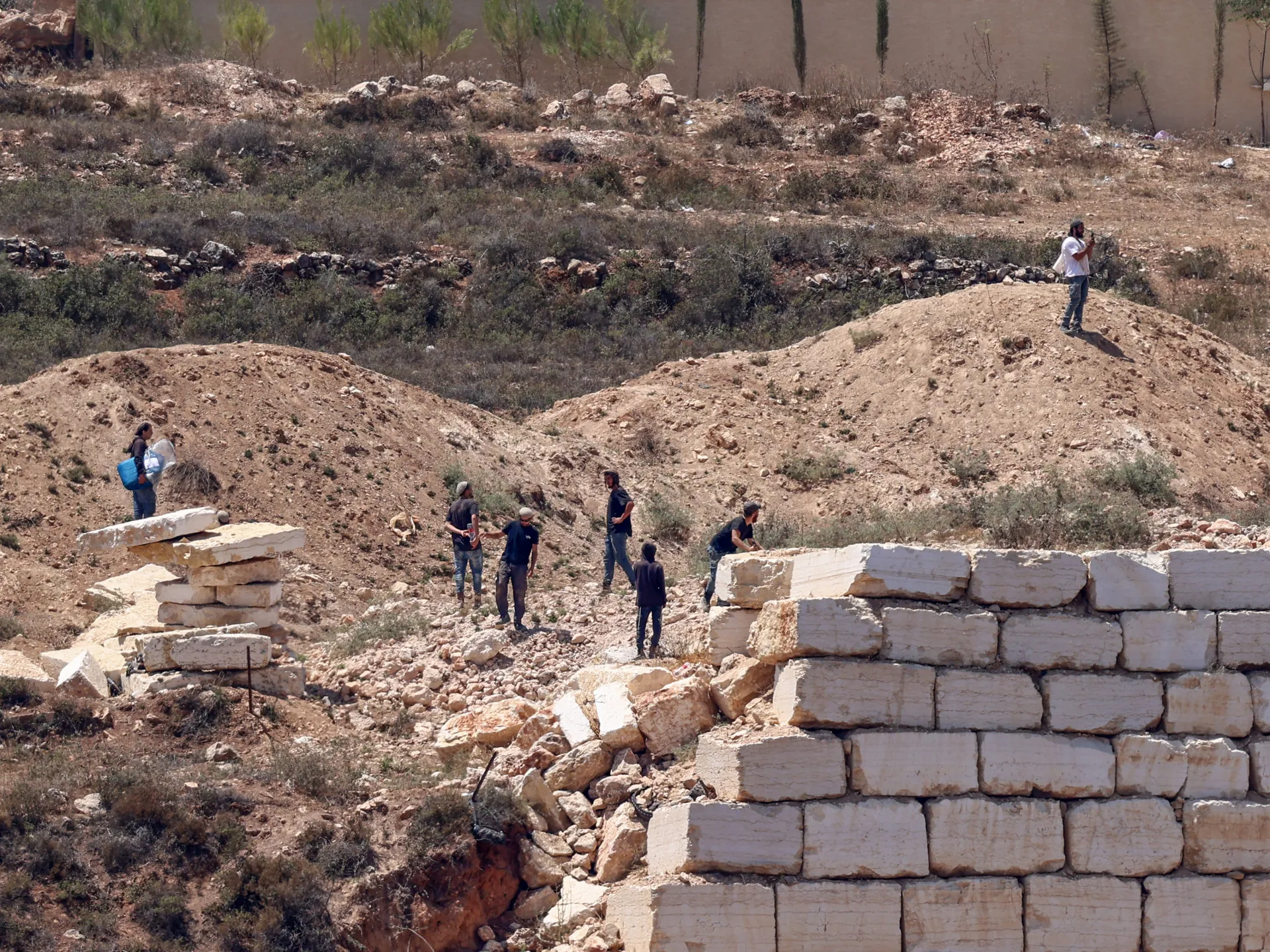
The Qusra siege entered its fourth day this week with two Palestinian families still trapped inside their homes, after Israeli security forces failed to remove the settlers surrounding them. The military has now announced it will send additional troops to the area.
The Abu Ridi and Hassan families live on the outskirts of Qusra, a village south of Nablus in the occupied West Bank. Their water and power were cut off on Sunday, and their food supplies have been running low since.
How the Standoff Began
Settlers blocked the road leading to the families’ gates and severed utilities on Sunday.
The first Israeli soldiers who arrived at the scene prayed with the settlers rather than removing them. The military later said those soldiers would face disciplinary action.
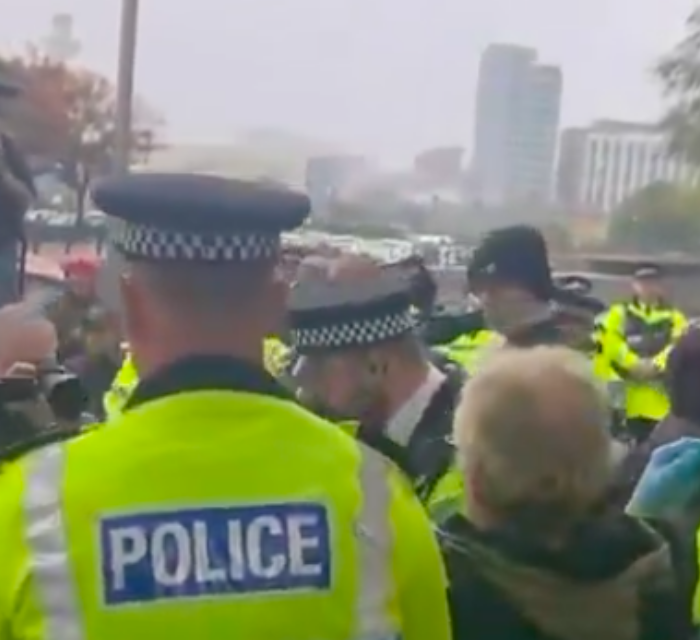
A more forceful attempt came Wednesday, when Israeli security forces tried to dislodge the group. It escalated into confrontation with a larger crowd of settlers and ultimately failed.
Palestinian security camera footage shared with the BBC showed soldiers and border police facing off against a substantial group, using tear gas and stun grenades. Other footage appeared to show forces confiscating the canopy under which settlers had been sheltering while leaving the rest of their equipment in place.
Overnight Developments
Videos from Qusra overnight showed roughly a dozen Israeli security vehicles including a bulldozer. Daylight footage showed a long line of security forces along the road to the village, which remains designated a closed military zone.
Local media reported that a nearby settler outpost was demolished.
Qusay Abu Ridi, trapped in his home since Sunday, told the BBC the house had been attacked again during the night and that some settlers remained in the area, avoiding the army.
His brother, who owns the property, is a Palestinian-American businessman who lodged a complaint with the US embassy.
American Intervention
US Ambassador to Israel Mike Huckabee said his embassy had asked Israel to remove the settlers, describing them in unusually strong terms as Israeli terrorists.
He wrote that the actions of those responsible were intended to intimidate and harass the family, calling the behaviour disgusting and thuggish with no possible excuse.
Language of that severity from a US ambassador regarding settler conduct is notable, particularly from an official with a long record of support for the settlement movement.
What the Settlers Want
The immediate objective in Qusra has not been stated explicitly, but the pattern is established.
The broader stated aim among settlers in the area is to empty the region of its Palestinian residents.
There is a recent precedent nearby. In July, settlers surrounded a Palestinian home in the village of Jalud, close to Qusra, for more than two weeks. The owners eventually fled, and settlers took over the property, where they remain.
A Village Under Sustained Pressure
Village mayor Abdel Azim Wadi told the BBC that residents have observed a clear and sustained pattern of targeting directed at Qusra.
Last month a newly completed mosque was set on fire, with Hebrew graffiti sprayed nearby.
That attack followed a wider escalation triggered by an assault on the Palestinian village of Tal, in which six people were killed: four Palestinians and two Israeli soldiers, one of whom served as a security coordinator for a nearby settlement.
The Numbers Behind the Trend
UN figures give the scale of what has been happening across the West Bank.
This year, 76 Palestinians including 18 children have been killed by Israeli forces or settlers. Over the same period, three Israelis including one civilian were killed in confrontations with Palestinians and in an alleged ramming attack.
Displacement figures are larger still. Since January 2023, 127 Palestinian communities have experienced full or partial displacement, with 47 emptied entirely, affecting more than 6,390 people.
In 2026 alone, roughly 3,800 Palestinians have been displaced due to settler violence, demolitions and evictions. Close to half of them are children.
The Legal and Political Dispute
Settlements are illegal under international law, a position held by the overwhelming majority of states and reflected in UN Security Council resolutions.
The Israeli government rejects that characterisation and has actively promoted rapid settlement expansion.
Speaking at a UN meeting, Israel’s Ambassador Danny Danon dismissed the argument that settlements obstruct peace. He said they would remain and continue growing, citing what he described as biblical, historic and legal rights to the land.
He told the Security Council it must understand a simple truth, that Israel is not going anywhere.
The Enforcement Question
What makes the Qusra case notable is less the settler action than the state response to it.
Israeli forces attempted to remove the settlers and could not. Soldiers who arrived first participated in prayer with them and required discipline. Additional troops are now being deployed to resolve a standoff involving civilians rather than armed combatants.
That sequence has drawn attention to a broader difficulty: the apparent reluctance or inability of Israeli security forces to enforce against settler violence with the speed and force they apply elsewhere.
Critics argue this reflects political constraints within the current government. Supporters of the settlement movement counter that confrontations are being exaggerated and that responsibility lies with a minority.
The Immediate Situation
Two families remain without reliable water, power, or free movement. Food stocks are low. The area is a closed military zone. Some settlers are reportedly still nearby.
Whether the additional troops resolve the situation, and whether the families remain in their homes afterwards, will be the practical measure of what this deployment accomplishes.
Author
-
Lucienne Albrecht is Luxe Chronicle’s wealth and lifestyle editor, celebrated for her elegant perspective on finance, legacy, and global luxury culture. With a flair for blending sophistication with insight, she brings a distinctly feminine voice to the world of high society and wealth.