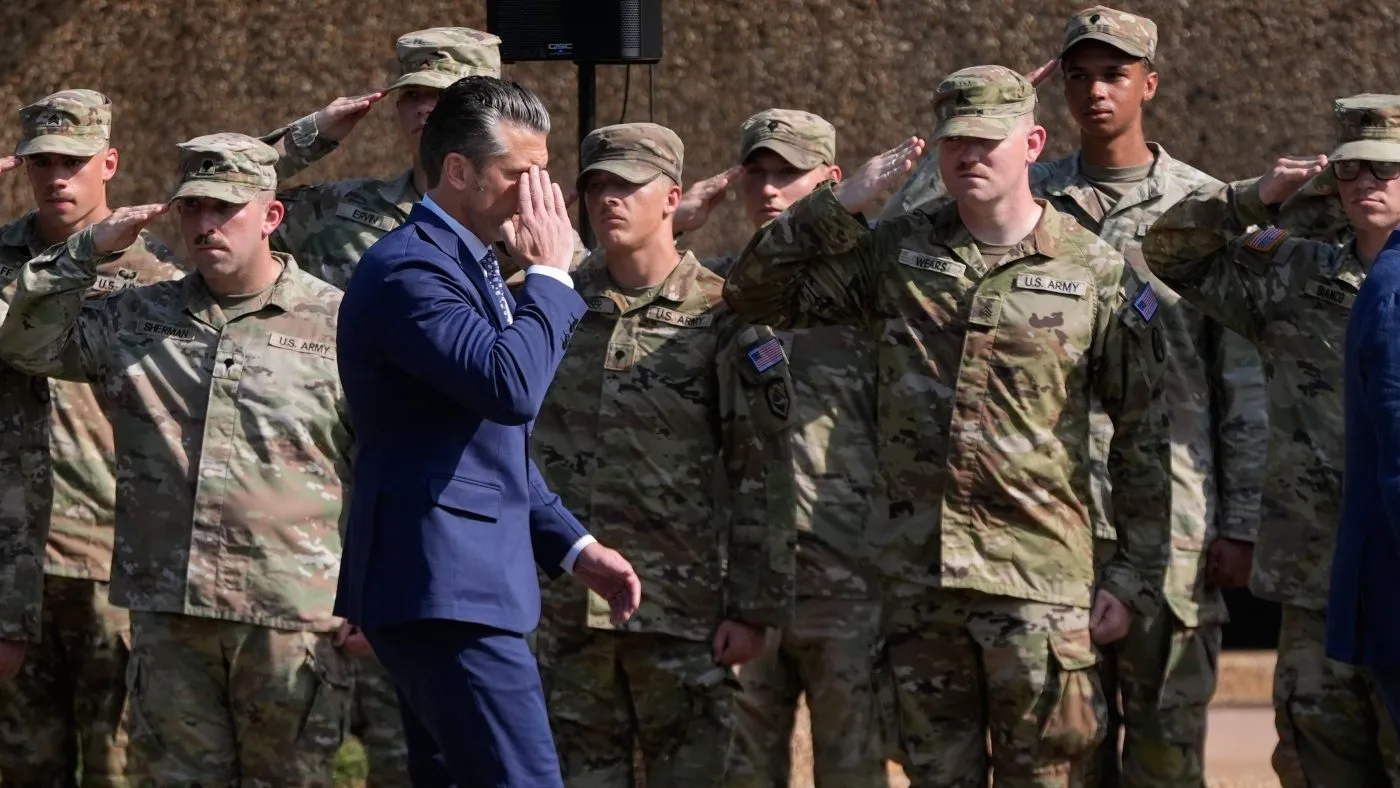
The Hegseth National Guard event in Washington, D.C., turned combative on Thursday, July 2, when Defense Secretary Pete Hegseth lashed out at demonstrators, branding them “ingrates” as he and fellow Trump administration officials praised the work of troops stationed in the capital. The heated moment unfolded during a gathering tied to the D.C. Safe and Beautiful Task Force, where the sound of protest very nearly drowned out the day’s message.
A Sharp Rebuke From the Podium
As demonstrators made their presence known, Hegseth chose to confront the disruption head-on rather than ignore it. He dismissed the commotion as little more than noise, characterizing it as the sound of ingratitude from people he claimed were too consumed by ideology to recognize law and order right in front of them.
He went further, insisting that the effort being celebrated carried no political or ideological agenda of its own. In his framing, the work of the National Guard was simply about common sense and public safety, and the objections being hurled his way reflected a refusal to see that plainly.
The defense secretary then pivoted to gratitude, thanking the assembled soldiers for their service and support. He acknowledged the punishing conditions as well, offering appreciation to the troops who had waited outside in the sun to be part of the event.
Officials Face a Wall of Noise
Hegseth wasn’t the only high-profile figure to draw the crowd’s ire. According to reporting from The Hill, White House Deputy Chief of Staff Stephen Miller and acting Attorney General Todd Blanche were also heckled during the proceedings.
The demonstrators, identified as part of the “Free DC” movement, made their opposition impossible to miss. Rather than relying on chants alone, they turned to an arsenal of noisemakers to interrupt the officials as they spoke, including:
- Whistles blown throughout the speeches
- Horns sounded to disrupt the flow of remarks
The protesters’ target was clear: they were pushing back against the continued presence of the National Guard, which has been patrolling Washington ever since the president ordered the troops into the city following a public safety emergency declaration.
How the Deployment Began
To understand the tension on display, it helps to trace how the military branch ended up patrolling the streets of the nation’s capital in the first place. The roots of the current standoff stretch back to the summer of 2025.
In August of that year, Trump declared a public safety emergency and deployed roughly 800 National Guard troops to Washington. He wasn’t acting alone, either, as several Republican-led states pitched in by sending their own Guard members to assist with the effort.
That initial deployment has since grown considerably. While the federal takeover of the city’s police department wrapped up in September, the National Guard’s presence never went away. Today, more than 4,000 troops remain stationed across the District, a dramatic expansion from those early numbers and a visible reminder of the federal government’s expanded footprint in local affairs.
A Push to “Beautify” the Capital
The National Guard deployment represents only one piece of a broader campaign. In March 2025, Trump established the D.C. Safe and Beautiful Task Force, the very body whose event became the backdrop for Thursday’s clash.
Through the executive order creating the task force, the president instructed federal agencies to focus on improving the appearance of the capital, folding beautification efforts into his larger vision for the city. The initiative reflects a governing philosophy that treats crime, cleanliness, and public order as intertwined priorities warranting direct federal involvement.
A Relationship Under Strain
At the heart of these developments lies an increasingly tense relationship between the Trump administration and the city it governs from. Throughout his second term, Trump has consistently argued for a larger federal role in the District, pointing to concerns about crime, homelessness, and public safety as justification for his interventions.
That approach has not sat well with many local residents and activists, who view the sustained military presence as an overreach into the affairs of a city that has long fought for greater self-determination. The “Free DC” protesters who disrupted Thursday’s event embody that resistance, casting the deployment not as a public safety measure but as an unwelcome imposition on their community.
The competing narratives were on full display during the confrontation. To administration officials like Hegseth, the troops represent a straightforward, nonpolitical commitment to restoring order. To the demonstrators, the same presence symbolizes federal encroachment and a disregard for local autonomy.
Two Visions in Collision
What played out at the task force event was more than a single tense exchange; it was a snapshot of a deeper divide over how Washington should be governed and who gets to make that call. Hegseth’s decision to characterize the protesters as ingrates rather than engage with their grievances underscored just how far apart the two sides remain.
For the administration, events like these are opportunities to spotlight what officials describe as tangible progress on safety and public order. For critics, they are moments to make clear that the federal presence is neither welcomed nor accepted by everyone in the community it claims to serve.
Looking Ahead
With thousands of National Guard troops still deployed and the D.C. Safe and Beautiful Task Force continuing its work, there’s little indication that the friction will ease anytime soon. The administration appears committed to maintaining its expanded role in the District, while grassroots movements like “Free DC” show no signs of backing down from their vocal opposition.
Thursday’s spectacle, with officials praising soldiers over the blare of whistles and horns, is likely to be repeated in one form or another as long as the fundamental disagreement persists. The question of how much authority the federal government should wield over the daily life of the capital remains unresolved, and as long as it does, moments of open confrontation like this one seem destined to continue defining the relationship between the Trump administration and the city of Washington, D.C.
Author