Houthi raids Saudi Arabia reports have surfaced in recent days, revealing that fighters from the Yemen-based group have conducted multiple ground incursions across the border in recent months. The development, which has received little attention in mainstream coverage, signals a significant widening of the conflict beyond Yemen and adds to the pressure on a kingdom already struggling with drone and missile attacks that have forced the cancellation of major international events.
What the Raids Involved
According to Middle East Eye, which cited a Western and Arab official with direct knowledge of the operations, the Houthis have launched several small-scale attacks on Saudi border positions in the country’s mountainous southwest. At least one of the raids took place as recently as the end of October, indicating that the incursions are ongoing rather than historical.
The terrain along that stretch of frontier is rugged and difficult to patrol, offering cover for cross-border movements. The raids reportedly targeted border posts rather than deeper Saudi territory, but their occurrence at all marks a shift from the aerial attacks that have characterised the Houthi campaign against the kingdom.
Captured Equipment
The report added that the Houthis appear to have seized specific small arms known to be used exclusively by Saudi border security forces, suggesting the raids resulted in direct contact with Saudi personnel and the loss of weapons. Observers also indicated that surveillance equipment had been captured.
These acquisitions supplement an existing stock of materiel the Houthis have taken from the ground forces of Yemen’s internationally recognised government, which is backed by Saudi Arabia and operates from Aden. Each captured item offers the group both practical value and propaganda potential.
The Aerial Campaign Continues
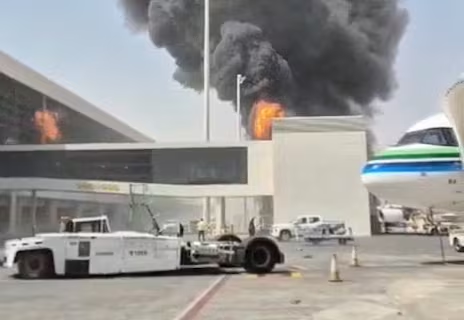
Alongside the ground incursions, Houthi drone and missile launches toward Saudi Arabia have persisted. Saudi authorities announced interceptions of inbound drones and occasionally missiles throughout the early part of this week, continuing a pattern that has made the kingdom’s airspace a recurring battleground.
The combination of ground raids and aerial attacks places Saudi defences under strain on two fronts and complicates efforts to secure the southern border.
Context: The Iran War
The escalation in Houthi activity is closely linked to the broader conflict between the United States, Israel and Iran, which has reignited fighting in Yemen. The Houthis, aligned with Tehran, have positioned themselves as a regional front in that war, striking at Gulf states and Red Sea shipping. Regional officials have warned Washington that any resumption of large-scale strikes on Iran could prompt the Houthis to intensify attacks on Saudi Arabia even further.
The cross-border raids suggest the group is already expanding its operations regardless of how the US-Iran standoff is resolved.
Asian Cup Postponed
The most visible consequence of the security situation came on Tuesday, when the Asian Football Confederation announced it would postpone the AFC Asian Cup, which Saudi Arabia was due to host, until late 2027. The tournament was among the most prominent international sporting events the kingdom had secured as part of its drive to become a global destination for major competitions.
In its statement, the AFC cited exceptional circumstances arising from regional developments, along with substantial logistical difficulties and disruptions to travel. Bloomberg reported that the decision reflected the degree to which Houthi attacks are testing Saudi ambitions to position itself as a hub for high-profile events.
A Growing List of Cancellations
The Asian Cup is far from the only casualty. Dozens of major international gatherings scheduled for September, October and November have already been suspended or pushed back as organisers and participants weigh the risks of travelling to a country under periodic aerial attack.
For a government that has invested enormous sums in sport, entertainment and tourism as pillars of its economic diversification strategy, the cancellations represent a direct blow to a central national project. The reputational damage may outlast the immediate security threat.
Economic Toll
The financial cost of the conflict for Saudi Arabia is expected to run into billions of dollars. Beyond lost revenue from cancelled events, the kingdom has faced attacks on Aramco facilities, the backbone of its oil economy. Disruptions to energy infrastructure carry implications not only for Saudi finances but for global markets already unsettled by the closure of the Strait of Hormuz and the American blockade of Iranian ports.
Gulf states have spent heavily on strengthening their defences since the war began, but the persistence of Houthi attacks shows the limits of what air defence systems alone can achieve against a determined adversary with access to drones and missiles.
Why the Raids Matter
Ground incursions, even small ones, carry symbolic weight. They demonstrate that the Houthis can reach into Saudi territory physically, not merely through projectiles launched from a distance. They also raise the prospect of a more sustained border conflict, with the attendant risk of casualties among Saudi forces and the possibility of escalation.
Saudi Defence Minister Prince Khalid bin Salman recently discussed continued Houthi attacks on the kingdom in a call with US Defence Secretary Pete Hegseth, an indication of how seriously Riyadh views the threat.
Looking Ahead
The trajectory of the Houthi campaign will depend heavily on what happens between Washington and Tehran. A negotiated settlement that includes a regional ceasefire could ease the pressure on Saudi Arabia. A return to full-scale war on Iran would likely bring the opposite.
In the meantime, the kingdom faces a difficult balance: defending its borders and infrastructure while trying to convince the world that it remains a safe venue for the events and investments on which its future plans depend.
Author