The Nevada fake electors case dismissed on Thursday brings a years-long prosecution to an abrupt halt, and with it another swing-state effort to hold Republican electors accountable for the 2020 election aftermath. Six Nevada Republicans had been accused of submitting a certificate falsely declaring Donald Trump the winner of a state he lost by more than 30,000 votes.
The judge concluded the state had not shown they meant to deceive anyone.
What the Court Found
District Judge Mary Kay Holthus based her dismissal on two grounds.
The first concerned evidence of intent. She found the prosecution had not established that the electors set out to mislead government officials.
Her reasoning centred on how publicly the group operated. Because the defendants announced both their actions and their stated purpose openly — rather than concealing what they were doing or quietly attempting to induce official reliance on their documents — she wrote that the circumstances cut against any reasonable inference of fraudulent intent.
The second ground was procedural. Holthus determined that the state had failed to present exculpatory evidence to the grand jury, a defect that goes to the integrity of the indictment itself.
The Underlying Events
Following the 2020 election, the six Republican electors assembled outside the Nevada Legislature and signed a certificate purporting to award the state’s six electoral votes to Trump.
The ceremony was streamed online. That footage later became evidence in the prosecution — a fact that ultimately worked in the defendants’ favour, since it demonstrated they had not attempted to hide anything.
Among the accused were Michael McDonald, chairman of the Nevada Republican Party, and Jesse Law, formerly chair of the Clark County Republican Party. All six pleaded not guilty.
Two Competing Theories
The entire case turned on a single question: what did the defendants think they were doing?
Prosecutors argued the documents were meant to be mistaken for genuine electoral votes — specifically, that they were intended to enter the count that then-Vice President Mike Pence would conduct on 6 January 2021.
The defence offered a different characterisation. Their attorneys described the signing as political theatre, a public gesture designed to draw attention to concerns about the election result. On this account, the electors were preserving their ability to contest the official outcome through legitimate channels and never intended for any government agency to accept their certificate as authentic.
Holthus found the second explanation the more plausible reading of the evidence before her.
The Charges and the Prosecutor
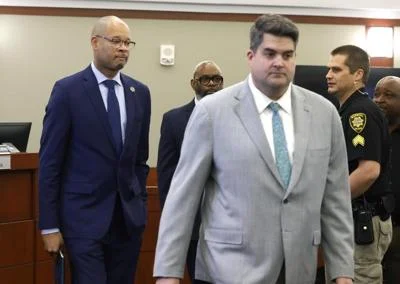
Nevada Attorney General Aaron Ford, a Democrat currently running for governor, brought charges involving forgery and offering a false instrument for filing or record.
His office intends to appeal the dismissal.
Richard Wright, defence counsel for McDonald, responded sharply. He called the plan to appeal hasty and premature, and characterised the decision to continue pursuing the matter as politically driven.
A Complicated Path Through the Courts
The case’s route to dismissal included a notable procedural detour.
Proceedings were originally set for trial in Carson City, the state capital. The attorney general’s office then voluntarily dismissed the case in order to refile it in Southern Nevada.
It landed in Clark County — home to Las Vegas and a jurisdiction that leans Democratic. That venue shift became part of the political criticism surrounding the prosecution, even though it ultimately produced the ruling that ended the case.
Part of a Broader Pattern
Nevada’s outcome is not isolated. Similar prosecutions across the country have unravelled.
Courts have dismissed comparable cases in Michigan and Georgia. In Arizona, Attorney General Kris Mayes recently dismissed her own office’s criminal case, though she pledged to return the matter to a grand jury in pursuit of a fresh indictment. That dismissal was a tactical move, intended to work around a deadline for initiating new grand jury proceedings after her office lost an appeal in June.
At the federal level, a special prosecutor dropped the case charging Trump with conspiring to overturn the 2020 result in late 2024. Those proceedings concluded following his defeat of Vice President Kamala Harris in that year’s election.
One prosecution remains active. A fake electors case in Wisconsin is still ongoing.
Why These Cases Have Struggled
The Nevada ruling illuminates a difficulty running through this entire category of litigation.
Forgery and related offences generally require proof of intent to deceive. That is a demanding standard, and it interacts awkwardly with conduct carried out in public view.
Prosecutors have argued that the documents themselves were designed to function as counterfeit instruments regardless of how openly they were signed. Defence teams have countered that transparency is fundamentally incompatible with fraud — that a person genuinely attempting to trick officials does not broadcast the attempt online.
Holthus sided with the latter view, at least on the record presented to her.
There is also a legal argument the defendants have consistently raised: that alternate slates of electors have historical precedent in contested elections, and that submitting one preserves a challenge rather than fabricating a result.
Where It Stands Now
The appeal will determine whether Nevada’s prosecution is genuinely finished or merely paused.
For now, the tally across swing states leans heavily in one direction. Four cases dismissed, one revival attempt underway in Arizona, and a single active prosecution in Wisconsin.
The legal question these cases raised — whether the elector certificates constituted crimes or contested political speech — remains, in most jurisdictions, unanswered by any verdict.
Author
-
Lucienne Albrecht is Luxe Chronicle’s wealth and lifestyle editor, celebrated for her elegant perspective on finance, legacy, and global luxury culture. With a flair for blending sophistication with insight, she brings a distinctly feminine voice to the world of high society and wealth.