Iran US talks aimed at ending the eight-month war remain alive, Tehran insisted on Monday, even though several days of discussions with Qatari mediators in Doha concluded without a decisive result. Iranian negotiators returned home on Sunday having trimmed their proposals to allow quicker implementation, but the fundamental gap between the two sides appears unchanged, and officials in Tehran privately believe a renewed American attack is more probable than an agreement.
Tehran: The Ball Is in Washington’s Court
Foreign Minister Abbas Araqchi described the mediated consultations as highly intensive. In comments carried by the state news agency IRNA, he said Iran had laid out its conditions and proposals and that everything now depended on whether Washington would act with what he termed political rationality.
The remarks came as anxiety grows that the conflict could flare again once Tuesday’s US midterm elections are over. President Donald Trump has repeatedly promised no new strikes before the vote, but has been far less definitive about what follows.
The Seven-Step Plan, Now Shortened
Foreign Ministry spokesperson Esmaeil Baghaei confirmed that the framework Iran submitted in September remains the basis of discussion. He also verified earlier comments attributed to Araqchi that the plan had been condensed so it could be carried out within two days rather than a week.
The proposal sets out a sequence: the United States lifts its blockade on Iranian ports, Iran reopens the Strait of Hormuz, Washington grants a waiver allowing Iranian oil sales, new sanctions are cancelled, and only then do talks on other matters begin. Trump rejected this blueprint when it was first presented in September.
Baghaei stressed that shortening the timeline does not alter Iran’s core position. Any return to negotiations over the nuclear programme can only happen after Tehran has verified that all its conditions have been fulfilled.
No Movement on Uranium
Asked whether the idea of shipping Iran’s stockpile of highly enriched uranium to a third country had come up in the talks, and whether Tehran might accept such an arrangement, Baghaei gave a flat no. The answer underscores how far apart the two sides remain on the issue Washington considers most critical.
Behind the Scenes
An official briefed on the negotiations said the Iranian delegation’s departure from Doha on Sunday did not signal a breakdown. A draft proposal is being circulated, the official added, though no details were offered.
Qatari mediators flew to Tehran on Monday night to meet Araqchi and discuss a version of the draft US-Iran deal that has been under negotiation for roughly eight days. The continued shuttling suggests both sides see value in keeping the channel open, even if neither is ready to commit.
Mixed Signals From Washington
Trump said on Monday that Iran wants an agreement to end the war and that one could materialise, without elaborating. Oil prices dropped nearly four percent on hopes that the mediation might bear fruit.
Yet Iranian sources told Reuters they still regard a fresh American assault as the more likely scenario. Tehran has warned that it would respond aggressively to any resumed attack, with plans to hit targets both inside and beyond the Middle East.
The War So Far
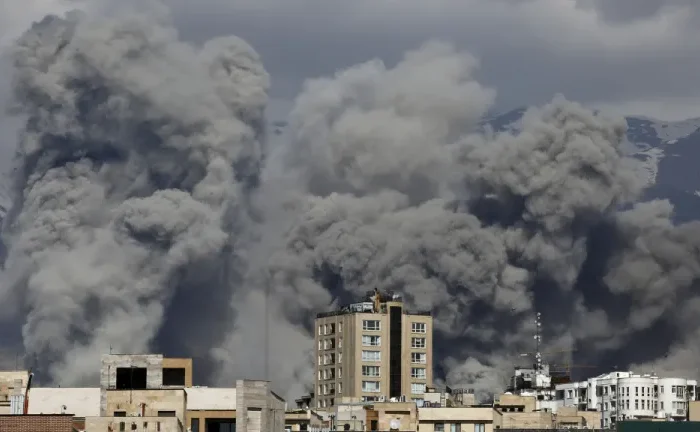
The conflict erupted without warning on February 28, when the United States and Israel launched strikes on Iran. Tehran responded by closing the Strait of Hormuz, prompting the American blockade of Iranian ports. The months since have seen repeated Iranian drone and missile attacks on Gulf states and a reignition of fighting in Yemen.
The economic toll has been global, with energy markets whipsawing on every rumour of escalation or de-escalation.
China and Russia Weigh In
Beijing and Moscow both spoke out on Monday against any return to military action. Chinese Foreign Minister Wang Yi, after meeting senior Iranian security official Ali Bagheri Kani in Beijing, urged all parties to prioritise political solutions over force.
China is stepping up its diplomatic engagement in the region this week. It hosted Oman’s Sultan Haitham bin Tariq al-Said, whose country borders the southern shore of the Strait of Hormuz, and Wang also met Saudi Arabia’s national security advisor Musaed bin Mohammed al-Aiban. The Chinese Foreign Ministry said all sides should work to protect regional energy supplies and shipping routes.
In Moscow, the Foreign Ministry expressed extreme concern over reports of possible new strikes and called for intensified diplomacy. President Vladimir Putin spoke by phone with Iran’s top security official Mohsen Rezaei on Monday, according to Iranian state media.
A Reminder of the Stakes
The fragility of the situation was underscored by news that a Qatari liquefied natural gas tanker had been struck by unidentified objects in the Gulf on Friday. Its operator, Nakilat, disclosed the incident on Sunday. While attacks on oil tankers have been frequent throughout the war, strikes on LNG carriers have been rare; the last reported case involving a Qatari vessel occurred in early July.
The incident serves as a stark reminder that even as diplomats trade drafts, the waters of the Gulf remain dangerous and the global energy system remains exposed.
What Comes Next
The coming days will be decisive. With the midterms concluded, Trump will face a choice between pursuing the draft deal under discussion or ordering a return to military operations. Iran, for its part, has made clear it will not negotiate on nuclear matters until its preconditions are met, and it is preparing for the worst.
Whether the condensed seven-step plan can bridge the divide, or whether it simply formalises a stalemate, may become clear before the week is out.
Author