





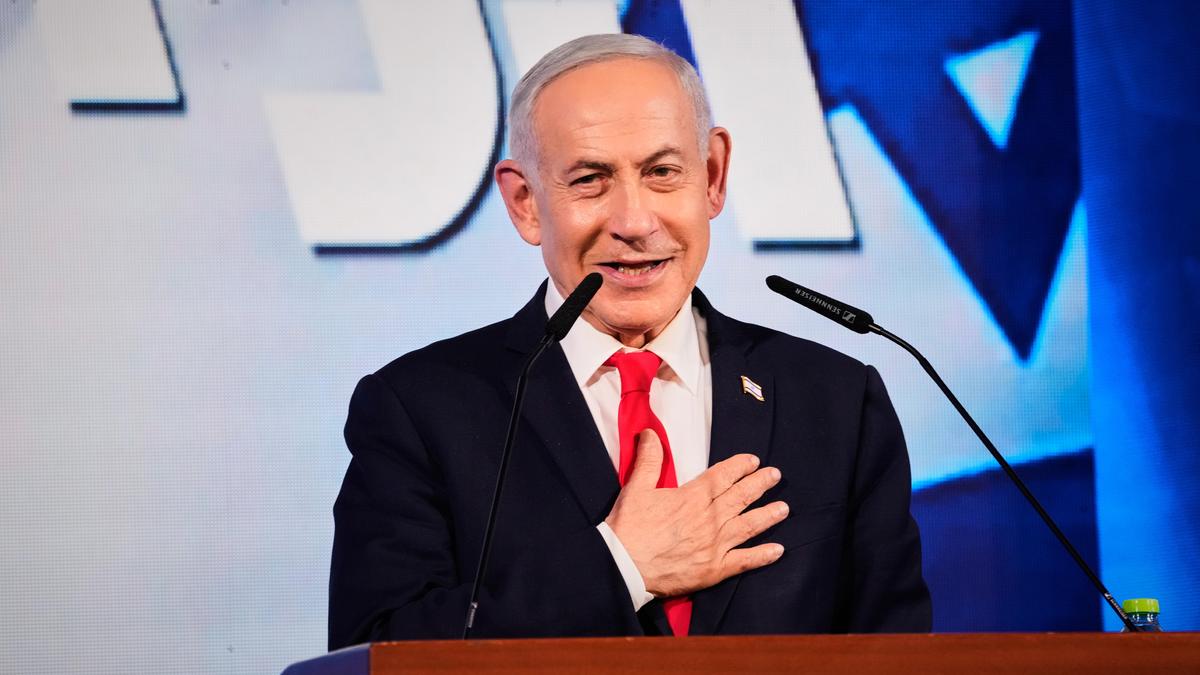
Israel Election Results Leave No Clear Winner as Netanyahu Bloc Falls Short of Majority
The Israel election results are in limbo. With close to 90 percent of ballots tallied, neither of the two main political camps has reached the 61-seat threshold required to govern in the 120-member Knesset. Prime Minister Benjamin Netanyahu’s right-wing alliance currently holds the lead, but not by enough to form a government on its own, setting the stage for what could be weeks of tense coalition negotiations.
Where the Count Stands
By 9pm local time on Wednesday, the Central Elections Committee had processed more than five million votes. On current projections, Netanyahu’s bloc is heading for roughly 53 seats, while the opposition grouping led by former army chief Gadi Eisenkot is expected to take around 48.
That leaves both sides well short of a majority. Final figures could be published as early as Thursday evening, but officials and analysts alike expect the overall picture of deadlock to hold.
Half a Million Ballots Still to Count
One important variable remains. More than 500,000 so-called double-envelope ballots have yet to be added to the totals. These are votes cast by people away from their registered polling stations, a group that includes:
Soldiers serving on active duty
Diplomats stationed abroad
Hospital patients and prison inmates
Election workers and others voting at special stations
Historically, these ballots can shift the distribution of a seat or two. Given how narrow the margins are, even a small movement could affect which combinations of parties are mathematically able to build a coalition.
A Vote Shaped by October 7 and the Gaza War
This was the first national election held since the Hamas attacks of October 7, 2023, and the devastating war in Gaza that followed. For many voters, the ballot functioned as a judgement on Netanyahu’s leadership during the most traumatic period in the country’s recent history.
The 77-year-old prime minister has governed for most of the past two decades. Despite the absence of a clear majority, he appears far from finished. His bloc remains the largest, and in Israel’s fragmented political system, being the biggest player often carries decisive weight once negotiations begin.
What Happens Next
Netanyahu will continue in a caretaker capacity until a new government is sworn in. President Isaac Herzog is expected to begin formal consultations with party leaders next week, after the official results are certified. During these meetings, each faction recommends who should be given the first chance to assemble a coalition.
Herzog has appealed to all parties to avoid dragging the country into yet another election. Israel has endured repeated rounds of voting in recent years because of exactly this kind of stalemate. Coalition building is the norm rather than the exception, and no single party has ever won an outright majority since the state was founded.
Could a Unity Government Emerge?
Because Netanyahu’s camp is likely to remain the largest, some analysts expect him to attempt a broad unity government, potentially one that brings in Eisenkot’s alliance. Such an arrangement would give the government a comfortable majority and might reflect a public mood that favours stability over another election.
However, that scenario faces real obstacles. Eisenkot built his campaign around the promise of change and has framed his movement as a direct response to the failures of October 7. Joining forces with Netanyahu would be difficult to justify to his supporters.
Eisenkot’s Message to Voters
Writing on X on Wednesday, Eisenkot said his alliance was now concentrating on the significant responsibility voters had handed it: delivering change and building what he described as a Zionist mobilisation government.
He characterised the outcome as a vote of no confidence in the government that was in power on October 7, and he criticised what he called a bloc of those who shirk national duty, a reference to disputes over military service exemptions for ultra-Orthodox communities. In his view, that camp has fallen to its weakest point in twenty years.
Likud Alleges Election Interference
The vote also saw record turnout among Arab citizens of Israel, a development that appears to have significantly affected the arithmetic. In response, Netanyahu’s Likud party issued a strongly worded statement accusing Arab parties of stealing the election.
Likud claimed that the result had been distorted through bribery, intimidation, violence, forgery and the use of banned software to turn out voters. The party said it was forwarding hundreds of testimonies and pieces of evidence to the police, the Shin Bet security service and the Central Elections Committee, alleging irregularities at many polling stations in Arab communities.
No independent body has confirmed these allegations, and the elections committee has not indicated that it found widespread fraud.
The Joint List Responds
The predominantly Arab Joint List alliance rejected the accusations and offered a very different interpretation of the results. In a statement published late Wednesday, it argued that preliminary figures showed Arab voter participation had been decisive in denying Netanyahu and his partners a majority, while acknowledging that official totals were still pending.
The alliance said voters had responded to what it called incitement and intimidation by turning out in large numbers. It described its support as a rejection of the current government and its policies, citing home demolitions, racism and conduct during the war. The Joint List said the result reflected a desire among Arab citizens for political unity and for representation capable of defending their rights without compromise.
The alliance pledged to work towards removing Netanyahu from office and preventing his return. It said it was willing to cooperate in building an alternative government.
Support From Outside, Not Within
Joint List leader Yousef Jabareen clarified the limits of that cooperation. He said his alliance would be prepared to support an anti-Netanyahu government from outside the coalition, but would not take ministerial posts within it. This mirrors arrangements seen in earlier Knessets, where Arab parties have occasionally provided a safety net for governments without formally joining them.
A Country Waiting for Clarity
For now, Israel faces a familiar period of uncertainty. The Israel election results have produced a parliament in which no obvious path to a majority exists, and the coming weeks will test whether party leaders can find common ground or whether the country is heading back to the polls.
Much will depend on the final count of the remaining ballots, the recommendations given to President Herzog, and whether Netanyahu or Eisenkot can persuade smaller parties to join them. Until those questions are settled, the prime minister remains in office, and the shape of Israel’s next government remains anyone’s guess.
Author