César Gastélum was killed in Culiacán on Tuesday while broadcasting live to his followers, gunned down in a restaurant parking lot in an attack that his audience watched unfold in real time.
The Mexican influencer becomes at least the tenth content creator slain in Sinaloa since 2024, according to reporting by Milenio, a figure that describes something closer to a pattern than a series of isolated crimes.
How the Attack Happened
Footage reviewed by Reuters shows two men arriving on a motorcycle and approaching Gastélum before opening fire.
Local outlet El Sol de Sinaloa reported that authorities at the scene identified the location as the parking lot of a KFC restaurant on Boulevard Enrique Sanchez Alonso, a major thoroughfare running through the city.
Additional footage reviewed by Milenio captured the moments preceding the shooting. Gastélum was standing with two other men, all three dressed in orange clothing and carrying backpacks resembling those used by local food delivery drivers.
The motorcycle stopped directly beside him. One of the riders fired.
Following the shooting, authorities sealed off the area, and the State Attorney General’s Office ordered the body transferred to the Forensic Medical Service.
Investigations remain ongoing, and no motive has been publicly established.
Who Gastélum Was
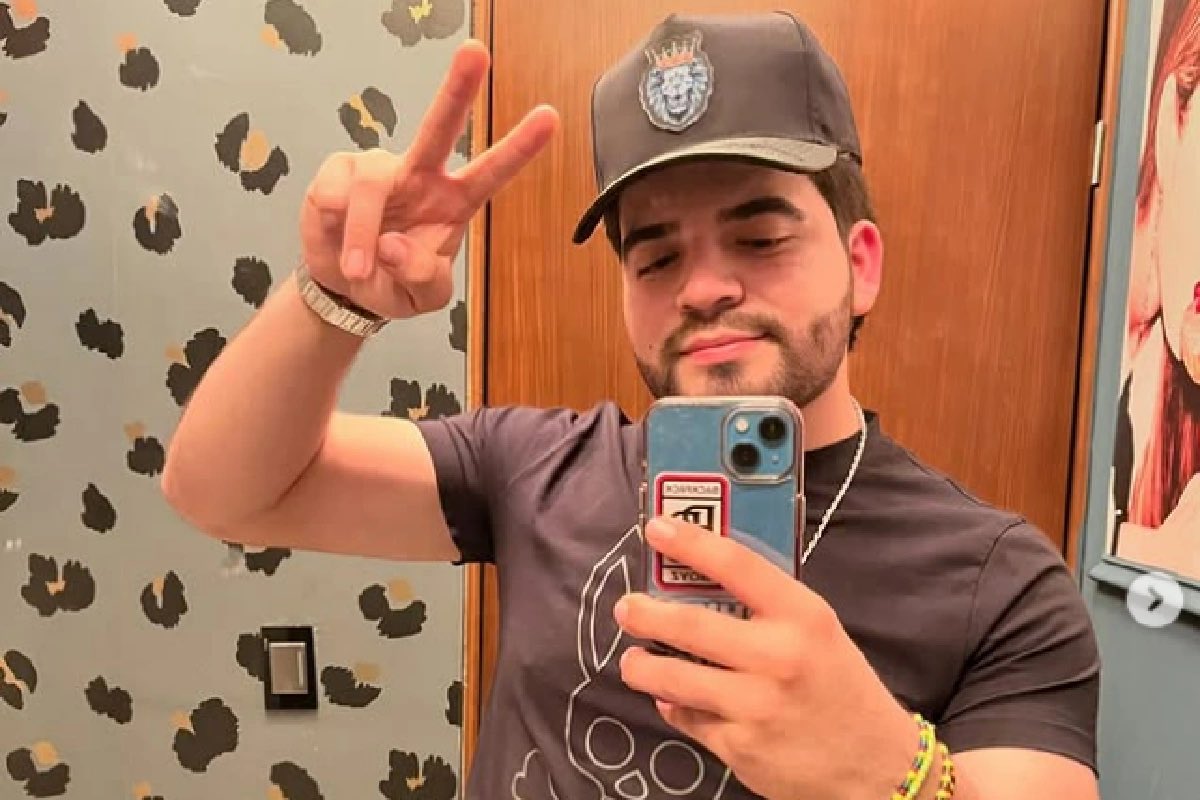
Gastélum had built a substantial following across platforms, with more than 610,000 followers on TikTok and 130,000 on Instagram, generating tens of millions of views.
His content leaned comedic. He cultivated a recognizable visual identity involving glasses, baseball caps, and chain jewelry, and frequently appeared alongside friends and fellow creators rather than performing alone.
He also streamed on Kick under the handle @Compasexor.
Some of his posts featured a persona in which he referred to himself as “padre,” wearing a large golden crucifix along with fabric resembling a Christian stole, a bit of comedic character work that formed part of his recurring material.
In his final TikTok post, he wore a cowboy hat and filmed himself eating beside a creator using the username @La Beba.
Milenio reported that Gastélum was from Culiacán, meaning he was killed in his own city.
A Pattern Across Sinaloa
Gastélum’s death fits into a grim sequence that has developed over roughly two years.
At least nine other content creators have been killed in the region since 2024. That concentration in a single Mexican state suggests creators have become a specific category of target rather than incidental victims of broader violence.
Early last year, an aircraft dropped pamphlets over Culiacán containing threats directed at influencers and artists alleged to have ties to a faction of the Sinaloa cartel, according to CBS News.
That method of communication is worth noting. Distributing printed threats from an aircraft over a city is an act of public messaging, designed to be seen widely rather than delivered privately to individuals.
The Valeria Márquez Case
The most internationally recognized case remains that of Valeria Márquez, a 23-year-old influencer killed in 2025 in Zapopan, Jalisco.
Prosecutors said she was shot while livestreaming from her workplace, a circumstance that drew substantial coverage outside Mexico and raised similar questions about why creators specifically were being targeted.
The parallel with Gastélum’s death is difficult to miss. Both were killed on camera, mid-broadcast, in the middle of ordinary activity.
Why Creators Appear Vulnerable
The reasons behind these killings have not been established in most cases, and speculation risks getting ahead of evidence.
What can be observed is structural. Social media creators in regions with significant cartel presence occupy an unusual position:
They are highly visible, with locations, routines, and associates often documented publicly
Their earnings and lifestyle are displayed openly, which can attract extortion attempts
Their content sometimes intersects with cartel-adjacent aesthetics, music, or figures, whether intentionally or not
They typically lack the security resources that businesspeople or public officials of comparable visibility would maintain
That combination creates exposure. A creator broadcasting live is, by definition, announcing where they are.
The Broader Picture in Culiacán
Culiacán has experienced sustained violence connected to factional conflict within the Sinaloa cartel, which has fractured in recent years and produced open confrontation between competing groups.
Civilians have been caught in that conflict repeatedly, and the city has seen periods where ordinary commerce, schooling, and movement were substantially disrupted.
Against that backdrop, the targeting of influencers reads less as an anomaly than as one expression of a wider breakdown in security.
What Remains Unknown
Authorities have not identified suspects, offered a motive, or indicated whether they believe the killing connects to the earlier deaths of other creators.
The delivery-driver clothing worn by Gastélum and his companions has not been explained publicly, and it is unclear whether it relates to work, content, or something else entirely.
For his audience, the answers are secondary to the fact of watching someone die during what began as an ordinary broadcast. That experience, now repeated across multiple cases in Mexico, has become its own form of public trauma.
Author
-
Lucienne Albrecht is Luxe Chronicle’s wealth and lifestyle editor, celebrated for her elegant perspective on finance, legacy, and global luxury culture. With a flair for blending sophistication with insight, she brings a distinctly feminine voice to the world of high society and wealth.