A wave of South Africa anti-migrant violence has left foreign nationals living in fear, as threats, mob attacks, and a looming deadline drive thousands to flee the country. What began as escalating rhetoric has hardened into a campaign that targets some of the most vulnerable people in the nation’s poorest communities.
A Chilling Ultimatum
For months, anti-migrant sentiment had been simmering across South Africa. For Kaunga Nyirenda, a Malawian gardener living in a Johannesburg suburb, it became personal in early June.
Two men confronted him with a stark choice: leave the country or face death. According to Nyirenda, they demanded to know when he would go, telling him they wanted to fix their country and warning that if he didn’t leave, he would do so in a coffin, since they wanted no foreigners remaining after June 30.
His experience is far from isolated. It reflects a broader surge in hostility that has swept through the country in recent weeks.
Protests Turning Violent
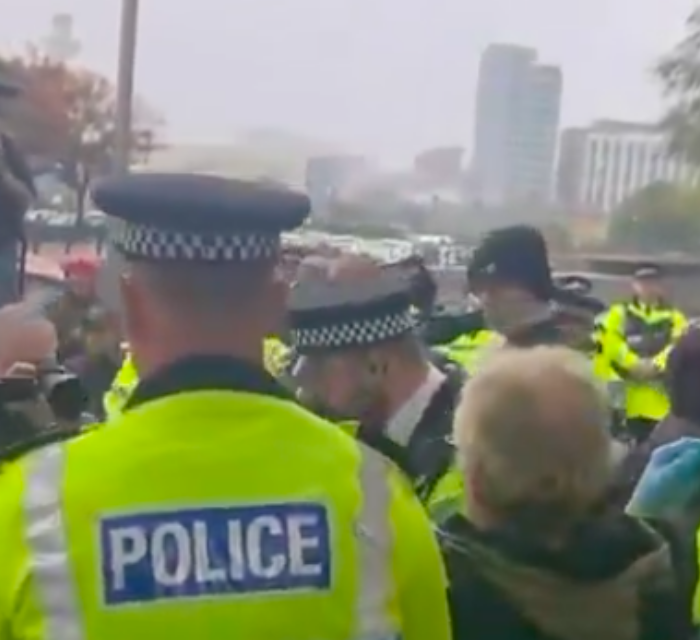
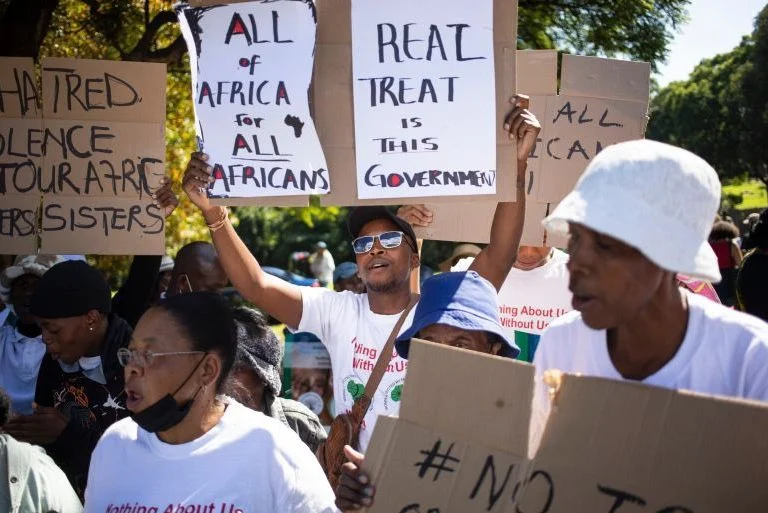
The unrest has been fueled by protest groups and self-styled vigilantes who insist their rallies are peaceful. Yet their demonstrations have appeared to spark violent attacks on foreign nationals, targeting both documented and undocumented migrants alike.
The accusations driving the anger follow a familiar pattern, with foreigners blamed for a range of societal problems:
- Taking jobs away from South Africans
- Committing crimes
- Straining public services
One group, March & March, called for mass protests if its demands weren’t met, including the immediate and massive deportation of all undocumented foreigners in the country. The mounting tension has raised fears of a violent climax as the month draws to a close.
The Government Responds
South Africa’s leadership has pushed back firmly against the so-called deadline. President Cyril Ramaphosa warned that the government would not tolerate any attempts to destabilize the country, whether through marching or other means.
He has repeatedly condemned attacks on foreign nationals, insisting they don’t represent the views of South Africa’s people or reflect government policy. Ramaphosa placed blame on opportunists exploiting the legitimate grievances of the poor under the false guise of community activism, and said security forces were on high alert to respond to any unrest.
A Deadly Toll
The violence has already claimed lives, prompting police investigations into several murders of foreign nationals. The scale of the attacks has been devastating for affected communities.
Among the documented incidents:
- Two Mozambican men were killed during violence in late May in Mossel Bay, where more than 50 shacks in an informal settlement were burned; Mozambique later said five of its citizens had died in what it called xenophobic attacks
- A Malawian man was allegedly killed by a mob at an informal settlement in Pietermaritzburg, near Durban
- The Pietermaritzburg attack forced hundreds of migrants to seek shelter in churches and mosques
As the deadline approached, the exodus of migrants continued, with fear of further mob violence spreading through poor neighborhoods. A video circulating on social media, appearing to show a young man wielding a machete and counting down to the deadline, only deepened the dread among people like Nyirenda.
The Groups Behind the Deadline
The current turmoil grew out of organized campaigns against undocumented migrants, led by movements including March & March and Operation Dudula, whose name in Zulu roughly translates to “push back” or “force out.”
Operation Dudula has pursued an aggressive agenda, targeting foreign-owned businesses, stopping people in the streets to check identification, and trying to block foreign nationals from accessing public hospitals. A prominent figure in the movement, Nkosikhona Ndabandaba, known as “Phakel’umthakathi,” commands more than 1.7 million Facebook followers and has organized demonstrations featuring men in traditional Zulu warrior regalia.
Ndabandaba told CNN he was the architect of the June 30 deadline. In one video, he tells a Congolese man to leave South Africa without even asking about his legal status, urging him not to wait and warning that after the deadline he couldn’t control the people of South Africa. He later said his campaign targets undocumented migrants of all nationalities and denied his supporters had engaged in violence, blaming unrest on other groups.
The Numbers Leaving
The campaign has already produced a significant outflow of people. South Africa’s Border Management Authority reported that more than 13,000 foreign nationals had either been voluntarily repatriated or deported in just the last fortnight.
Those departing included roughly 9,000 Malawians, 3,000 Zimbabweans, 900 Ghanaians, and 300 Nigerians, illustrating just how widely the pressure has been felt across different migrant communities.
A Deeper Economic Backdrop
Ramaphosa has acknowledged the challenge of illegal immigration, saying his government is working to address it. He noted that undocumented migration places pressure on public services and distorts the labor market by allowing some employers to exploit cheaper labor, while still cautioning against scapegoating migrants for the country’s economic woes.
Those woes run deep. More than three decades after the end of apartheid, South Africa still wrestles with high unemployment, one of the world’s highest murder rates, and profound racial inequality. The unemployment rate stood at 32% in the first quarter of 2026 after 350,000 jobs were lost, with young people hit hardest. Even so, as one of Africa’s leading industrial economies, the country remains a magnet for migrants willing to take low-paying jobs in domestic work, security, and agriculture.
A Recurring Pattern
Attacks on foreign nationals are not new to South Africa, which has endured repeated waves of xenophobic violence. More than 3 million immigrants, about 5% of the population, live in the country, most having come from neighboring Southern African nations in search of work.
Researcher André Duvenhage of North-West University explained that migrants are often hired because employers see them as willing to accept lower wages and, as non-citizens, lacking many labor protections. Some employers also perceive them as having a stronger work ethic than certain local citizens. Historically, resentment has focused on migrants from Zimbabwe, Mozambique, and Malawi, with similar hostility aimed at Ghanaians and Nigerians.
The current tensions have revived memories of past tragedies, including the xenophobic violence of 2008 that killed at least 62 people and displaced thousands, with further deadly attacks flaring in 2015 and 2019.
A Racialized and Class-Based Divide
Some observers argue the violence reflects deeper fault lines in South African society. Tonye Irims, who runs solar energy companies in Nigeria and South Africa, told CNN the hostility is broadly aimed at any suspected Black African migrant living and working near low-income South African Black communities.
He described the violence as heavily racialized and classed, pointing out that wealthier foreigners and White residents are rarely targeted. In his analysis, South Africa’s economy remains largely controlled by a wealthy White Afrikaner minority, leaving many Black South Africans with limited opportunities. Unable to challenge the political and corporate structures he blames for their poverty, many instead direct their frustration at defenseless Black immigrants.
Irims called it a painful paradox: migrants face the greatest risk of attack yet receive little international protection, while a group retaining significant economic privilege has been granted expedited political asylum abroad. He was referring to the United States’ decision to resettle Afrikaners after President Donald Trump claimed a genocide was taking place in South Africa and that White farmers were being killed and their land confiscated.
One Man’s Painful Decision
For Nyirenda, the protests feel deeply hypocritical because they selectively target Black African migrants. Despite building a life in South Africa over the past 16 years, the 38-year-old has decided to return to Malawi.
He captured the bitter irony in his own words, observing that the protesters only seem to have energy for fellow poor Black Africans. He questioned why anyone would fight someone who is just as hungry as they are while leaving untouched those who have taken all the wealth.
An Uncertain Future
As the deadline passes, it remains unclear what the anti-migrant groups will do next, leaving thousands of foreign nationals in a state of anxious uncertainty. The combination of organized campaigns, sporadic violence, and deep economic frustration has created a volatile situation with no easy resolution.
What’s clear is that the human cost is already mounting, measured in lives lost, families uprooted, and communities living in fear. For many migrants who came seeking opportunity, the dream of a better life in South Africa has given way to a desperate calculation about survival, and for some, like Nyirenda, the only safe choice is to go home.
Author