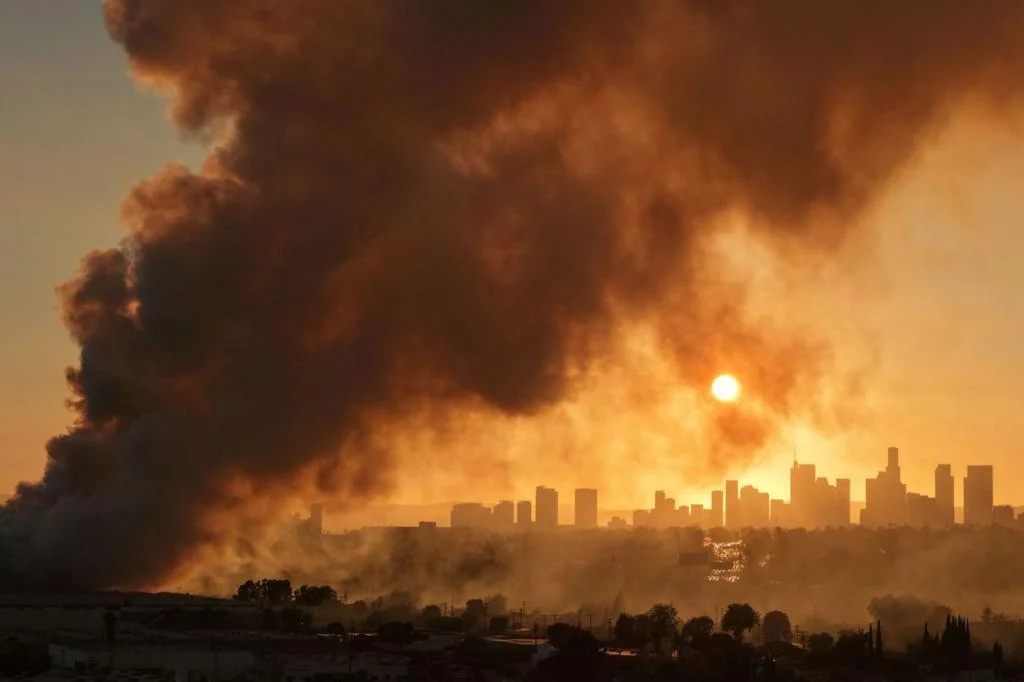
A Los Angeles warehouse fire has been burning for six days at a massive frozen-food storage facility near downtown, and firefighters still have not been able to step inside the building. As the blaze stretches on, crews have resorted to tearing away sections of the exterior walls in an effort to reach the flames.
Thick smoke continues to pour from the roughly 500,000-square-foot facility, which is wrapped in heavy insulation like a freezer and topped with solar panels. With homes sitting directly across the street in the working-class neighborhood of Boyle Heights, the fire has become both a stubborn firefighting challenge and a serious public health concern.
Why Is the Fire So Hard to Put Out?
A typical large warehouse fire can usually be extinguished within a day. But cold storage facilities are a different story entirely. According to authorities, these fires can burn for weeks because of the very features that make the buildings effective freezers.
Los Angeles Fire Department spokesperson Jamie Stewart explained that the heavily insulated ceilings, roofs, and walls trap heat and make the flames extremely difficult to reach and extinguish.
Firefighters face several major obstacles inside the structure:
- Floor-to-ceiling heavy-duty steel rack shelving that poses a serious danger
- A roof that cannot be easily ventilated because of the thick insulation
- Limited visibility, since crews can’t release trapped gas and smoke the way they normally would
The scale of the interior only adds to the difficulty. Fire Chief Jaime Moore described rows standing 65 feet tall and stretching 650 feet long, packed with pallets and boxes, similar to walking through a Costco or Home Depot warehouse. Inside, an estimated 85 million pounds of frozen food was being stored.
Moore offered a sobering assessment, suggesting firefighters may never be able to enter the building at all. He noted that the entire roof has been compromised and is now resting on top of those towering 65-foot racks, creating conditions far too dangerous to risk sending crews inside.
For now, firefighters are stripping away exterior walls on certain sides of the building and blasting it with heavy streams of water from the outside.
What Caused the Fire?
The blaze sparked on Wednesday, and while the official cause is still under investigation, early signs point to work being done on the roof.
Lineage Logistics, the Michigan-based company that operates the facility, said it believes the fire started while subcontractors were working on the rooftop solar panels. The company emphasized that the cause has not yet been officially determined and said it is cooperating with fire officials.
Chief Moore offered additional context, explaining that preliminary information indicates Lineage, which rents the warehouse, was leasing the roof to a solar company. That company was reportedly working on the panels when the fire ignited. According to Moore, the workers tried to put it out themselves, called 911, and from there the situation quickly spiraled out of control.
What Was Stored Inside?
The facility, known as Big Bear, served as a key link in the West Coast food supply chain. According to Lineage, the warehouse stored a range of products before they were shipped out to grocery stores and restaurants, including:
- Seafood
- Pork
- Beef
- Poultry
The sheer volume of frozen goods inside helps explain why the fire has proven so persistent and why so much smoke continues to billow into the surrounding area.
Growing Air Quality Concerns
The fire’s impact extends well beyond the building itself. The South Coast Air Quality Management District extended its poor air quality warning for the area, cautioning that the blaze keeps producing smoke affecting the neighborhood as well as areas to the north and east.
Of particular concern are microscopic particles known as PM2.5, which can travel deep into the lungs and pose health risks. With light winds expected to push the smoke in multiple directions, officials warned that other parts of metropolitan Los Angeles could also be affected.
Residents in the hardest-hit areas were given clear safety guidance:
- Avoid vigorous physical activity
- Close all windows, doors, and vents
- Turn off air conditioning
- Keep people and pets in an interior room
- Wear an N95 or P100 mask if going outside is necessary
Community Demands Answers
For people living near the warehouse, the lingering smoke has sparked frustration and worry. Los Angeles City Councilmember Ysabel Jurado, who represents Boyle Heights, said residents are desperate to know exactly what materials and chemicals were inside the warehouse, what has already burned, and what is still burning.
Jurado stressed that air quality results should include this information and be released in both English and Spanish, using language ordinary people can easily understand.
She described a community on edge, with families, workers, and other residents seeing the smoke, smelling strong odors, and discovering ash and debris near their homes and businesses. As she put it, there still isn’t enough clear information about what burned and what may continue to burn.
The Bottom Line
The Los Angeles cold storage fire highlights just how uniquely challenging these blazes can be, combining dangerous structural conditions with serious environmental and health risks. With firefighters unable to enter the building and the flames still active days later, both crews and nearby residents face an extended ordeal.
As the investigation continues and air quality concerns persist, the people of Boyle Heights are left waiting for answers and watching the smoke that refuses to clear.
Author