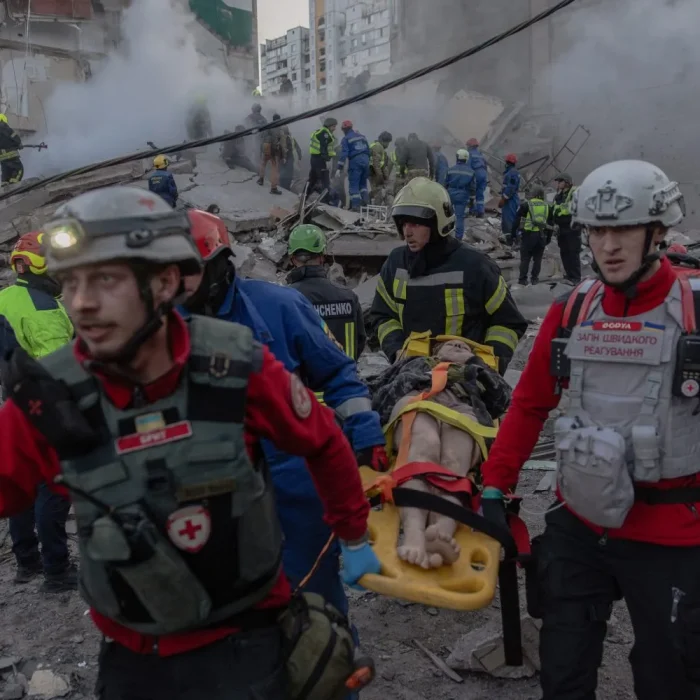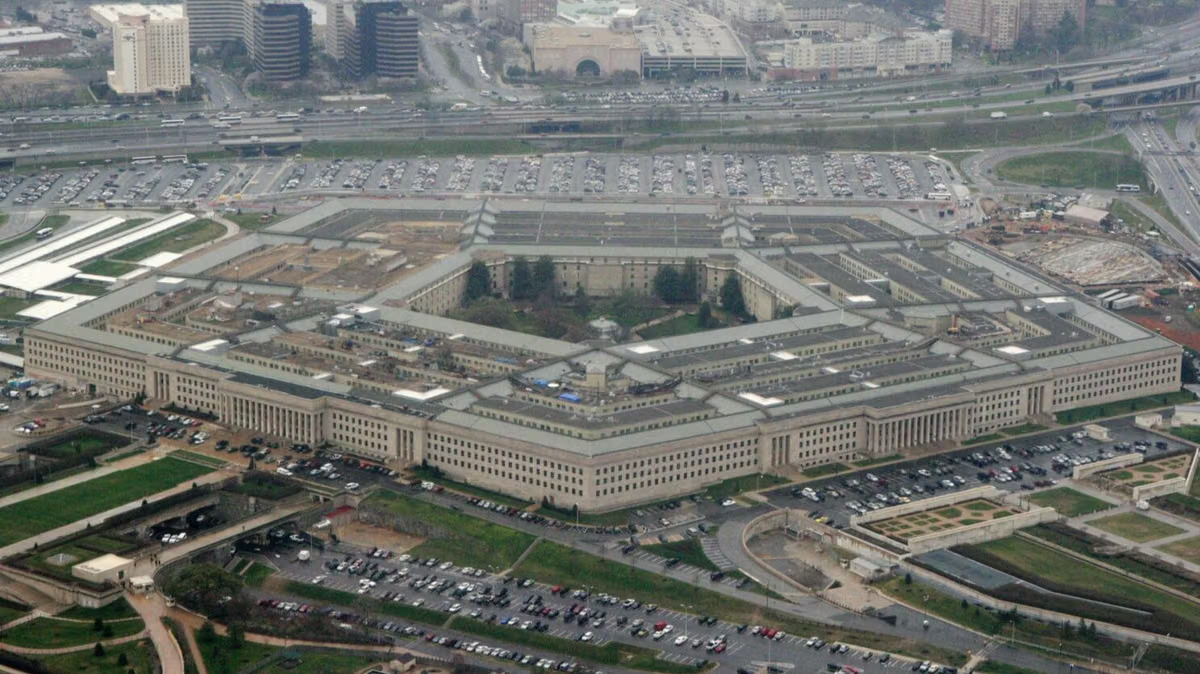
The Pentagon Iran war casualties record shifted again over the weekend, with the defense department quietly adding more than 140 wounded service members to its official database — and introducing an entirely new category that critics say exists to serve a legal argument rather than an accounting one.
The Defense Casualty Analysis System now includes a heading labeled “Overseas Operations,” covering personnel killed and wounded starting July 7. That date is not arbitrary, and it sits at the center of the dispute.
What the Numbers Now Show
Under the updated database, the official toll for the earlier phase of the conflict — designated Operation Epic Fury — stands at 14 service members killed and more than 400 wounded in action.
Those figures represent a reduction from what the department had listed only days earlier, when the record showed 18 deaths and 482 wounded.
Combining the revised Epic Fury totals with the newly separated category produces a fuller picture: 18 American troops killed and 624 wounded since the United States launched its campaign against Iran on February 28.
In other words, the overall count did not shrink. It was split.
Why the Split Matters
The reason for the division traces back to the War Powers Act of 1973, a law requiring a president to terminate military operations within 60 days unless Congress authorizes them to continue.
The Trump administration has argued that the April ceasefire with Iran stopped that clock on May 1, closing out the initial period of the conflict. Under that reading, the fighting that resumed on July 6 constitutes a new operation rather than a continuation of the old one — and a new operation restarts the statutory countdown.
Separating the casualty figures at July 7 follows directly from that interpretation. Analysts and officials have questioned whether casualties from renewed fighting should be tallied apart from Epic Fury at all, noting that such a division would be without precedent.
How the Shift Became Visible
The change surfaced earlier this week in a way that was difficult to miss.
The Pentagon’s official online list of service members killed in the ongoing Iran war omitted four soldiers who died during renewed fighting over the weekend. Those same names, however, appeared in a Pentagon press release announcing the formal transfer of their remains back to the United States on Wednesday.
The discrepancy — absent from one official record while present in another — is what drew attention to the reclassification in the first place.
Bipartisan Pushback
Lawmakers from both parties have challenged the administration’s reading of the War Powers timeline.
Rep. Thomas Massie, a Kentucky Republican, responded to the updated figures on X with unusually direct language. He described the arrangement as an absurd ruse, arguing that the Pentagon is pretending there have been two separate Iran wars divided by a brief ceasefire.
His conclusion was blunter still: by exceeding 90 days without congressional authorization, he wrote, Defense Secretary Pete Hegseth is breaking the law and must be held accountable.
That Massie is a Republican matters to the politics here. Objections to the interpretation are not confined to the opposition party, which complicates any argument that the criticism is purely partisan.
The Underlying Constitutional Question
The dispute is narrower than it appears on the surface, and also much larger.
Narrowly, it concerns whether a pause in fighting resets a statutory clock. The administration says yes. Critics say a ceasefire that collapses is a lull in one war, not the conclusion of one and the beginning of another.
More broadly, it touches a tension that has run through American governance since Vietnam. Congress holds the constitutional power to declare war. Presidents have repeatedly conducted extended military campaigns without a formal declaration, relying on emergency authority, prior authorizations or interpretations of the War Powers Act that Congress has rarely tested in court.
The judiciary has historically avoided ruling on these questions, treating them as political disputes between the other two branches. That leaves enforcement almost entirely to Congress itself — through funding, resolutions or political pressure — and Congress has often lacked the votes or the will to act.
Why Casualty Records Carry Weight
Beyond the legal argument, the casualty database serves a public function that makes revisions to it especially sensitive.
Official counts are how a country measures what a war is costing. They inform congressional debate, shape public opinion and stand as the formal record of who was lost. When those numbers move — particularly when they move downward before being redistributed under a new label — the change invites scrutiny regardless of the underlying rationale.
Families of the wounded and killed also rely on official designations for benefits, recognition and formal acknowledgment, which is why classification decisions are rarely treated as merely administrative.
What Happens Next
Several threads remain open. Whether Congress moves on a war powers resolution. Whether the administration formally submits the required notifications for what it now describes as a distinct operation. Whether the casualty categories persist or are eventually merged.
For now, the arithmetic that matters most is the total, which the reclassification does not change: 18 Americans dead and 624 wounded since late February. How those numbers are sorted determines a legal argument in Washington. It does not alter what happened to the people counted in them.
Author
-
Lucienne Albrecht is Luxe Chronicle’s wealth and lifestyle editor, celebrated for her elegant perspective on finance, legacy, and global luxury culture. With a flair for blending sophistication with insight, she brings a distinctly feminine voice to the world of high society and wealth.