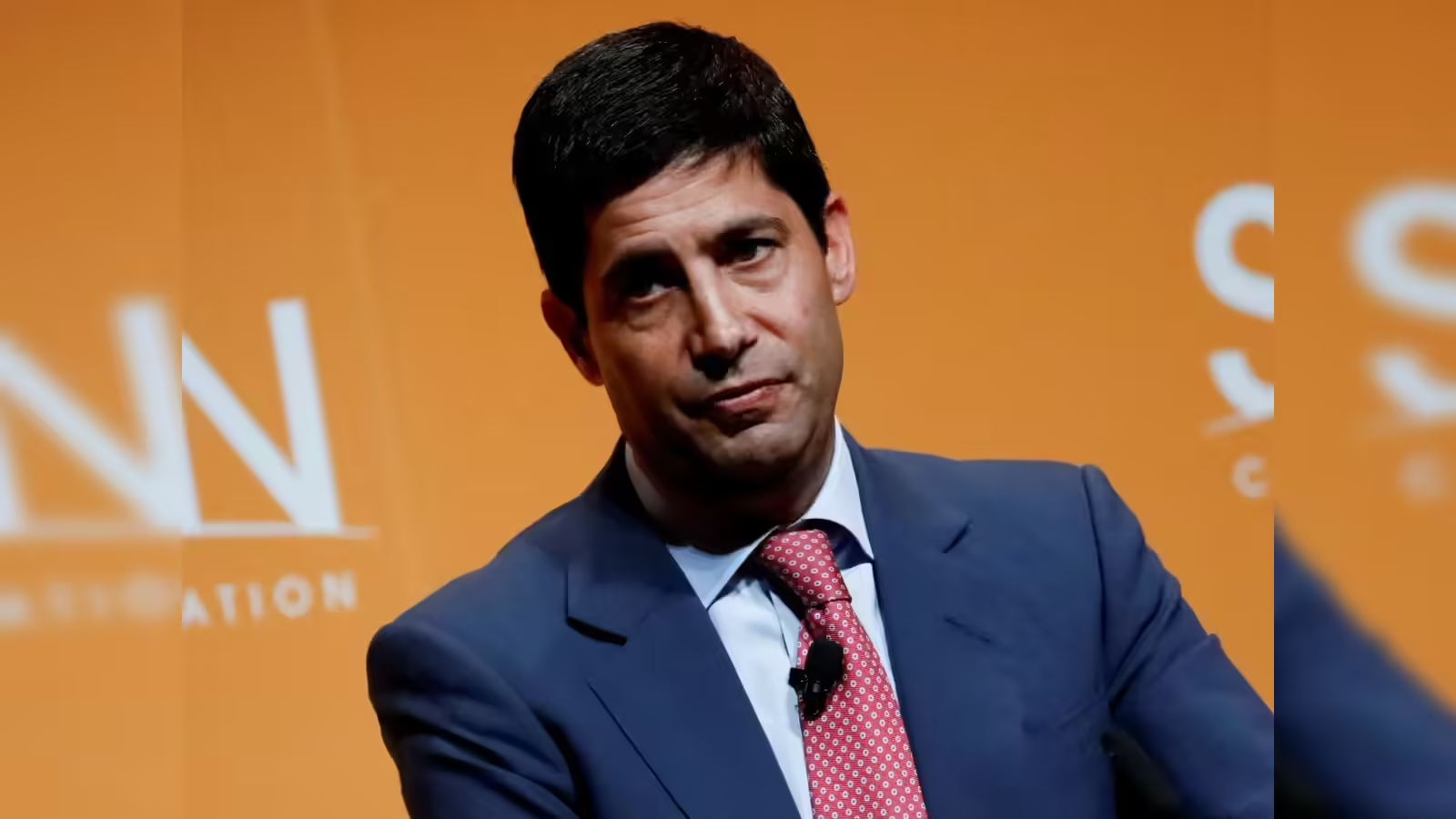
Kevin Warsh’s Fed changes are signaling something far bigger than routine adjustments. In his first major move as Federal Reserve chairman, Warsh has launched what observers are calling a quiet revolution — a sweeping effort to rethink nearly everything about how the central bank sets policy and communicates with the world.
A Calmer Tone, A Bigger Ambition
The most striking shift wasn’t just in policy, but in tone. When Warsh announced his new task forces following his first meeting at the helm on Wednesday, he was emphatic and deliberate — yet notably absent was the combative rhetoric he had used to criticize the Fed over the past year.
The contrast was hard to miss. Last July, while campaigning for the job in a CNBC interview, Warsh had called for “regime change” at the Fed and pointed to a “credibility deficit” caused by its “incumbents.” Now, he spoke of being “incredibly impressed” by what he’d witnessed in his first weeks and praised the meeting as embodying the best of the Fed’s traditions.
What might have become a tense, adversarial environment has instead turned collegial, even as Warsh pursues a fundamental overhaul of how the institution operates.
The Velvet Glove Approach
That blend of bold ambition and gentle execution caught the attention of market watchers. Scott Clemons, chief investment strategist at Brown Brothers Harriman, captured it memorably, describing the moment as “regime change, but in a velvet glove.”
According to Clemons, the new task forces will review and potentially revise nearly every working aspect of Fed practice — from communications and data sources to the balance sheet and the inflation framework. The potential for transformation, he noted, is enormous.
Five Task Forces, One Sweeping Review
At the center of Warsh’s plan are five task forces that will draw on experts from both inside and outside the Fed. Together, they represent a comprehensive examination of the areas that define modern monetary policy — an undertaking no recent chair has matched in scope.
The task forces will scrutinize:
- The Fed’s communications strategy
- The data used to measure the economy
- The central bank’s view on inflation and its causes
- The impact of emerging technology, including artificial intelligence
- The size and composition of the Fed’s $6.7 trillion balance sheet, along with a possible path to reducing its holdings
Warsh framed the mission in ambitious terms, saying the groups would start from first principles, ask hard questions, examine current practices, weigh alternatives, and propose next steps for policymakers. He emphasized a shared goal: a Federal Reserve that is clear-eyed about its mission, fit for purpose, and focused on the future.
Fed Veterans Voice Support
Warsh’s decision to strike a positive, consensus-building tone came as little surprise to longtime Fed observers, several of whom endorsed his approach.
Former central bank Vice Chair Roger Ferguson noted that anyone familiar with the Fed knows change typically happens exactly as Warsh is pursuing it — through task forces that build consensus. He suggested some practices could helpfully be eliminated, while others would require caution.
Former Cleveland Fed President Loretta Mester, who spent nearly four decades at the central bank and served on a communications subcommittee, offered a similar view. She pointed out that the issues Warsh is examining are ones the Fed has explored before, but credited him with organizing the work and accelerating the timeline. While supportive of the study, she stressed that the real test will come with the recommendations and the changes Warsh ultimately chooses to make.
Overhauling Communication
One of the most visible changes already underway involves how the Fed communicates. The post-meeting statement abandoned much of the boilerplate language of the past, offering instead a stripped-down summary of the committee’s decision and its view of economic conditions.
In a notable structural shift, the statement opened with the actual rate decision — left unchanged, as expected — echoing the format the Fed used before March 2009. Since the financial crisis era, statements had typically begun with an assessment of the economy.
Mester welcomed the return to the older format and praised the removal of unnecessary boilerplate. She described the Fed’s longstanding “Hotel California problem,” where phrases, once added to statements, proved nearly impossible to remove. The cleanup, she said, was a much-needed purging.
Still, she flagged one concern: the statement also dropped so-called forward guidance language. Officials, she suggested, may eventually need to offer more clarity about the Fed’s “reaction function” — how and why it adjusts policy in response to economic conditions.
More Reforms on the Horizon
The task forces are expected to reach into many corners of Fed operations. Among the practices likely to face scrutiny are the “dot plot” rate forecasts from individual FOMC participants and the format of the news conferences chairs have held for the past 15 years.
The balance sheet is another major target. Warsh has long objected to the Fed’s large footprint in bond markets, which expanded dramatically during the 2008 financial crisis and again during the 2020 pandemic.
Inflation measurement will also come under review, particularly after the Fed spent five years above its target following the now-infamous “transitory” call of 2021 and 2022. Beyond that, the reviews will examine how the Fed gauges the broader economy, with an anticipated push toward greater use of data and analytics.
A New Era for Monetary Policy
The significance of Warsh’s approach has not been lost on Wall Street. BlackRock fixed income chief Rick Rieder — himself a finalist for the nomination Warsh won — described the effort as a new era of monetary policy in the United States.
Rieder argued that thoughtfully tackling such complex and influential subject matter could strengthen confidence in the Fed’s ability to meet its policy targets. This time, he suggested, really is different, with a new philosophy, new tools, and potentially a very different policy ethos taking shape.
The Need for Clarity
For all the optimism, Mester emphasized that success will depend on transparency. The Fed, she argued, must draw clear lines about what will drive monetary policy going forward.
That guidance, she said, doesn’t need to be numerical or overly prescriptive, but it should give the public a sense of what officials are watching and what might sway their decisions. Without it, the Fed risks falling back on a “trust me” posture — which, in her words, simply isn’t good communication.
A Quiet Revolution Takes Shape
Kevin Warsh’s early moves suggest a chairman intent on reshaping the Federal Reserve from the inside out, but doing so through consensus rather than confrontation. The harsh campaign-era rhetoric has given way to collaboration, even as the underlying ambition remains every bit as transformative.
Whether this velvet-glove revolution delivers lasting change will depend on what the task forces recommend and which reforms Warsh ultimately implements. For now, though, the message is clear: the Fed is entering a period of deep self-examination, and the institution that emerges may look quite different from the one Warsh inherited.
Author