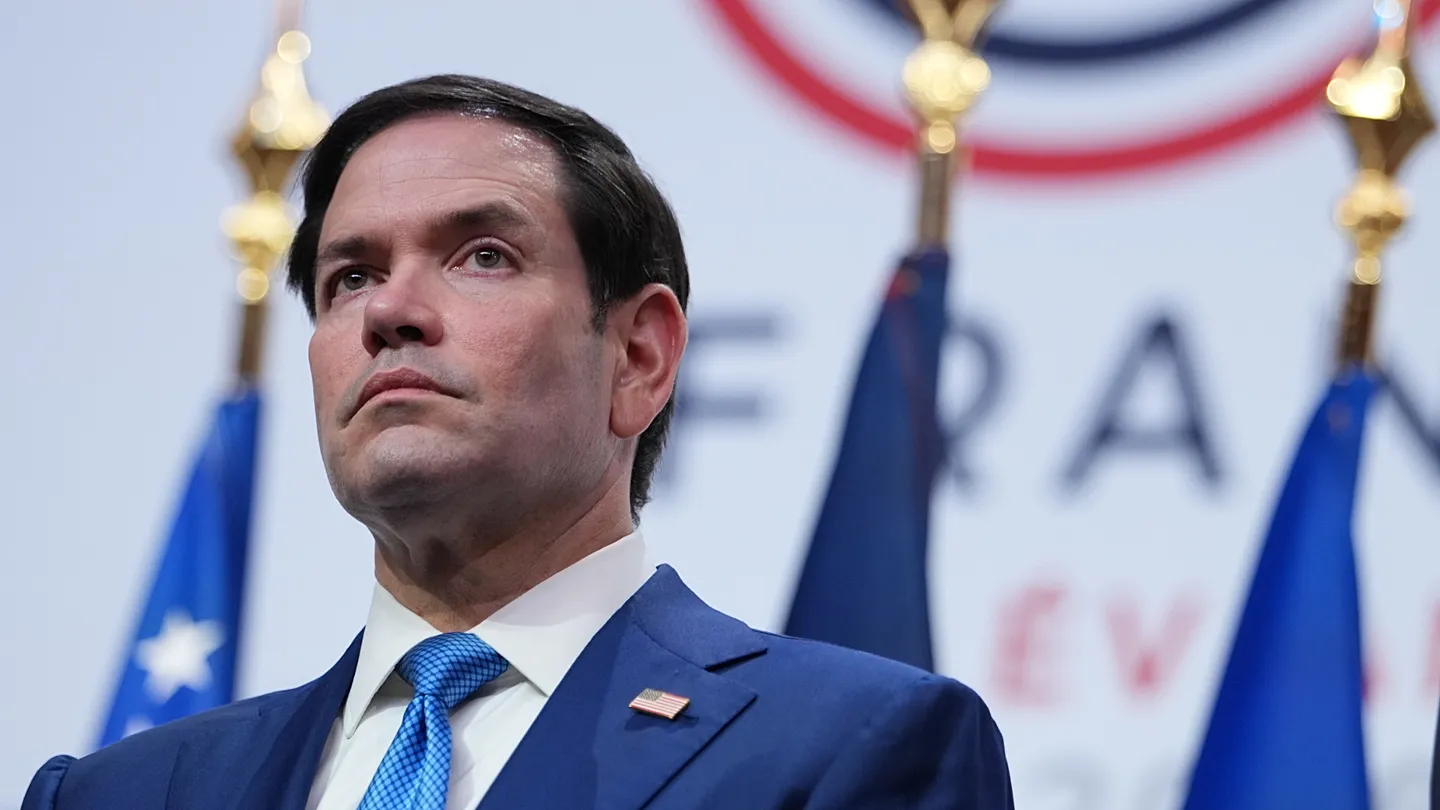
The Trump administration ICC standoff has entered a far more aggressive phase, with the State Department declaring a whole-of-government effort to systematically disable the International Criminal Court’s ability to function at all.
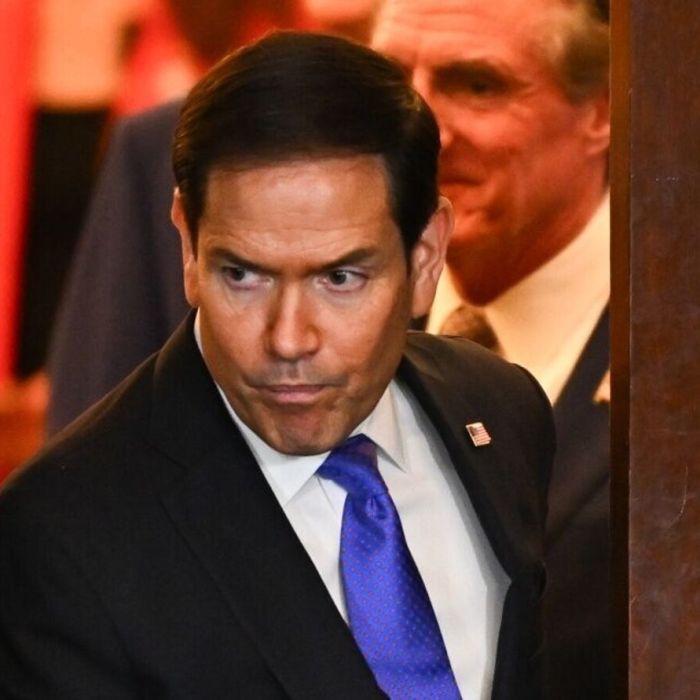
The announcement arrived Monday via a news release, a video statement from Secretary of State Marco Rubio, and an op-ed in the Wall Street Journal — a coordinated rollout designed to leave no ambiguity about intent.
Rubio’s Framing
The rhetoric was extraordinary even by the standards of this administration.
Rubio accused the court of waging war against the United States — not with bullets or missiles, he said, but with statutes, compacts, and the force of what he called so-called international law.
He went further, claiming the ICC now threatens every aspect of American political and legal life. If the court believes it can strip the US of its sovereignty, he warned, it would learn the full meaning of American resolve.
What’s Actually on the Table
For all the heat, the announcement was notably thin on specifics. It listed “actions under consideration” rather than concrete policy.
Those include:
- Pressuring countries that partner with the US military and law enforcement to publicly reject the ICC’s authority to prosecute American officials and service members
- Increased scrutiny of nations that decline to do so while continuing to receive US assistance
- Expanded sanctions on ICC personnel and affiliated organizations
- Travel bans targeting the same individuals and groups
That third item is not hypothetical. Washington has already sanctioned ICC officials and rights groups that supplied evidence to the court, while threatening penalties against anyone assisting investigations touching the US or its allies — Israel foremost among them.
The Jurisdictional Question
The legal picture is more tangled than either side’s rhetoric suggests.
The United States never signed the Rome Statute, the 2002 treaty that established the court. On that basis, Washington maintains it falls outside ICC jurisdiction entirely.
But the court sees a gap in that logic. American citizens can still be investigated and potentially prosecuted as part of probes into abuses committed within countries that are parties to the statute.
The clearest example is Afghanistan. Since 2020, the ICC has been examining alleged war crimes there, including conduct by US military and intelligence personnel. No American has been prosecuted.
Successive administrations have held the same line — that US citizens simply cannot be tried by the court. The Justice Department reiterated that position in a letter to ICC President Tomoko Akane delivered in late June.
A Familiar Pattern
This is not Trump’s first confrontation with the court.
During his first term, he imposed sanctions on ICC officials in 2020, directly in response to the Afghanistan investigation. President Joe Biden later lifted those sanctions but never abandoned the underlying US objection to the probe.
Now the pressure is back, and considerably heavier.
Why Now?
That is the question puzzling observers.
William Schabas, a professor of international law at Middlesex University London, called the timing perplexing. The ICC, he noted, has taken no action concerning the US or its allies since Trump returned to office in January 2025.
His theory is that the administration may be acting preemptively — speculating about where the court might eventually look.
There is no shortage of candidates. Legal experts have flagged several recent US actions as potentially investigable, including:
- Conduct during the US-Israel war with Iran
- Strikes on alleged drug smuggling boats in the Caribbean
- The abduction of Venezuelan leader Nicolás Maduro
A Wounded Target
Schabas also offered a blunter explanation: the ICC looks weak right now.
The court is grappling with internal scandal surrounding lead prosecutor Karim Khan, and Washington may sense an opening.
“Maybe they’re just feeling they’ll kick it some more, and that’ll do a death blow to it,” Schabas said.
He also noted the obvious gap between the administration’s language and its actual toolkit. Beyond more sanctions and lobbying allies, there is not much more the US can practically do to the court.
The Broader Stakes
Critics see something larger than a jurisdictional dispute.
Raed Jarrar, advocacy director at the Washington-based rights organization DAWN, argued that the campaign broadcasts a simple message: the powerful are above the law.
What Rubio is dismantling brick by brick, Jarrar said, is not really the ICC — it is the rules-based international order built from the wreckage of the Second World War.
Whether that order survives a determined American assault is now, apparently, an open question.
Author