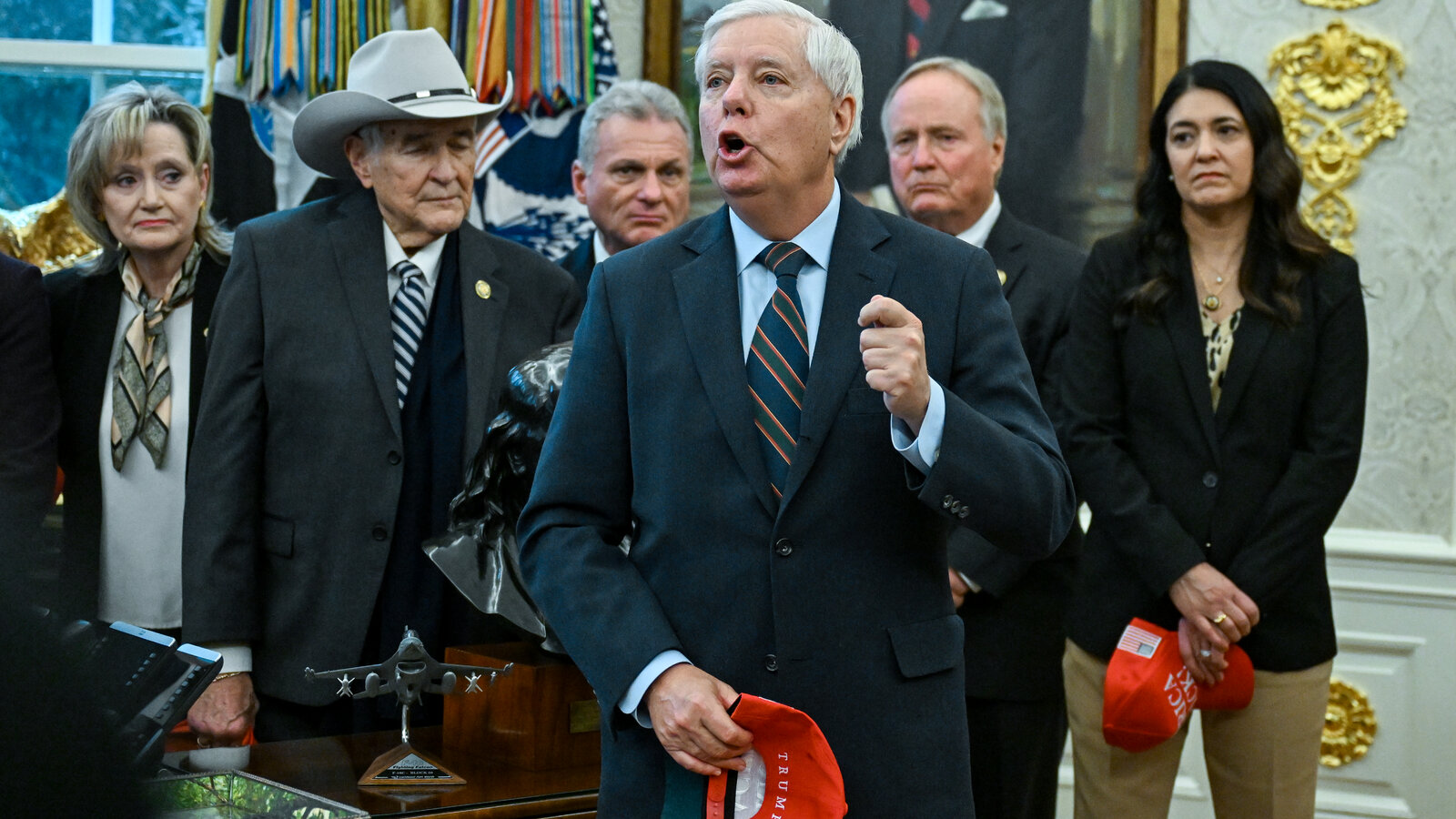
The Russia sanctions bill that Lindsey Graham spent years pushing has suddenly become the vehicle for honoring him.
Senators from both parties are coalescing around a revised version of the package, framing its passage as a fitting tribute to the South Carolina Republican who died unexpectedly over the weekend.
An Unusual Moment of Unity
Bipartisan cooperation has become a rarity in the Senate. Graham’s death appears to have briefly restored it.
Senate Majority Leader John Thune said passing the updated bill — which already carries 85 cosponsors — would be a great tribute to Graham’s legacy.
Minority Leader Chuck Schumer pushed for immediate action, urging Thune to bring the sanctions measure to the floor in Graham’s honor. It would pass overwhelmingly, he argued, and would help America’s allies in Ukraine.
Sen. Cory Booker made the emotional case most directly. Passing the bill, he said, would demonstrate bipartisan unity around something Graham was fighting for with what turned out to be some of his final breaths.
The Deal Graham Struck Days Before His Death
What makes the timing so striking is how close Graham came to seeing this through himself.
For years, the Senate repeatedly approached passage of foreign policy legislation drafted by Graham and Sen. Richard Blumenthal — only to stall when President Trump asked Republicans to hold back, preserving room for his administration to run its own pressure campaign against Vladimir Putin.
That obstacle appeared to fall away last week.
Meeting with Treasury Secretary Scott Bessent in Ankara, Turkey, Graham and several colleagues emerged believing they had finally resolved the White House’s objections. Graham briefed Trump on the breakthrough during a Saturday night phone call.
Graham, Blumenthal, and Sens. Jeanne Shaheen and Roger Wicker announced in a joint statement that they had reached an agreement with the administration to move the updated legislation forward.
Blumenthal later recalled his final extended conversation with Graham that weekend. Graham was elated at having landed the agreement, telling him: “This is a big effing deal.”
What Changed in the Bill
The revised legislation preserves the original spirit but softens its edges.
The initial version would have imposed tariffs of up to 500 percent on countries that continue buying Russian oil and gas — a category that includes China. The updated text narrows the reach of those penalties considerably.
That compromise is almost certainly what unlocked the administration’s cooperation.
The Scramble to Fill His Seat
The mechanics of replacing Graham moved with remarkable speed.
At Trump’s urging, South Carolina Gov. Henry McMaster appointed Graham’s sister, Darline Graham Nordone, to serve out the remainder of his term. She will be sworn in at 2:30 p.m. Tuesday.
Other consequences are rippling through the chamber:
- Sen. Ron Johnson is expected to take over as chair of the Budget Committee
- Potential candidates are already maneuvering to run for a full six-year term in the 2026 election
A Chamber in Mourning
Senators spent Monday still absorbing the shock.
Thune fought back tears while speaking on the Senate floor as colleagues reflected on Graham’s influence.
Wicker struggled to find adequate language, saying there are no words to capture Graham’s impact on American foreign and domestic policy.
The House Complication
The path forward is not entirely clean.
The original sanctions bill has already passed the House — but House members want to amend it as well, which means the two chambers will need to reconcile their versions before anything reaches the president’s desk.
There is also the matter of what to call it.
Rep. Joe Wilson of South Carolina proposed naming the legislation the “Lindsey Graham Sanctions Act,” arguing that the way to restrain Putin is to bankrupt the oligarchs surrounding him.
The Bottom Line
A bill that spent years trapped between congressional ambition and White House hesitation may finally move — not because the underlying politics shifted, but because its chief architect died three days after finally getting the deal done.
Whether that momentum survives past the funeral is the question hanging over the Capitol this week.
Author