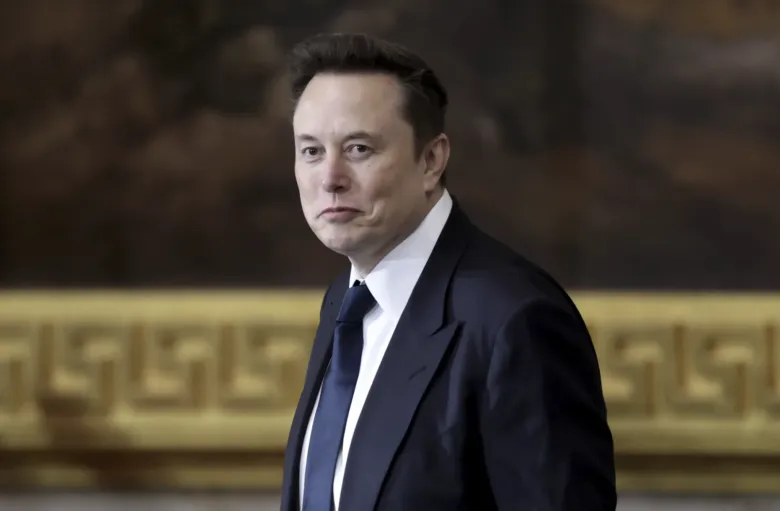
Federal Court Dismisses Elon Musk’s Lawsuit Against OpenAI After Jury Verdict
The high-profile Musk lawsuit against OpenAI has ended in a clear defeat for the Tesla CEO. On Monday, a federal judge threw out all of Elon Musk’s claims against the artificial intelligence company after a jury concluded that he had waited too long to bring the case, exceeding the statute of limitations.
The outcome is a decisive victory for OpenAI and for two of the men Musk once worked alongside: chief executive Sam Altman and president Greg Brockman.
How the Case Ended
After a three-week trial in Oakland, California, the jury needed only about two hours to reach its decision. The proceedings had involved hundreds of pages of documents and extended testimony from Musk, Altman, and a long line of former OpenAI executives and board members.
The jury’s role in this case was advisory, meaning the final authority rested with the judge, Yvonne Gonzalez Rogers. Once the verdict was read, she confirmed it within seconds, dismissing Musk’s claims that Altman and Brockman had betrayed OpenAI’s original mission and reshaped the company into a for-profit operation for personal gain.
Notably, the verdict arrived abruptly. The jury delivered its unanimous decision while the judge was still holding a hearing to weigh what consequences OpenAI might face if Musk were to win. Gonzalez Rogers defended the value of the process, saying trials matter because they bring clarity to important questions.
What Musk Had Demanded
Musk’s lawsuit, filed in the U.S. District Court for the Northern District of California, sought sweeping changes. He had asked the court to force Brockman and Altman to step down and to require that all equity in OpenAI’s for-profit arm be returned to its nonprofit parent.
Had he succeeded, the consequences for OpenAI could have been severe. The company depends on billions of dollars from outside investors to pay staff and fund the costly work of training and running advanced AI models. OpenAI is also reportedly expected to go public either later this year or in early 2027, and the lawsuit represented a real threat to that trajectory.
The Roots of the Conflict
The dispute traces back to OpenAI’s founding. Musk, Altman, and Brockman launched the organization in 2015, along with others, with the goal of developing AI for the benefit of humanity and serving as a counterweight to Google, then the dominant force in the field.
The founders soon recognized that donations alone would not keep OpenAI competitive. Disagreements followed over who should control the company if it accepted more conventional investment. Musk departed in 2018, reportedly saying the organization had little chance of succeeding on its own.
In the years since, OpenAI accepted billions in funding, including from Microsoft, and helped ignite the modern AI race with the release of ChatGPT in late 2022. Musk later founded his own for-profit AI venture, xAI, in 2023.
A central issue at trial was timing. Musk testified that his suspicions about OpenAI grew over time, but that he only realized in 2023 that the company had fundamentally changed. OpenAI’s attorneys countered with evidence that Altman had kept Musk informed of major developments even after his exit, including the Microsoft investments. Musk acknowledged during testimony that he had not read a document about one of those investments in full.
Reactions to the Verdict
OpenAI’s legal team framed the case as an attempt to undermine a rival. Lead attorney Bill Savitt told reporters that the lawsuit was a hypocritical effort to sabotage a competitor, tied to a long record of inaccurate predictions about OpenAI’s future. The company had argued throughout the trial that Musk’s motivation was partly to damage a competitor to his own venture, xAI.
Outside legal observers viewed the loss as particularly stinging. Corporate litigation lawyer Andrew Stoltmann, who was not involved in the case, described the result as deeply embarrassing for Musk, noting that losing on statute-of-limitations grounds despite having top legal counsel amounts to a significant setback. He characterized it as a major win for Altman, who he said stood toe-to-toe with the world’s wealthiest man and prevailed.
Musk’s attorney, Marc Toberoff, indicated in court that an appeal was possible but did not respond to a request for comment. Musk himself reacted critically online, directing pointed criticism at the judge in a post responding to the verdict.
What the Trial Revealed
Even though Musk lost, the trial put a spotlight on Altman and surfaced uncomfortable details for several parties.
Former colleagues used the proceedings to revive claims that Altman was not a fully trustworthy business partner, and his personal investments in startups that do business with OpenAI came up repeatedly.
The case also exposed the enormous wealth generated by OpenAI’s rise. Brockman testified that his stake in the company is worth roughly $30 billion. Court filings brought to light unflattering private messages from Musk and other tech figures, including Meta CEO Mark Zuckerberg. Personal details about Musk’s life also emerged through testimony from Shivon Zilis, a longtime associate who served as his main link to OpenAI and later became the mother of four of his children.
During the trial, Musk attended court for much of the first week, even on days he did not testify. He later traveled to China as part of a business delegation accompanying President Donald Trump, despite technically still being subject to a recall to the witness stand.
What Happens Next
For now, it remains uncertain whether Musk will follow through on an appeal, or whether a higher court would take up the matter given the statute-of-limitations findings. Musk has said in the past that he believes filing lawsuits on principle has value, even when the odds of winning are slim.
What is clear is that, for the moment, the ruling removes a serious threat to OpenAI as it continues competing at the front of an intensely contested AI industry.
Author