The Ukrainian drone attack on Moscow this week marked a dramatic escalation in the conflict, with waves of drones striking a major oil refinery, paralyzing the capital’s airports, and signaling just how far Ukraine’s reach now extends into Russian territory. The assault, carried out on Thursday, appeared to be the most intense drone operation aimed at Moscow since Russia’s invasion began more than four years ago.
A Capital Under Fire
For much of the war, Russia’s largest cities remained shielded from the violence unfolding along the border. That sense of distance is rapidly disappearing.
Thursday’s strikes were part of a growing pattern of attacks that highlight Ukraine’s expanding capacity to break through Russian air defenses. What once seemed untouchable, the heart of Moscow, is now firmly within range.
According to Moscow Mayor Sergei Sobyanin, Russian air defenses intercepted at least 194 drones heading toward the capital in several successive waves during the morning hours. But the assault wasn’t limited to Moscow alone.
The Russian Defense Ministry reported that more than 550 drones were brought down across the country, underscoring the sheer scale of the coordinated operation.
Airports Halted and Civilians Hurt
The impact on daily life in the Moscow region was immediate and disruptive.
Key consequences included:
- All four of Moscow’s airports were shut down for most of the morning before slowly resuming operations.
- At least 16 people were injured across the Moscow region, according to regional governor Andrei Vorobyev.
- Several civilian sites, including markets, malls, and residential buildings, sustained damage.
One drone reportedly slammed into a high-rise apartment building in the suburb of Zhukovsky. Another forced the closure of one of the city’s largest shopping malls, while Moscow’s biggest open-air market was also damaged in the barrage.
The Refinery at the Center of the Strike
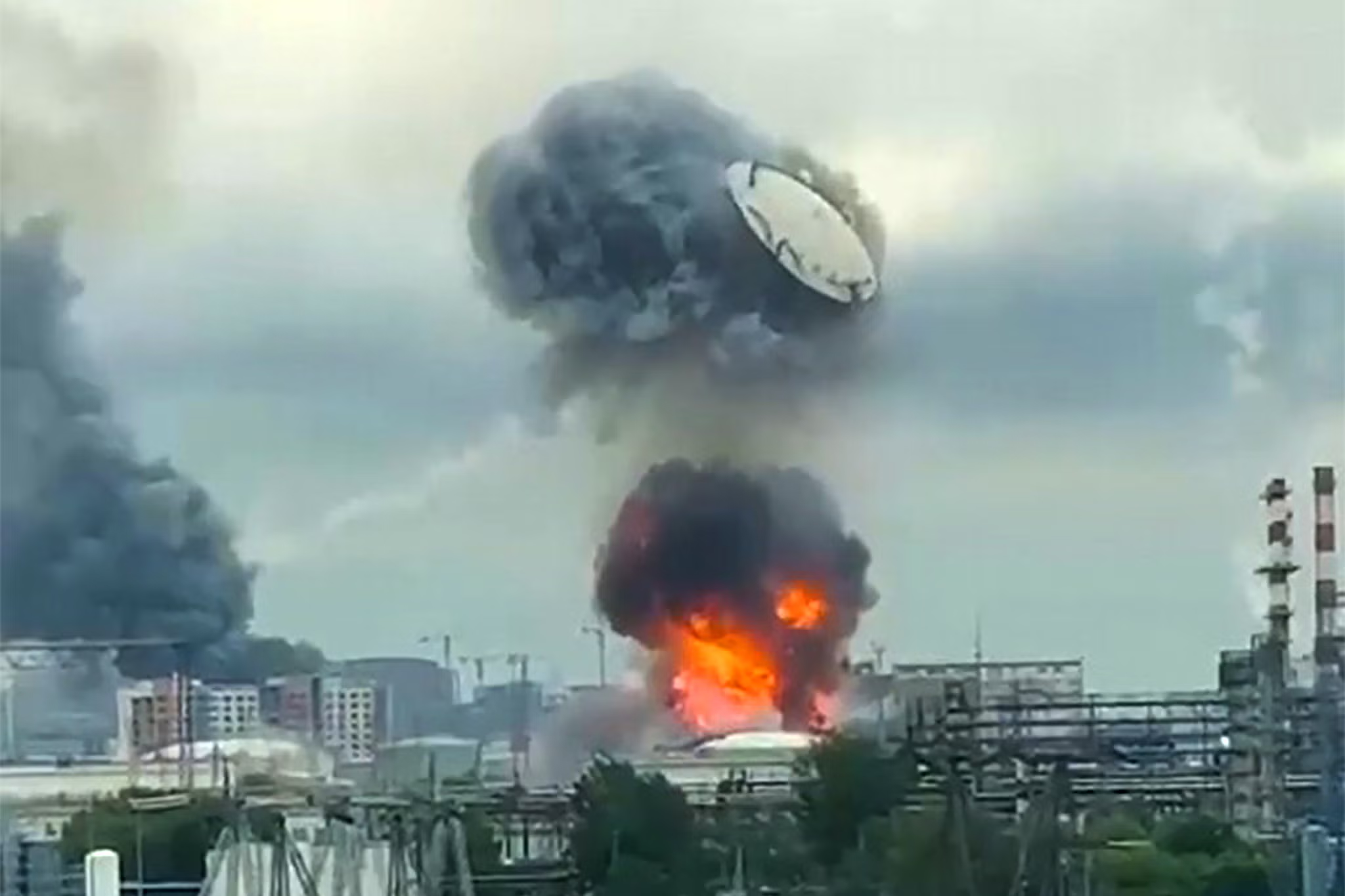
The most significant target was a massive oil refinery located on the southeastern edge of the city, a facility that looms large over the surrounding area.
Sobyanin confirmed that several Ukrainian drones struck the refinery, which had already been hit in a smaller attack earlier in the week. Footage shared on social media showed flames rising from multiple points across the complex, with thick black smoke spreading over the skyline.
This refinery is no minor target. It supplies roughly 40 percent of Moscow’s gasoline needs, meaning the damage is likely to tighten fuel supplies not just locally but across the country.
Part of a Larger Strategy
Thursday’s strike wasn’t an isolated event. It fits into a sustained, months-long Ukrainian campaign aimed at crippling the oil infrastructure that fuels Russia’s war machine.
By repeatedly targeting refineries and energy facilities, Ukraine is attempting to disrupt one of the most vital arteries of the Russian economy and military. These efforts have already triggered fuel shortages in Russian-occupied Crimea and parts of eastern Ukraine, suggesting the strategy is beginning to bite.
The logic is clear: degrade the resources that keep Russian forces operational, and the pressure on the front lines may eventually grow.
Zelensky Defends the Strikes
Ukrainian President Volodymyr Zelensky publicly justified the operation, framing it as a direct and warranted reaction to Russia’s ongoing assaults on Ukrainian cities and communities.
His comments came against a backdrop of intensifying Russian attacks. In recent days, Russian missiles and drones have battered Ukrainian targets, damaging a centuries-old cathedral and monastic site in Kyiv, a strike that drew significant attention.
Russian forces also launched ballistic missiles and drones at Kyiv overnight, though no casualties were immediately reported. For Ukraine, the message is one of reciprocity: strikes on its cities will be met with strikes in return.
Ukraine’s Expanding Drone Capabilities
Perhaps the most striking takeaway from Thursday’s assault is what it reveals about Ukraine’s evolving military capacity.
Over recent months, Russian cities have grown increasingly exposed to aerial attacks. Two key developments explain this shift:
- Ukraine has significantly ramped up its drone production.
- It has begun deploying large numbers of longer-range drones capable of reaching hundreds of miles into Russian territory.
These advances have allowed Ukraine to hit targets once considered far beyond its reach, including locations deep inside Russia. The result is a battlefield that no longer ends at the border, but extends into the Russian heartland itself.
What This Means Going Forward
The latest Ukrainian drone attack on Moscow represents more than a single dramatic morning of explosions and grounded flights. It reflects a fundamental shift in the dynamics of the war.
Several trends are now coming into focus:
- Russia’s interior is increasingly vulnerable, despite robust air defenses.
- Ukraine is prioritizing strategic economic targets, especially energy infrastructure.
- The conflict is becoming more symmetrical, with both sides striking each other’s cities and critical sites.
For ordinary residents of Moscow, the war that once felt distant is now arriving in the form of shuttered airports, damaged buildings, and burning refineries.
The Bottom Line
Thursday’s assault stands as a powerful demonstration of Ukraine’s growing long-range strike capabilities and its determination to bring the cost of war home to Russia. By targeting a refinery that fuels a large share of Moscow’s supply, Ukraine is signaling that no part of Russia is entirely safe.
As both nations continue trading blows, the escalating drone war suggests the conflict is entering a more volatile and unpredictable phase, one where capital cities, energy networks, and civilian life are increasingly on the front line.
Author