






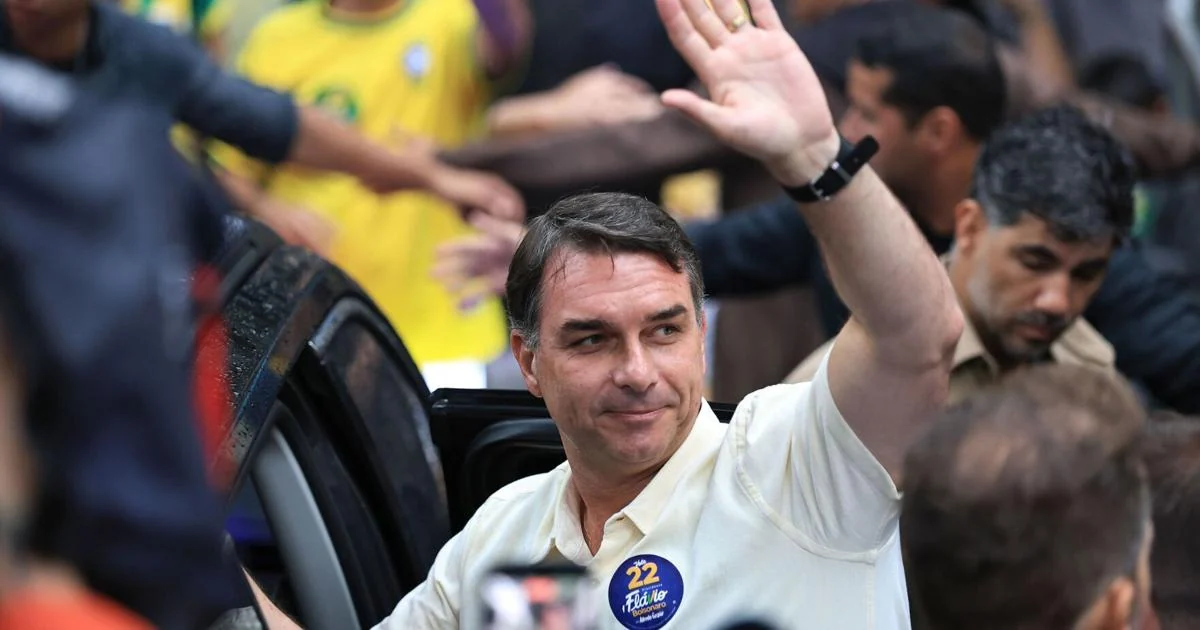
Flavio Bolsonaro, the Brazilian senator who was defeated in his country’s presidential election by leftist leader Luiz Inacio Lula da Silva, has been told by Donald Trump that he may remain in the United States for as long as he likes. The US president made the remark on Saturday while speaking to reporters at his Mar-a-Lago club in Palm Beach, Florida, offering a public signal of goodwill toward a figure who left Brazil shortly after his electoral loss.
A Brief but Telling Statement
Trump’s comments were short, but they carried weight. Asked about the Brazilian senator’s presence on American soil, the president said simply that Bolsonaro could stay “as long as he wants.” He did not elaborate on the legal basis for that stay, nor did he suggest any formal arrangement had been made. The tone, however, was unmistakably welcoming.
At the same time, Trump made clear that he was not planning any personal engagement. He told reporters he had no intention of meeting with Bolsonaro, drawing a line between allowing the senator to remain in the country and actively hosting him as a political ally.
Who Is Flavio Bolsonaro?
Flavio Bolsonaro is a member of Brazil’s Senate and the eldest son of former president Jair Bolsonaro. He emerged as the standard-bearer for Brazil’s right-wing movement in the recent presidential contest, carrying the family name into a race against Lula, one of the most recognisable figures on the Latin American left.
The election did not go his way. Lula secured victory, extending his hold on the presidency and handing the Bolsonaro camp another defeat. Rather than remain in Brazil in the aftermath, Flavio Bolsonaro departed for the United States, a move that has raised eyebrows both at home and abroad.
Why the Departure Matters
Leaving one’s country immediately after losing an election is unusual for a sitting senator, and it has inevitably prompted speculation about his motives. Some observers see it as a retreat from a hostile political climate. Others view it as an attempt to regroup among sympathetic figures overseas. Bolsonaro himself has not offered a detailed public explanation, and Trump’s remarks did not shed light on the reasons behind the decision.
What the episode does highlight is the close ideological relationship between the Bolsonaro family and the American right. Jair Bolsonaro was frequently compared to Trump during his own presidency, and the two men cultivated a warm rapport. That connection now appears to extend to the next generation.
Trump’s Careful Balancing Act
Trump’s words reflect a delicate position. On one hand, he offered open-ended hospitality, a gesture that will be read in Brazil as tacit support for a political opponent of the sitting government. On the other, he pointedly declined to arrange a meeting, which suggests a desire to avoid being seen as directly interfering in Brazilian affairs or endorsing a challenge to Lula’s legitimacy.
This dual message allows Trump to reassure his conservative base, many of whom view the Bolsonaros favourably, without committing to any concrete action that could strain relations with Brasilia. Whether that balance holds will depend on how Bolsonaro conducts himself during his time in the United States and how Lula’s government responds.
The View From Brazil
For Lula and his allies, the sight of a defeated rival being welcomed by the American president is unlikely to sit well. Brazil and the United States maintain important economic and diplomatic ties, and any perception that Washington is sheltering an opposition figure could complicate those ties.
At the same time, Lula has dealt with similar tensions before. His relationship with Trump has never been especially close, and his government has generally sought to assert Brazil’s independence in foreign policy. The Bolsonaro situation may become one more irritant in a relationship already marked by ideological differences.
Open Questions
Several key issues remain unresolved. It is not clear under what immigration status Bolsonaro is residing in the United States, or whether his stay could eventually become permanent. Nor is it known whether he intends to return to Brazil to resume his Senate duties, or whether his absence might create political or legal complications at home.
Trump’s statement, while generous in spirit, does not answer these questions. A president’s verbal assurance is not the same as a formal legal determination, and the practical details of Bolsonaro’s situation will likely be handled through ordinary channels rather than presidential decree.
A Pattern Across the Americas
The episode fits into a broader trend of right-wing political figures from Latin America seeking refuge or support in Trump-aligned circles in the United States. Mar-a-Lago in particular has become a gathering point for conservative leaders and their allies from across the region. Bolsonaro’s presence in the country, and Trump’s willingness to let him stay, reinforces that pattern.
Looking Ahead
For now, Flavio Bolsonaro remains in the United States with the president’s blessing but without a meeting on the calendar. His next steps will be closely watched in both countries. If he chooses to use his time abroad to rebuild his political standing, the question of American influence on Brazilian politics will only grow louder.
Trump, meanwhile, has managed to send a signal of solidarity while keeping his distance. It is a familiar approach for a leader who often prefers to leave his options open, and it ensures that the story of the Bolsonaro family’s relationship with Washington is far from over.
Author