Pentagon Gives Weapons Makers 21 Days to Speed Up as Missile Stockpiles Run Low
Pentagon weapons production has become an urgent priority inside the Defense Department, with senior officials now pressing American arms manufacturers to move faster than they ever have. The reason is uncomfortable but straightforward: five months of fighting with Iran has drawn down stockpiles that were already thinner than planners would like.
Pentagon spokesman Sean Parnell said in a statement on Saturday that the department is actively working to ramp up munitions acquisition, framing the goal as delivering the weapons troops need at whatever pace the threat requires. He acknowledged that efforts to compress the process had accelerated sharply in the past week, while insisting the push belongs to a broader modernization drive that began before the current conflict.
A Memo With a Deadline Attached
The clearest sign of urgency came in writing.
Deputy Defense Secretary Steve Feinberg sent a memo to industry leaders on Wednesday giving them no more than 21 days to come back with concrete plans. What he wants are proposals to dramatically compress delivery schedules, expand production capacity, or both, specifically for capabilities the department considers critical.
His language left little space for negotiation. Development cycles measured in years, he wrote, are simply not acceptable anymore. Program schedules must be accelerated and production capacity expanded immediately.
Parnell confirmed on Saturday that the memo is genuine. He added that its findings will shape the fiscal year 2028 budget request eventually sent to Congress, and described the effort as fully aligned with the administration’s ongoing attempt to rebuild the American defense industrial base.
The Numbers Behind the Alarm
The pressure is not abstract. An analysis from the Center for Strategic and International Studies, a Washington think tank, laid out how far interceptor inventories have fallen.
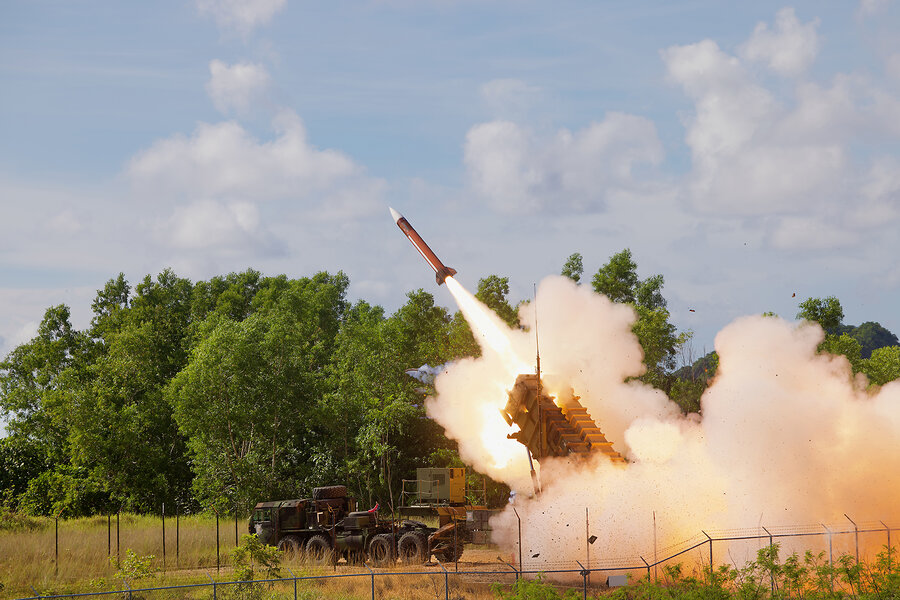
Patriot interceptors, the workhorse of American and allied air defense, numbered around 2,330 before the war began. By the time an April ceasefire took hold, that figure had dropped to roughly 1,030. Following the most recent round of fighting, the stockpile is now estimated somewhere between 759 and 827 units.
That represents a decline of at least 65 percent from prewar levels.
THAAD interceptors, designed to knock down ballistic missiles at higher altitudes, followed a similar trajectory. Prewar inventory stood at 452. By the April ceasefire it had fallen to between 232 and 262. Some replenishment has since occurred, bringing the count to between 234 and 278, but the stockpile remains at least 38 percent below where it started.
These are estimates from an outside analyst rather than official Pentagon figures, but they have driven much of the current conversation in Washington.
Why Depleted Interceptors Change Battlefield Math
Interceptors are not just equipment. They shape how commanders make decisions under fire.
When inventory is plentiful, standard practice is to fire multiple interceptors at a single incoming threat, improving the odds that at least one connects. It is expensive, but it prioritizes protection above all else.
When inventory is scarce, that calculus shifts. According to the CSIS analysis, shrunken Patriot and THAAD stocks may force the United States and its Middle Eastern partners to accept greater risk in order to conserve what remains. In practice, that could mean firing fewer interceptors at incoming Iranian drones and missiles.
Fewer shots means a higher probability that something eventually gets through. And what gets through can reach bases, ports, or population centers.
That is the core concern driving the sudden urgency around production.
A Public Disagreement Over Severity
The shortage narrative has not gone unchallenged at the highest level.
President Donald Trump has publicly pushed back against reports describing a munitions crisis. Writing on Truth Social on Thursday, he said the United States holds massive quantities of weapons and that large amounts are being manufactured and shipped as needed.
Parnell’s Saturday statement did not contradict the president directly, but it did confirm that the Feinberg memo exists and that it seeks a rapid escalation in output. The two positions are not necessarily incompatible. A stockpile can be substantial in absolute terms while still being judged insufficient against a specific threat scenario, and officials frequently avoid detailing exact inventory levels for security reasons.
Still, the gap between reassurance and a 21-day industry ultimatum has drawn attention.
Congress Is Not Cooperating
Whatever the Pentagon wants, it needs money to get it. That is where things get complicated.
A defense spending bill is currently stalled on Capitol Hill. Lawmakers have expressed anger over the administration’s military action against Iran, and many are resisting a White House request to raise Pentagon spending to 1.5 trillion dollars, up from roughly 900 billion the previous year.
That is an enormous proposed increase, and the political appetite for approving it while the underlying conflict remains contested appears limited.
The result is a genuine bind. Manufacturers being asked to expand capacity need certainty about future orders before committing capital to new production lines, additional shifts, and expanded supplier networks. Without a funded budget, that certainty does not exist.
The Deeper Structural Problem
Even with full funding, speed has limits.
Advanced interceptors are not simple products. They depend on specialized solid rocket motors, seeker heads, guidance electronics, and precision components that often come from a small number of qualified suppliers. Some of those suppliers are single-source, meaning a bottleneck anywhere cascades everywhere.
Skilled labor is another constraint. Building missiles requires trained technicians who cannot be hired and certified overnight.
This is precisely why officials talk about rebuilding the defense industrial base rather than simply placing bigger orders. The capacity itself has to be constructed, and that takes years even under ideal conditions.
What to Watch Next
The three-week window on Feinberg’s memo means industry responses are due within days. Those submissions will indicate what manufacturers believe is realistically achievable and what it would cost.
From there, attention shifts to Congress and to whether the spending impasse breaks. The fiscal year 2028 budget request will carry the answer to how seriously the department intends to fund this effort over the long term.
For now, the message from the Pentagon is unambiguous: move faster, and start now.
Author
-
Lucienne Albrecht is Luxe Chronicle’s wealth and lifestyle editor, celebrated for her elegant perspective on finance, legacy, and global luxury culture. With a flair for blending sophistication with insight, she brings a distinctly feminine voice to the world of high society and wealth.