




Qatari gas tanker attack reports emerged on Sunday as the country’s state media confirmed that one of its liquefied natural gas carriers had been struck while passing through Gulf waters. The incident, which took place on Friday evening, adds to mounting concerns about the safety of commercial shipping in a region that has become a battleground since the outbreak of war between the United States, Israel and Iran earlier this year.
What Happened to the Al Mayeda
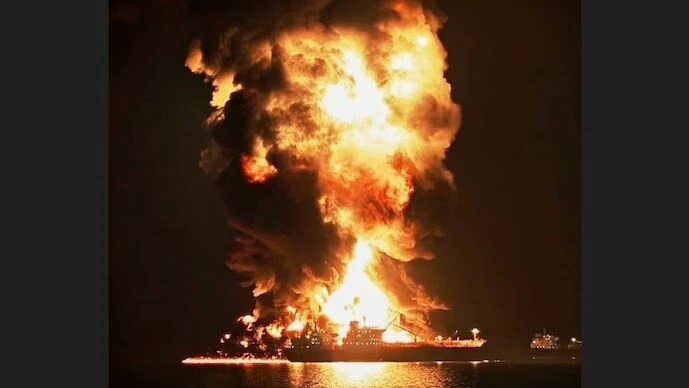
According to the Qatar News Agency, the vessel targeted was the Al Mayeda, an LNG carrier operated by the Qatar Gas Transport Company. The ship was hit by what officials described only as “unidentified objects” during its transit. No further detail was given about the nature of the projectiles or where exactly the attack originated.
Despite the strike, the outcome could have been far worse. The agency reported that every crew member on board escaped injury, and there was no environmental damage resulting from the attack. The shipping company was quoted as saying the vessel remained in a safe condition and was still operational, suggesting the damage was limited.
A Gulf Under Pressure Since February
The attack cannot be understood in isolation. Since the US-Israeli war against Iran began in February, Tehran has been striking ships in the Strait of Hormuz and the wider Gulf as part of a campaign to assert control over maritime traffic. Iran has declared that vessels must seek its approval before passing through the strategic waterway, a demand that has effectively turned one of the world’s most important shipping lanes into a contested zone.
Washington has answered with a blockade of Iranian ports, tightening the economic squeeze on Tehran while raising the stakes for any vessel caught in the crossfire. The Al Mayeda incident shows how exposed even neutral commercial traffic has become.
Qatar’s Awkward Position
The timing is particularly sensitive for Qatar. The Gulf state has positioned itself as a mediator in the conflict and has intensified its diplomatic outreach in recent days in an effort to restart talks between the United States and Iran. An attack on a Qatari-owned tanker, whoever is responsible, complicates that role and raises questions about whether the country’s neutrality is being respected by the warring sides.
Qatar has not publicly assigned blame for the strike, and the use of the phrase “unidentified objects” appears to reflect a deliberate choice to avoid escalating the situation while mediation efforts continue.
Trump Weighs In on Iran
The tanker news arrived on the same day that US President Donald Trump offered his own assessment of the conflict. Speaking earlier, Trump said the United States still needed to deal with “one or two sites” in Iran, signalling that military action is not yet over. He described ongoing talks as “going fine” but added a note of scepticism, calling Tehran “not very reliable.”
The mixed message captures the uncertain state of affairs: negotiations are underway, but neither side appears ready to stand down fully, and incidents like the Al Mayeda strike only add to the volatility.
Haredi Protesters Clash With Police Over the Draft
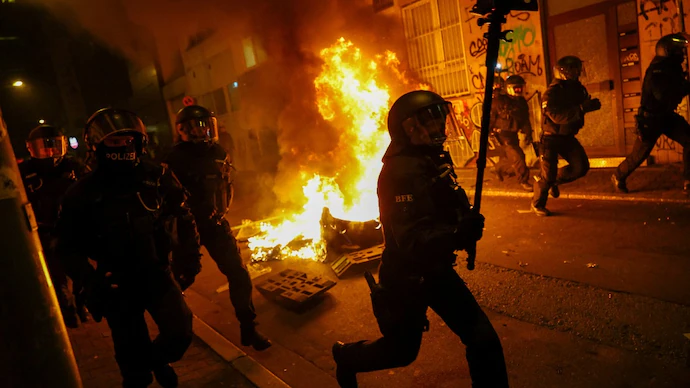
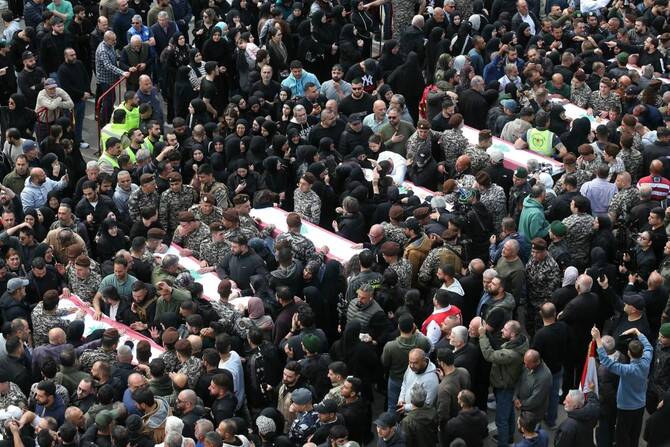
Back in Israel, a very different confrontation was unfolding. Ultra-Orthodox men gathered near the Israel Defense Forces’ Tel Hashomer recruitment office to protest against military conscription, blocking roads in the area and disrupting traffic. The demonstration coincided with reports that roughly 230 Haredi men were expected to report for enlistment that day.
The scene grew heated, with protesters hurling insults at the police, calling officers “Nazis” and “terrorists.” The language reflects the depth of anger within parts of the ultra-Orthodox community over efforts to bring more Haredi men into the military, a long-running and deeply divisive issue in Israeli society.
The draft question pits the principle of shared national burden against the community’s insistence that full-time religious study is a legitimate and protected way of life. Sunday’s protest suggests that tensions over the matter remain far from resolved.
Flags Burned in Lyon
Across the Mediterranean, video footage showed demonstrators in the French city of Lyon setting fire to both American and Israeli flags. The images highlight how the Middle East conflict continues to inflame public sentiment in Europe, where protests related to the war have become a recurring feature of city streets.
Flag burning is a provocative act designed to draw attention, and its appearance in Lyon underscores the extent to which opposition to US and Israeli policy has become a rallying point for certain protest movements abroad.
IDF Prepares for Search and Rescue Drill
In a quieter development, the IDF announced that its Search and Rescue Brigade would carry out a training exercise this week. Such drills are routine, but their timing during an active conflict serves as a reminder that the military is maintaining readiness for scenarios involving damage to civilian infrastructure, whether from missile strikes or other emergencies.
Trump and the Bolsonaro Question
Rounding out the day’s headlines, Trump also addressed the situation of Brazilian Senator Flavio Bolsonaro, who left Brazil for the United States after losing his country’s presidential election. The president said Bolsonaro could remain in the US for as long as he wishes, though he indicated he had no plans to meet with him personally.
A Region on Edge
Taken together, Sunday’s developments paint a picture of a region and a wider world struggling with overlapping crises. In the Gulf, the attack on the Al Mayeda demonstrates that no vessel is entirely safe while Iran and the United States remain locked in confrontation. In Israel, domestic divisions over the draft continue to spill into the streets. And in Europe, the conflict is fuelling anger that shows no sign of easing.
For Qatar, the challenge now is to keep its mediation efforts alive even as its own shipping comes under fire. Whether it can do so may help determine whether the Gulf moves toward calm or slides further into disorder.
Author