Janez Jansa Slovenia Prime Minister Return Marks a Sharp Political Shift
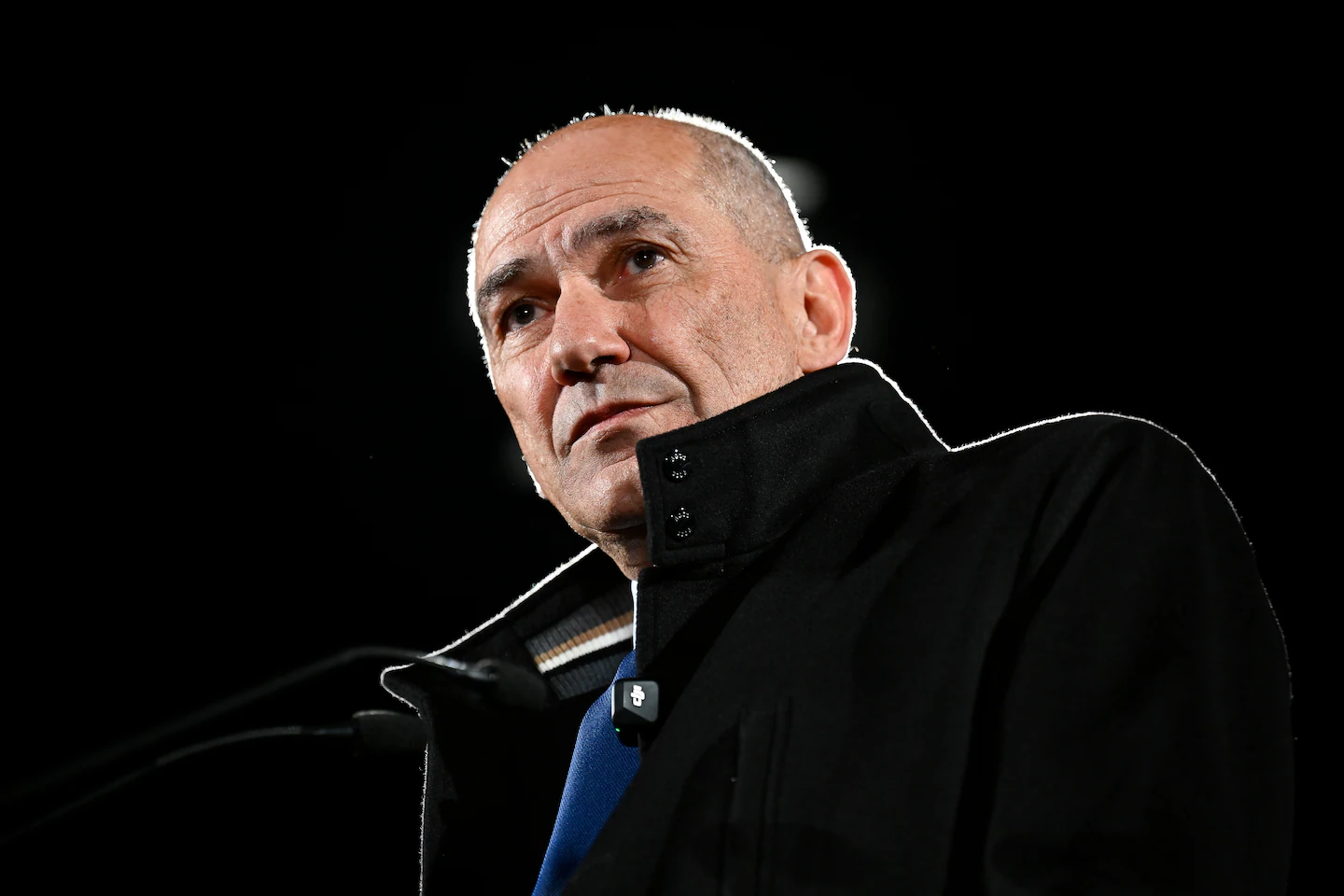
The political landscape in Slovenia has taken a dramatic turn as Janez Jansa Slovenia Prime Minister title has officially been reclaimed. The country’s parliament approved the right-wing politician’s return to power on Friday, ending months of political uncertainty and signaling a sharp ideological shift for the small European Union member state, which had recently been led by a liberal government.
A Decisive Vote in Parliament
In a closely watched vote, Slovenia’s 90-member parliament backed Jansa with 51 votes in favor and 36 against. The decision officially restores Jansa to the country’s top political post, where he will now begin shaping his fourth term as prime minister.
Despite this initial parliamentary approval, Jansa must return to parliament within the next 15 days to secure another vote confirming the makeup of his Cabinet. That step will be essential before his government can begin its work in full.
End of a Post-Election Deadlock
Jansa’s appointment officially ends a two-month-long political stalemate that began after the March 22 elections. In that vote, former liberal Prime Minister Robert Golob’s Freedom Movement narrowly came out on top with 29 seats. However, the party was unable to form a parliamentary majority, opening the door for a competing coalition to take shape.
That moment was seized by Jansa and his Slovenian Democratic Party (SDS), which came in second place with 28 seats. After weeks of negotiations, Jansa managed to bring together several centre-right groups, paving the way for his political comeback.
A Coalition Built on Centre-Right Unity
On Thursday, Jansa and his SDS signed a coalition agreement with several centre-right parties to form the new government. The newly formed alliance includes the SDS, New Slovenia, the Democrats, the Slovenian People’s Party, and Focus. Together, they now hold 43 seats in the assembly.
The coalition also has the additional backing of the right-wing Resnica party, which has chosen not to formally join the government but has agreed to support its policies. This support gives Jansa enough strength to pursue his ambitious agenda without immediate political roadblocks.
Jansa’s Long Political Journey
At 67 years old, Janez Jansa is no stranger to Slovenia’s political scene. His return to power makes this his fourth time serving as prime minister. He previously held the role from 2004 to 2008, again from 2012 to 2013, and most recently from 2020 to 2022.
Each of his previous terms has been marked by both strong support and significant controversy. His political style is known for being bold, direct, and at times confrontational, drawing both admiration from supporters and criticism from his political rivals.
A Vision for Slovenia’s Future
Speaking after his approval, Jansa laid out a vision for the country’s future. He focused his speech on several key priorities, including economic growth, the fight against corruption, and reducing bureaucratic red tape. He also emphasized the importance of decentralization, aiming to give more power to local communities across Slovenia.
Jansa pledged to lower taxes for higher-income earners and expressed strong support for private education and healthcare. Earlier this month, he told reporters that his coalition’s mission was to deliver “a cheaper state but with better quality.”
These commitments are likely to appeal to his centre-right base but may face resistance from opposition groups and from segments of Slovenian society that benefit from public services.
A Shift to the Right in EU Politics
Jansa’s return to office is more than just a domestic political event. It also represents a significant shift in Slovenia’s place within European politics. After years under a liberal government led by Robert Golob, the country is now expected to take a much more conservative direction.
Jansa is known for being an open admirer of U.S. President Donald Trump. He was also a close political ally of Hungary’s former populist Prime Minister Viktor Orban, who was defeated in a landslide election just last month. With Orban out of power, Jansa’s victory adds new energy to the broader right-wing movement in Central Europe.
Foreign Policy and Israel Support
Jansa is well known for his strong support of Israel and has long maintained close diplomatic ties with the country. He was also one of the most vocal critics of the previous Slovenian government’s decision in 2024 to recognize Palestine as a state. That move had been widely celebrated by some in the international community but heavily criticized by Jansa and his political allies.
His return is likely to bring a fresh recalibration of Slovenia’s foreign policy, particularly regarding Israel, Palestine, and broader Middle East affairs.
A Controversial Political Legacy
Despite his strong supporter base, Jansa’s previous term in office was filled with controversy. He was widely accused of cracking down on democratic institutions and limiting press freedoms during his last stint as prime minister. These actions sparked large public protests and drew sharp criticism from the European Union, which closely monitored Slovenia’s democratic standards.
Critics argue that his return raises serious concerns about how he will handle media independence, judicial freedom, and democratic norms this time around. Supporters, however, view him as a strong leader capable of restoring order and pushing Slovenia toward greater economic prosperity.
What Comes Next
Jansa now faces several immediate challenges. The first will be securing parliamentary approval for his Cabinet within the next 15 days. After that, his government will need to begin tackling Slovenia’s most pressing issues, including managing inflation, modernizing public services, and reducing political polarization.
His ability to deliver on his ambitious promises will largely depend on the strength of his coalition and his willingness to compromise with both political allies and the opposition.
A New Political Era for Slovenia
The return of Janez Jansa Slovenia Prime Minister marks the beginning of a new chapter for the small but politically vibrant European nation. With a clear shift toward conservative policies, strong international alignments with right-wing figures, and a controversial track record, Jansa is set to once again become one of the most closely watched leaders in Central Europe.
Whether his fourth term in office leads to economic renewal or fresh political controversies remains to be seen. But one thing is certain: Slovenia is entering a new political era, and the world will be paying close attention to how it unfolds.
Author