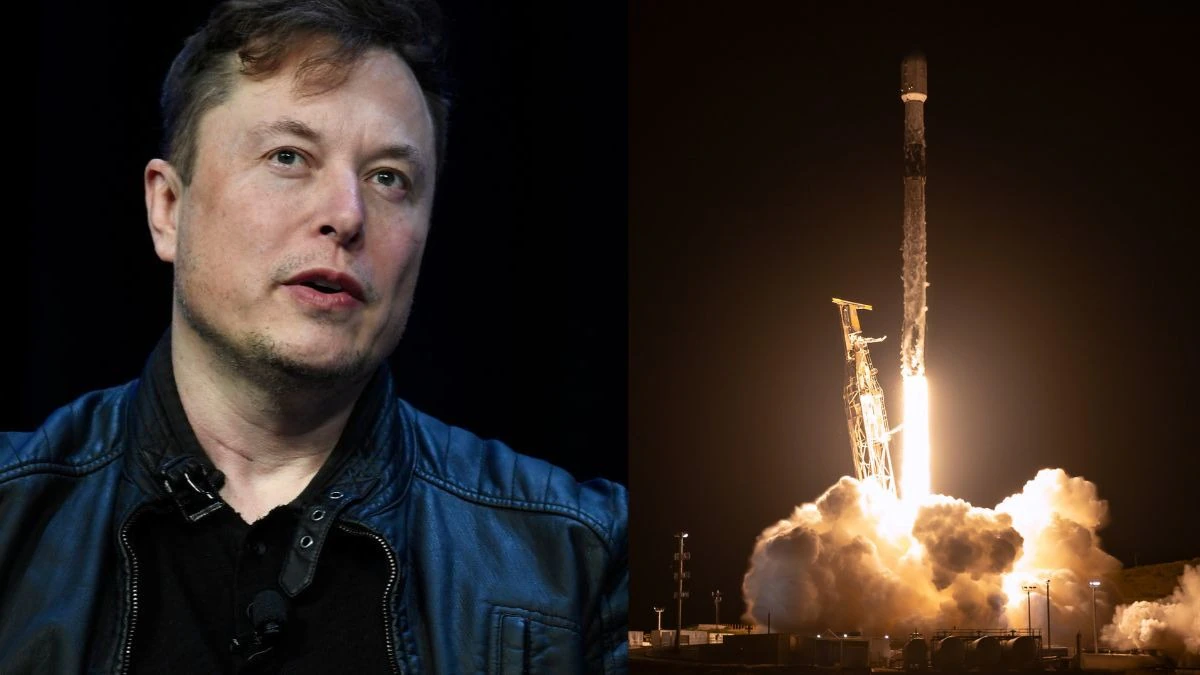
The SpaceX valuation has exploded to staggering heights, briefly vaulting past Amazon in one of the most dramatic public-market debuts in recent memory. Just days after going public, Elon Musk’s space-and-AI venture has captivated investors, sending its worth into the trillions on a wave of optimism, ambitious acquisitions, and intense trading activity, all despite financials that tell a far more cautious story.
A Meteoric Rise in Days
SpaceX’s climb has been nothing short of breathtaking. The stock surged 20% on Monday, its first full day of trading, setting the tone for what followed.
The momentum accelerated sharply on Tuesday. Two developments fueled the spike: news that SpaceX was acquiring AI coding company Cursor, and the launch of options trading on SpaceX shares. Together, they pushed the company’s valuation as high as $2.9 trillion before it eventually pulled back and settled lower.
At its peak, that figure was enough to briefly surpass Amazon, a milestone that underscores just how feverish investor enthusiasm has become.
The Numbers Behind the Hype
What makes this surge so remarkable is how sharply it contrasts with the company’s actual financial performance.
Last year, SpaceX posted a loss of $4.9 billion on revenue of $18.7 billion. Amazon, by comparison, operates on an entirely different scale, having turned a profit of $78 billion on $717 billion in sales in 2025. By any traditional measure, the gap between the two companies’ fundamentals is enormous.
That disconnect raises an obvious question: how does a company losing billions briefly become more valuable than one of the most profitable corporations on earth? The answer lies largely in expectations about the future rather than results from the past.
New Revenue Streams Fuel the Story
Part of the optimism stems from fresh business lines SpaceX has been building out.
The company has recently added revenue through compute leasing deals with Anthropic and Google. On top of that, it stands to absorb revenue from Cursor once that acquisition closes in the third quarter.
There’s a notable caveat, though. The deals with Anthropic and Google are non-binding, meaning they aren’t yet locked in. Investors, however, appear largely unbothered by that uncertainty. Since going public on Friday, Musk’s company has added roughly $1 trillion to its valuation, a sign that markets are betting heavily on the narrative regardless of the fine print.
A Massive Capital Infusion
The public offering itself was historic in scale. SpaceX debuted with a valuation of around $1.7 trillion, and the transaction raised nearly $86 billion for the company.
That influx of capital rests largely on a bold promise: that SpaceX can build an AI business worth trillions of dollars. It’s an audacious claim, made all the more striking by the fact that the company recently dismantled its AI division and began rebuilding it from scratch.
The Cursor Acquisition and xAI’s Reset
The Cursor deal sits at the heart of SpaceX’s AI ambitions, and it has a backstory.
SpaceX first revealed a collaboration with Cursor in April. At the time, Musk candidly admitted that his AI company xAI, now folded into SpaceX, had not been built right the first time around, saying he was rebuilding it from the foundations up.
The acquisition itself is being made with $60 billion in company shares, a substantial commitment that signals how central AI has become to SpaceX’s vision, even as that part of the business undergoes a dramatic overhaul.
Why the Wild Swings?
The extreme volatility in SpaceX’s stock isn’t entirely surprising, and there’s a structural reason behind it.
During its IPO, SpaceX made only about 4% of its total shares available for trading. Experts had predicted that this limited supply would leave the stock especially vulnerable to sharp price swings, since a relatively small pool of shares can amplify the effect of heavy buying or selling.
That prediction played out clearly on Tuesday. Traders exchanged more than 300 million SpaceX shares over the course of the day, more than half of the 555 million shares available on the public market following the IPO, according to data from the Nasdaq stock exchange. That kind of turnover in a single session reflects just how frenzied the trading has been.
The swings didn’t stop when regular trading ended, either. During after-hours trading, SpaceX’s valuation briefly eclipsed Amazon’s market cap for a second time before retreating once again.
The Bigger Picture
SpaceX’s debut tells a story of two competing realities. On one side are the hard financials: billions in losses and revenue that, while substantial, pales next to established giants like Amazon. On the other is a powerful narrative built on space dominance, an ambitious AI pivot, and the magnetic pull of Elon Musk’s vision.
For now, investors are clearly siding with the narrative, willing to value the company on what it might become rather than what it currently earns. The limited share supply has only intensified those bets, producing the kind of dramatic price action that can send a valuation past a trillion-dollar titan in a matter of hours.
Whether SpaceX can grow into its eye-popping valuation remains the central question. The compute deals are unconfirmed, the AI division is being rebuilt, and the Cursor acquisition has yet to close. But in these early days of public trading, SpaceX has proven one thing beyond doubt: few companies can capture the market’s imagination, and its capital, quite like this one.
Author