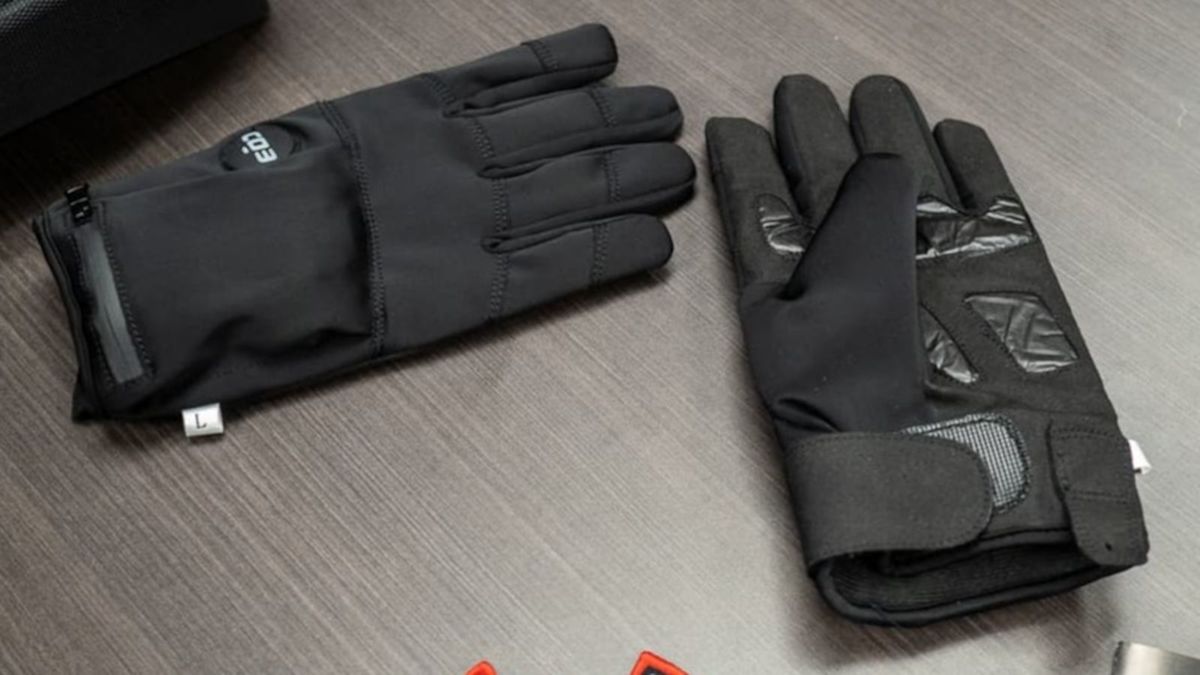
The dispute over shock gloves in schools brought Omaha’s mayor, police chief and school district leadership into the same room Thursday afternoon. By the police chief’s own account, nobody left thinking differently than when they arrived.
The Meeting
OPS Superintendent Matthew Ray and Board President Jane Erdenberger came to Omaha Police headquarters for a private session with Chief Todd Schmaderer, Mayor John Ewing and roughly 40 school resource officers.
Neither Ray nor Erdenberger spoke to reporters on the way out.
Schmaderer declined to discuss specifics but answered general questions afterward. Asked whether perspectives had shifted, he was candid.
He did not think any opinions had changed, he said, though he appreciated that the superintendent and board president came in person and treated the matter as important. Their presence, he added, showed they recognize the value of school resource officers.
What Prompted It
Earlier in the week, OPS asked that officers assigned to district schools stop carrying the devices as an enforcement tool.
Omaha police agreed. Bellevue police, which staffs two schools OPS oversees, did not.
The Chief’s Central Claim
Schmaderer’s position rests on a timeline argument: the district knew, and had years to object.
The department informed OPS about the low-voltage gloves three years ago and encountered no opposition, he said. They could have said no then. They could have raised concerns. They did not.
He described the relationship as ongoing rather than a single notice. The department clearly interfaced and sought feedback, he said, characterizing it as a process rather than a notification.
He also drew a line around when objections emerged. There was no opposition during contact with OPS, none when the purchase went to the city council, and none at all until the technology became linked to reporting that referenced ICE.
What the Emails Actually Show
A review of internal emails spanning January 2023 through August 2026 complicates that picture in one specific way.
The chain, titled “Compliant Technologies Gloves,” includes 15 named individuals: 11 from the police department and school safety officials from Omaha’s four metro districts.
Only one Omaha Public Schools employee appears anywhere in the 16-message exchange. That is Donald Morrison, the district’s school safety supervisor.
Superintendent Ray’s name does not appear as a sender, recipient or copied party on any message.
Asked directly whether he was certain Ray personally knew, Schmaderer answered honestly: he did not know, had never spoken with him about it, and took the superintendent at his word that the information never reached him.
How the Technology Was Pitched
Lieutenant Charles Ott of the Neighborhood Services Unit introduced the devices to district officials on January 24, 2023, after volunteering to be shocked during a company demonstration the previous month.
He described them as potentially transformative for school resource officers, capable of reducing use-of-force incidents and de-escalating situations by their appearance alone. He suggested they could end fights simply through skin contact.
Morrison stayed in the exchange for the following two years. In a March 2025 message, as the department sought funding, he noted that Bellevue police already had them for their SROs, covering two OPS secondary schools, and framed the district’s view as deferring to police judgment about what tools their work requires.
That message came more than a year before Ray and board members said publicly, at an August 17 meeting, that they had not been informed the gloves were in use.
A Question That Went Unanswered
The same March 2025 exchange contains a concern raised from outside the district.
Bill Jelkin, director of student services and school safety for Millard Public Schools, wrote that the issue could get tricky given that districts must navigate corporal punishment policies. He identified a line between schools and police that the gloves would ride, and said legal review would likely be required before approving their use.
Ott asked him to forward the question to Millard’s legal department before April 24, ahead of a funding decision.
The email chain, running through August 2026, contains no later message documenting that a review occurred or describing any outcome.
That question predates the national ICE coverage by more than a year, which undercuts the suggestion that concerns only surfaced afterward.
The Funding Route
The purchase did not move through Omaha’s ordinary police budget process.
Ott wrote in March 2025 that he had attempted to secure money in the previous two budgets without success. A February message indicates he pursued equitable sharing funds, derived from law enforcement asset forfeiture, as an alternative.
In May 2025, the department asked the Omaha City Council to approve 40 pairs, accompanied by an 18-page submission framed around school safety, according to Councilman Danny Begley.
The council approved the purchase in June 2025 through its consent agenda, the mechanism cities use to bundle routine items into a single vote.
Begley said there was little pushback at the time, noting that many members of the public follow council agendas closely and no opposition materialized. He explained that residents can ask council members to pull any item for separate debate, and that nobody requested it here. He said he is open to discussing changes to the process.
Officers across all four served districts were trained and issued the gloves on August 7, 2025.
How They Have Been Used
Omaha police report two uses on students during the 2025-26 school year.
One involved a student found trespassing at Omaha South High School. The other occurred at the district’s Integrated Learning Program, which serves students with social, emotional, behavioral and learning needs.
According to police reports, the second incident began when a security guard confiscated a lighter from a middle school student. The student, believing a paraprofessional had reported him, made threats against her, threw a chair that struck a security guard and punched the guard in the head.
An officer applied the glove for roughly one second, then again for two to three seconds when the student continued resisting. The student was taken into custody, and the school nurse reported no injuries.
Bellevue police confirmed two separate incidents in their schools, one during 2022-23 and one during 2024-25. Details have not been released.
What the Device Does
Both departments describe the G.L.O.V.E., or Generated Low Output Voltage Emitter, as delivering between 324 and 362 volts through skin-to-skin contact, activated only after verbal commands.
They characterize it as a lower level of force than a Taser, which a joint city statement said can deliver up to 1,000 volts through metal probes.
Where Things Stand
Following the August 17 board meeting, where more than 20 people spoke including parents on both sides, Ray sent letters on August 18 to Omaha’s mayor and police chief, Bellevue’s mayor and police chief, and the Douglas County Sheriff, requesting that SROs no longer be authorized to carry the gloves on OPS property.
Omaha agreed. Officers there continue carrying Tasers, OC spray, batons and firearms.
Bellevue declined. Chief Ken Clary said he is not comfortable asking officers to surrender a tool that has repeatedly proven safe, effective and less harmful than alternatives. He noted he has personally had the device used on him during testing and training and can attest that it works without causing injury or lasting effects.
Ray wrote to Bryan Middle and Bryan High families that Bellevue had declined the request and that SROs there will continue carrying the devices, adding that the district considers their use counterproductive to the working relationship.
Millard said it plans to engage with Omaha police to learn more. Westside said it continues investigating available tools before deciding. Neither has requested removal.
The Objections That Remain
Some parents want more than a policy change on one device.
At this week’s board meeting, parent Kacie Ware said she was glad the gloves would not be used but did not think it went far enough, noting that Tasers, pepper spray and police officers remain in schools. She described what she considered massive negligence in oversight at both the council and board level.
The Arc of Nebraska, a disability advocacy organization, opposed use of the devices on students, particularly those with intellectual or developmental disabilities, and requested transparency from districts and police about how the technology has been deployed.
The Underlying Problem
Ray has said he first learned the gloves were in use during the week of August 10, and that the episode exposed communication gaps between the district, police and school resource officers.
The email record supports that characterization more than it contradicts it. Contact existed and was sustained, but it ran through a single safety supervisor and never reached the superintendent’s office.
Whether informing one employee constitutes informing a district is the question underneath the entire dispute over shock gloves in schools, and it has implications well beyond this one piece of equipment.
Author