Ebola Americans Kenya Policy Sparks Backlash Over Treatment Abroad
The decision to send Ebola Americans to Kenya rather than bringing them home has ignited fierce debate, as Trump administration officials defended the plan on Thursday. Officials said Americans exposed to Ebola during the current outbreak in the Democratic Republic of Congo would be transported to a newly constructed facility at a Kenyan air base, arguing it represents the fastest path to quality care.
The approach marks a sharp departure from how the United States handled previous outbreaks, when infected or exposed citizens were brought back to American soil for treatment. That break with precedent has triggered strong objections from doctors, public health advocates, and career diplomats alike.
A Notable Shift in Policy
During earlier Ebola crises, the standard practice was to return Americans home for care in U.S. facilities. This time, the administration has chosen a different course, and the contrast has not gone unnoticed.
Among the most vocal critics is Craig Spencer, an American doctor who cared for Ebola patients during the 2014 epidemic in West Africa and was later treated in New York City after developing symptoms. He has characterized the decision to send U.S. citizens to Kenya as abandoning what he called the country’s responsibility for its own people.
Where Things Stand Now
As of the announcement, the Kenyan facility was not yet housing anyone. The current cases involving Americans were being handled in Europe:
- One American doctor, infected after treating an Ebola patient in Congo’s Ituri province, the epicenter of the outbreak, was being treated in Berlin.
- One of his colleagues was in Prague, though that individual had not shown symptoms.
Under the new plan, administration officials explained that any Americans moved to Kenya due to exposure would primarily quarantine there. Should they fall ill, they would ultimately be transported to Europe for more advanced treatment.
The Administration’s Justification
Officials framed the decision as a matter of medical practicality rather than politics. Speaking on the condition that their names not be used, one senior official insisted the choice was based purely on what would best serve the health of American citizens overseas. The official said the decisions were made to provide the best possible care and optimize outcomes for Americans abroad.
The reasoning centered largely on logistics and timing. Rather than subjecting exposed individuals to a lengthy journey back to the United States, officials argued it made more sense to bring them to closer, high-quality care institutions. The official emphasized there were no political factors involved, citing the long transit time home as the primary concern.
Secretary of State Marco Rubio offered a more pointed framing of the broader goal. At a Cabinet meeting, he stated firmly that the United States would not allow any cases of Ebola to enter the country.
Inside the Kenyan Facility
The new facility is taking shape at Laikipia Air Base, located in central Kenya roughly 125 miles north of the capital, Nairobi. The setup reflects a significant logistical undertaking.
Key details of the operation include:
- Fifty beds were to be available beginning Friday to quarantine Americans exposed to Ebola.
- Kenyan President William Ruto approved the plan, and the United Kingdom was in talks with the U.S. about joint access to the facility.
- Thirty U.S. healthcare specialists from the Commissioned Corps of the U.S. Public Health Service, trained to respond to disease outbreaks worldwide, would staff the site.
Some of those officers had responded to the 2014–2016 Ebola outbreak. They trained for three days at Joint Base Andrews in Maryland and would continue training upon arrival. Officials described the level of care as exceptionally high and noted that an additional group of officers would be trained to deploy the following week.
Treatment and Transport Logistics
The medical infrastructure extends beyond quarantine beds. The U.S. planned to transport three isolation units, each capable of housing four people who become symptomatic or test positive. In addition, two biocontainment units, each able to hold two patients, would care for symptomatic or positive individuals temporarily until they could be flown to Europe for higher-quality treatment.
The exact European destination remained undetermined, described as both an ongoing negotiation among the CDC, the State Department, and other countries, and a case-by-case medical decision. Officials stressed that medical professionals on the ground in Kenya would decide when transport should begin, making individualized determinations rather than applying a uniform approach.
At this stage, officials had no estimate for how many Americans, if any, would ultimately need to quarantine or seek treatment in Kenya.
Growing Opposition
The departure from past practice has drawn substantial pushback. Critics argue that the United States possesses more than a dozen of the world’s finest Ebola treatment facilities and should not deny its citizens, including those actively responding to the outbreak, access to that lifesaving care.
The American Foreign Service Association, the union representing career diplomats, formally protested the decision after it was first reported. The association argued that its members exposed to Ebola had a right to come home.
Spencer, writing on Substack, sharpened the critique by questioning the administration’s priorities. He noted that the administration had identified keeping Ebola out of America as its top priority and ending the outbreak in central Africa as its second, while pointing out that the Americans being asked to respond appeared nowhere on that list.
The Scale of the Outbreak
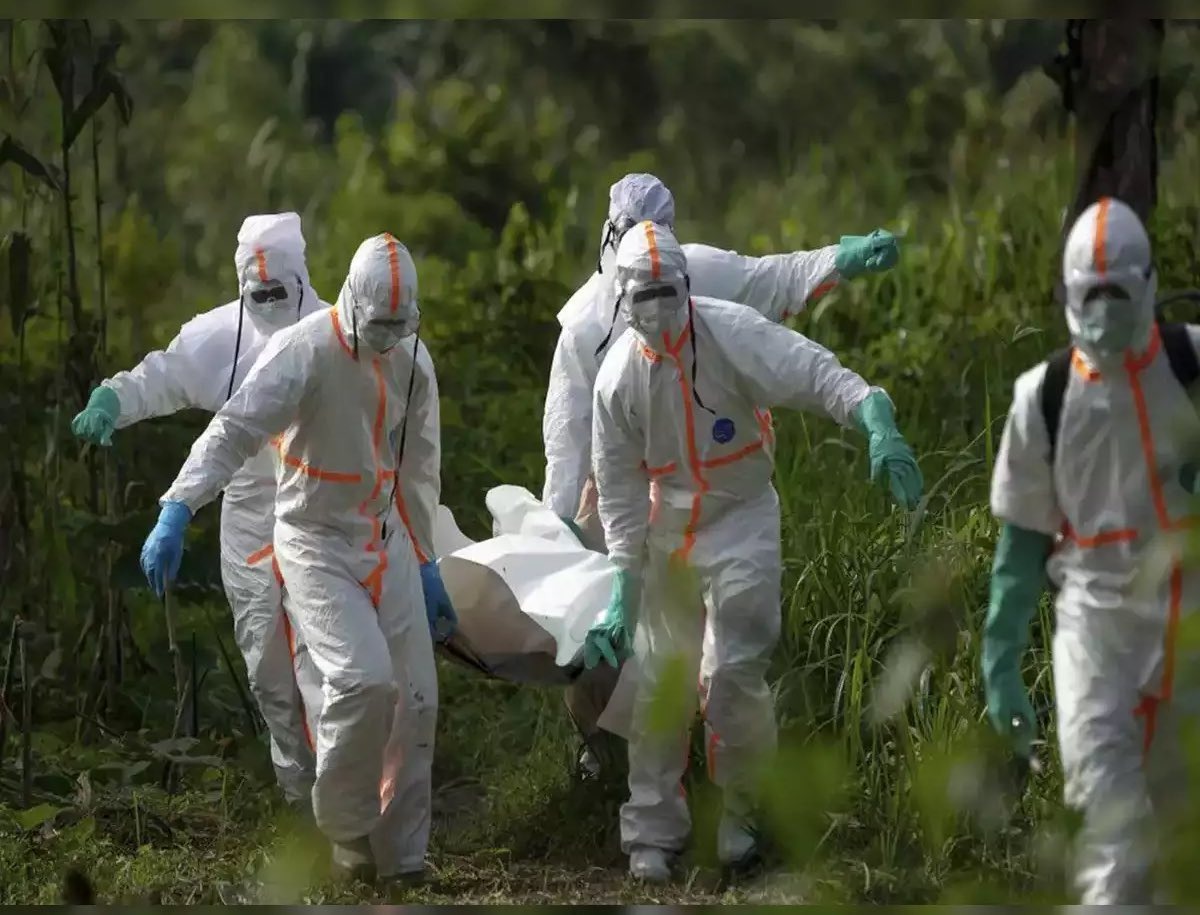
The stakes are considerable. The current outbreak involves a rare strain known as Bundibugyo, for which there are no licensed treatments or vaccines.
The toll has been severe:
- More than 1,000 people are suspected to have contracted the virus.
- Nearly 250 deaths have been attributed to it, according to the Africa Centres for Disease Control and Prevention.
- The outbreak now ranks as the third largest on record.
Public health officials fear the virus had been spreading for months before its discovery earlier this month. Tests for the Bundibugyo strain are harder to obtain, a factor that contributed to its late detection. Some working in the region attribute the delay partly to foreign aid cutbacks by the U.S. and other wealthy nations, while Rubio has blamed the World Health Organization for catching the outbreak late. WHO Director-General Tedros Adhanom Ghebreyesus pushed back, arguing that detecting and reporting outbreaks is the responsibility of individual countries rather than the WHO.
Broader Protective Measures
Beyond aiding Americans in the affected region, which spans the Democratic Republic of Congo, Uganda, and areas near South Sudan’s border with Ituri Province, the administration has taken additional steps to guard against domestic spread.
These measures include airport screenings for Americans returning from the affected area and travel restrictions for non-citizens seeking to enter the United States. One official framed the dual approach as complementary rather than contradictory, saying the goal was both to get Americans abroad the care they need and to ensure people in the United States do not contract the disease.
The Treatment of Current Patients
The handling of the two Americans already infected or exposed offers insight into the logic behind the European treatment strategy. The infected doctor, Peter Stafford, who works with the Christian missionary group Serge, was recovering at Berlin’s Charité Hospital. His colleague, Patrick LaRochelle, was being monitored at Prague’s Bulovka University Hospital.
A German government official explained that Germany agreed to a U.S. request to treat Stafford because of the country’s prior experience treating Ebola patients and because the shorter flight time to Germany allowed treatment to begin much more quickly.
Trump’s Past Stance
While President Trump has not personally weighed in on the current decision, his views during the 2014 outbreak are well documented. That epidemic, which lasted until 2016, became the deadliest of more than 30 Ebola outbreaks since the 1970s, killing more than 11,000 people. At the time, Trump argued that the United States could not allow infected individuals to return home, even posting that people who travel to faraway places to help must suffer the consequences.
What It All Means
The Ebola Americans Kenya policy has crystallized a difficult tension between protecting domestic public health and honoring a perceived obligation to citizens serving abroad. The administration frames the plan as a medically sound effort to deliver faster, high-quality care, while critics see it as a troubling abandonment of those on the front lines of a deadly outbreak.
As the facility prepares to open and the outbreak continues to grow, the debate is unlikely to fade. The coming weeks will reveal how many Americans, if any, end up relying on the Kenyan facility, and whether the strategy ultimately serves the citizens it is meant to protect. For now, the controversy underscores the painful choices that emerge when public health fears, logistics, and national responsibility collide.
This article discusses a serious and ongoing public health emergency. For reliable, up-to-date guidance, official sources such as the World Health Organization and the CDC provide current information and resources.
Author