President Donald Trump has set his sights on a major technological leap, signing executive orders aimed at building a powerful quantum computer by 2028. The move is designed to accelerate scientific research while strengthening defenses against the cybersecurity threats that quantum technology could unleash, positioning the United States more aggressively in its high-stakes race with China.
The orders highlight how seriously the administration views quantum computing, a field that could reshape everything from science to national security in the years ahead.
An Ambitious 2028 Target
The administration is aiming high. Michael Kratsios, director of the White House Office of Science and Technology Policy, said officials believe a powerful quantum computer could be achieved by 2028.
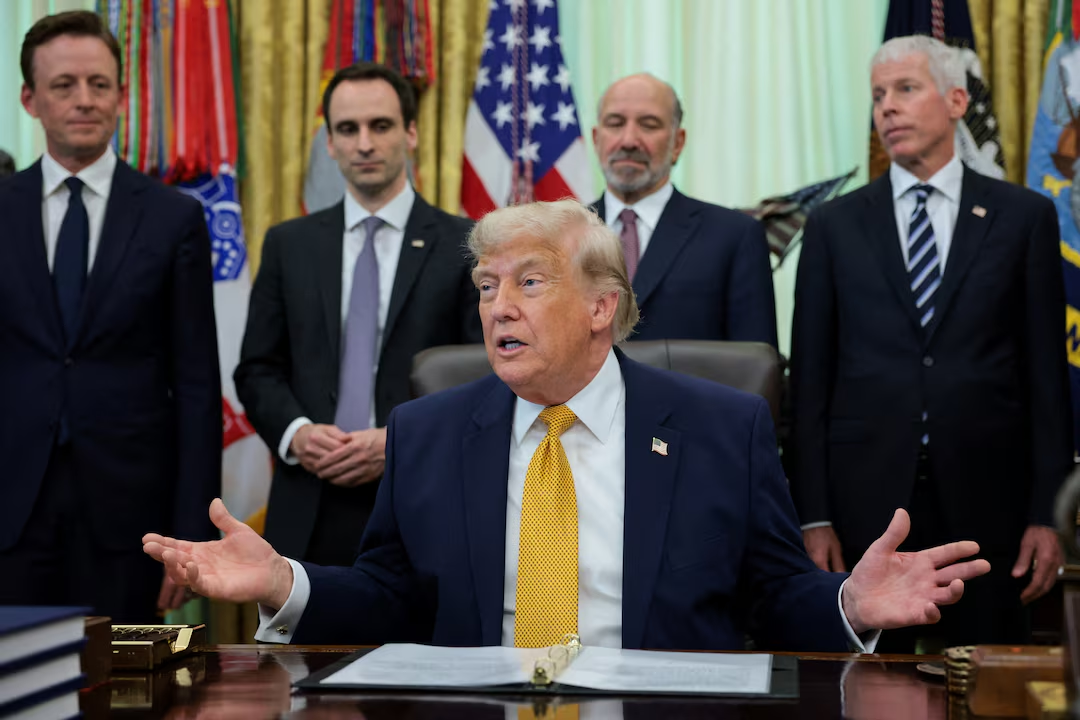
Trump signed two executive orders to advance these goals. While one focuses on developing the computer itself for scientific research, the other concentrates on protecting government systems from the unique cyber threats that quantum machines could pose.
That second order sets a goal of migrating key government computing systems to post-quantum cryptography by 2030 or 2031, a critical safeguard given what this technology could eventually do.
Why Quantum Computing Matters
To understand the urgency, it helps to grasp what makes quantum computers so powerful. These machines harness the laws of quantum physics to process information in ways that can solve certain complex problems far faster than even today’s most advanced supercomputers.
That raw power comes with a serious downside. Quantum computers could potentially unscramble the encryption that currently protects computers from hacking, raising the prospect of devastating cyberattacks. This dual nature, enormous promise alongside significant risk, is precisely why the administration is pursuing development and protection at the same time.
A Race With China
At the heart of these orders is a broader competition with China for leadership in quantum technology.
The administration is betting that securing an edge in this field could pay dividends across multiple critical domains. According to officials, advances in quantum computing could fuel progress in:
- Artificial intelligence
- Materials science
- Chemistry
At the same time, the orders reflect a determination to guard against the cybersecurity dangers the technology introduces. In other words, the United States wants to lead the field while also shielding itself from the threats that field will create.
The Push for Quantum Sensors
Beyond computing, the orders also call for the Pentagon to deploy quantum sensors by 2028. These sensors offer practical and potentially transformative capabilities, particularly in defense.
Among their potential uses, quantum sensors could:
- Help aircraft navigate in war zones where GPS signals have been disrupted
- When placed in satellites, detect underground activity such as tunnel construction or missile silos from space
Matthew Kinsella, CEO of Infleqtion, who attended the signing in the Oval Office, emphasized that quantum sensing can deliver valuable benefits even before quantum computing fully matures. He expressed confidence that the proposed timelines are realistic, noting there are many interesting things quantum sensing can bring sooner rather than later.
Protecting Intellectual Property and Supply Chains
The orders extend beyond hardware and into the realm of strategy and security. One of them aims to strengthen international cooperation on intellectual property protections and supply chain security.
Kratsios framed this as a response to the actions of rivals, pointing to competitors and adversaries seeking to undermine U.S. economic and national security. By bolstering these protections, the administration hopes to ensure that American advances in quantum technology are not stolen or compromised by foreign actors.
The Bottom Line
Taken together, the executive orders signal a comprehensive push to secure American leadership in one of the most consequential technologies on the horizon. The strategy is notably two-sided: chase the breakthroughs that quantum computing promises while simultaneously preparing defenses against the threats it could create.
With ambitious deadlines spanning quantum computers, sensors, and cryptography upgrades, the coming years will test whether these targets can be met. What’s clear is that the administration sees quantum technology not as a distant curiosity but as a present-day priority central to both scientific progress and national security in the race against China.
Author