Nvidia has cleared all three of the world’s largest memory chipmakers to supply their most advanced high-bandwidth products for its next-generation AI accelerators, a milestone CEO Jensen Huang confirmed publicly for the first time. The decision intensifies an already fierce competition among the trio for a share of one of the most lucrative corners of the semiconductor market.
The Big Three Get the Nod
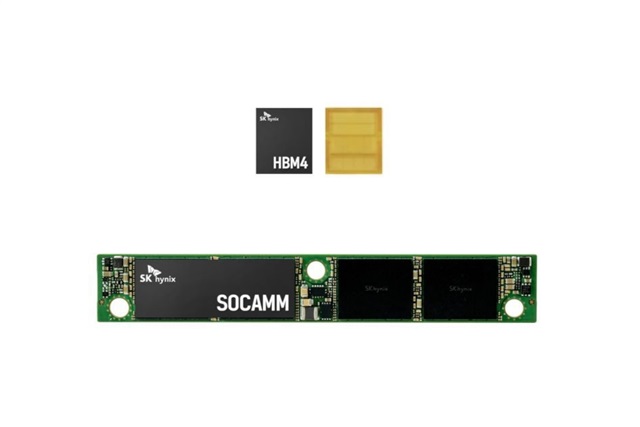
Huang has given the green light to Samsung Electronics, SK Hynix, and Micron Technology to provide HBM4, the high-bandwidth memory that serves as an indispensable component of Nvidia’s forthcoming Vera Rubin platform for artificial intelligence workloads. Together, these three companies dominate the global market for the storage semiconductors used in computing, and they compete aggressively for every slice of that business.
Speaking to reporters upon arriving in Seoul for a multiday visit, Huang left no ambiguity. He confirmed that all three vendors have been qualified, are in production, and are racing to support Vera Rubin. That qualification matters enormously, since it determines which suppliers get to feed one of the most anticipated product lines in the AI hardware race.
Inside Vera Rubin
The Vera Rubin platform is no longer a distant prospect. Huang said this week, while attending the Computex trade show in Taiwan, that the system is now in full production, with deliveries slated for the third quarter of this year.
The architecture itself is built for scale. Each system pairs clusters of Nvidia’s Vera central processing units with Rubin graphics cores, complemented by terabytes of HBM4 in every server. That heavy reliance on cutting-edge memory helps explain why securing supply from all three major chipmakers carries such strategic weight.
Memory: The Toughest Bottleneck
The emphasis on memory reflects a broader anxiety rippling through the industry. Memory has emerged as what Arm Holdings CEO Rene Haas described this week as probably the toughest bottleneck to resolve, a concern echoed widely among chip and AI companies.
Huang appeared keenly aware of that dependence. In an unusual gesture in Taipei on Monday, he hosted a dinner with his South Korean partners, including SK Group Chairman Chey Tae-won and SK Hynix CEO Kwak Noh-jung, openly acknowledging their critical role in the semiconductor supply chain. By certifying multiple suppliers rather than relying on a single source, Nvidia effectively hedges against the very bottleneck the industry fears most.
A Charm Offensive in Korea
Huang’s visit underscores just how central South Korea has become to Nvidia’s ambitions. He outlined a packed schedule, noting meetings lined up with Hyundai, LG, SK, Samsung, and Naver, among many others, along with further gatherings and a dinner with top Korean business leaders.
The trip is not all business. Huang said he planned to attend a baseball game over the weekend and teased that he had more surprises in store during his stay. He also revealed that Nvidia is actively hiring for a new research and development center in Korea, signaling a deeper, longer-term investment in the region.
Taken together, the qualification of all three memory giants and Huang’s high-profile courtship of Korean industry paint a clear picture. As demand for AI computing surges and memory remains the hardest piece to lock down, Nvidia is moving decisively to secure its supply chain, keep its biggest partners close, and ensure that Vera Rubin reaches customers without stumbling over the components that matter most.
Author