Former Air Canada Pilot Accused of Flying for 17 Years Without a Captain’s License
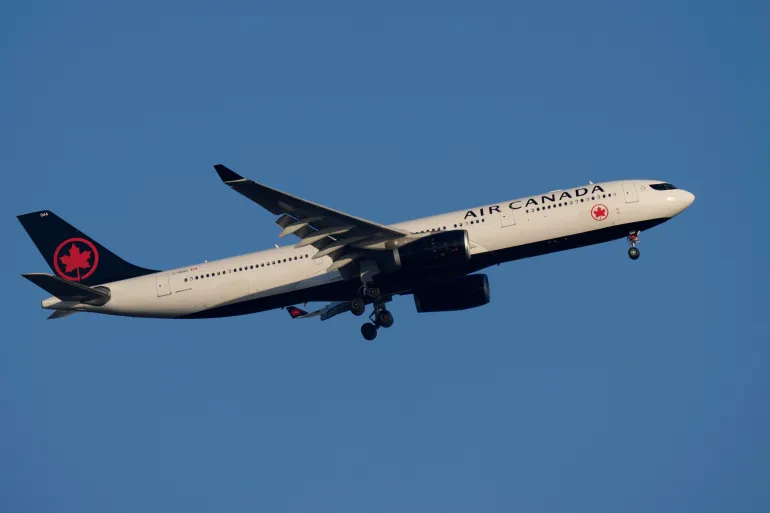
An Air Canada pilot spent nearly two decades in the cockpit of commercial jets without ever holding the license legally required to serve as captain, according to police in Ontario. The allegations, which emerged from a detailed fraud and forgery investigation, suggest the man piloted hundreds of flights carrying tens of thousands of passengers based on credentials that authorities say were forged.
The case has raised serious questions about how such a lapse could go undetected for so long, even as the airline insists that safety was never compromised.
The Scope of the Allegations
The investigation, fittingly named “Project Icarus,” uncovered what police describe as a years-long deception. According to officials, the pilot flew for Air Canada throughout his entire career, from 1998 to 2025, and forged a required license when he was promoted to captain in 2009.
The numbers involved are striking. Authorities say the man operated:
- Boeing 767, 777, and 787 passenger jets
- More than 900 domestic and international flights
- Flights carrying tens of thousands of passengers
Throughout all of it, police allege, he lacked the proper authorization to be in command.
For Peel Police Services Board Chair Nando Iannicca, the case represents a deliberate attempt to bypass systems built to protect the public. When that happens, he stressed, accountability becomes essential.
The Missing License
At the center of the case is a specific and crucial credential: the airline transport pilot license, or ATPL. Deputy Police Chief Nick Milinovich explained that this license is a firm requirement for anyone flying passengers in the role of captain.
Investigators believe the pilot never held that license during his entire tenure as a captain. Instead, according to Milinovich, the accused misrepresented his qualifications to both his employer and the regulator. Fraud Bureau Detective Sgt. Chad Mitchell emphasized that this high-level license is mandatory to operate the type of aircraft the man was flying at the rank of captain.
In other words, while the pilot was performing the duties of a captain for more than 15 years, he allegedly did so without the foundational certification the law demands.
How the Scheme Unravelled
The deception began to come apart during what should have been a routine moment. According to Detective Sgt. Mitchell, the catalyst for the investigation occurred in March 2025 at Pearson International Airport during a standard evaluation of the pilot’s credentials and performance.
During that evaluation, anomalies were detected in the license the pilot presented. Those irregularities triggered a chain of events:
- First, a regulatory investigation conducted by Air Canada
- Then, a criminal investigation launched by police in January after the airline notified Transport Canada
Air Canada has said it reported the matter voluntarily, flagging the issue to the regulator after conducting its own review.
A Curious Twist
The investigation also turned up an unusual detail. Milinovich said police believe the former pilot had filed a false police report concerning stolen pilot documentation, relating to an event that the investigation determined never actually occurred.
Officials offered no further explanation about that reported incident, leaving it as one of the more puzzling threads in an already complex case.
Charges and Court Proceedings
The pilot was arrested on June 1, and his first court appearance is scheduled for June 29 in Brampton. He faces seven counts in total, including:
- Fraud
- Uttering forged documents
- Public mischief
Police also said they do not believe anyone else was involved in the alleged scheme, and they noted that the pilot retired early in 2025.
Air Canada’s Response
Air Canada moved quickly to address the allegations, with a central message that passenger safety was never at risk. The airline pointed to its rigorous training requirements as evidence.
According to Air Canada, all of its pilots must complete mandatory recurrent training every six months to validate their flying competency. That includes a flight check with a certified Transport Canada check-pilot every 12 months. The airline argued that these safeguards ensured the individual remained a capable operator throughout his career.
In its statement, Air Canada described the man as a fully trained pilot who held a valid Commercial Pilot License and who consistently met or exceeded the required recurrent training, demonstrating a high level of competency in operating large aircraft.
At the same time, the airline did not dispute the core regulatory point. It acknowledged that captains of large aircraft operated by Canadian airlines are required to hold an airline transport pilot license, which is obtained by passing a series of written exams. The pilot in question, the airline confirmed, has been removed from active duty, and it said it takes the matter with the utmost seriousness.
The Distinction That Matters
The case hinges on an important nuance. Air Canada’s defense rests on the argument that the pilot was trained and competent, while the legal issue centers on whether he held the specific license the regulations demand.
In effect, the airline is drawing a line between practical ability and formal certification. The pilot may have been capable of flying the aircraft, but the law requires that captains also possess the ATPL, regardless of demonstrated skill. That gap between competency and credential is precisely what the criminal charges seek to address.
What Comes Next
For now, the matter remains under investigation, and the pilot is presumed innocent until proven otherwise in court. The Air Line Pilots Association acknowledged the situation in a statement, noting that it is subject to an ongoing investigation.
The case is likely to draw continued scrutiny, both for its sheer length and for the questions it raises about credential verification in commercial aviation. When the pilot appears in court on June 29, the proceedings will begin to test whether the allegations hold up and how a forged license could allegedly have gone unnoticed across more than 900 flights and nearly 17 years in the air.
Author