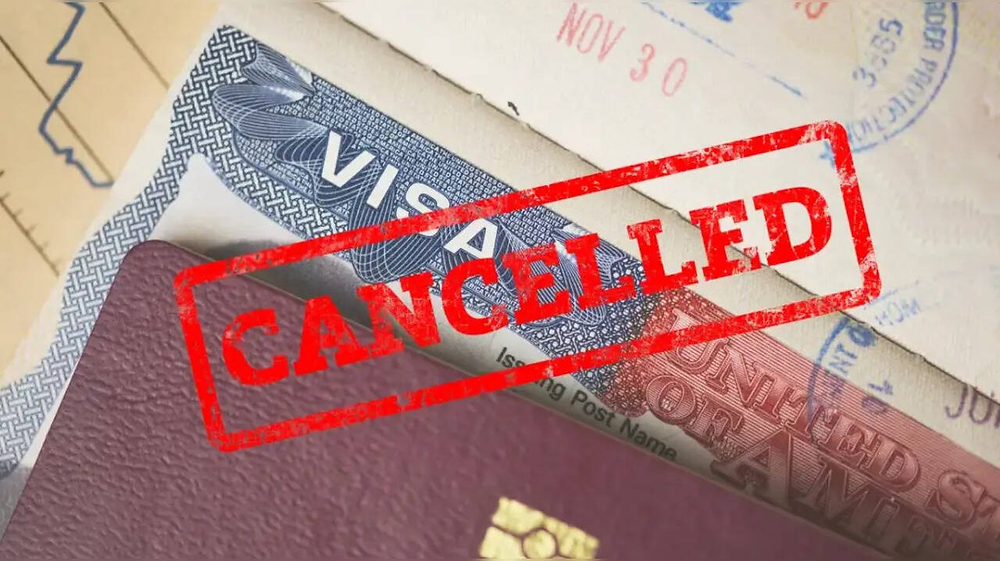
A mass visa revocation of a scale never before attempted in the United States is now taking shape inside the State Department, with as many as 200,000 foreign nationals potentially losing their business and tourism travel privileges.
The common thread among those targeted is straightforward: each entered or sought to enter the country on a short-term visa, then filed for asylum. Officials describe this as an abuse of the system. Immigration advocates are almost certain to describe it very differently, and courtroom challenges appear inevitable.
What Is Actually Being Planned
According to internal State Department documents reviewed by The Associated Press and accounts from two U.S. officials, an announcement could come within weeks unless the plan is blocked or scaled back.
The scope covers B1 and B2 visas issued across a full decade, from 2016 through 2026, held by people who have either already applied for asylum or have an application pending. The State Department would carry out the action jointly with the Department of Homeland Security.
B1 visas are typically granted for business travel. B2 visas cover tourism, visiting relatives and seeking medical treatment. Neither category is designed as a path toward permanent residence.
Department spokesman Tommy Pigott framed the effort as targeting people who present themselves as temporary visitors and then pursue permanent status once inside the country. He would not confirm any figure, explaining that the process will unfold continuously and that the count will shift as revocations are processed in batches rather than all at once.
Revocation Does Not Equal Immediate Removal
One important distinction is getting lost in early coverage. Losing a visa is not the same as being put on a plane.
Officials indicated that most individuals with asylum claims still pending would not face immediate deportation. Instead, they would be shifted into a different immigration category and would simply forfeit their standing as business or leisure travelers.
The practical effect is a loss of status and flexibility rather than instant expulsion. The officials discussing the plan requested anonymity, noting that nothing has been finalized.
Where the Data Came From
The documents suggest the review of existing B1 and B2 holders began after the State Department obtained asylum application information from U.S. Citizenship and Immigration Services. In effect, one agency’s filing records became another agency’s screening list.
Neither the documents nor the officials clarified precisely how many current visa holders have asylum claims on file, which leaves the ultimate number uncertain even to those drafting the policy.
Worth noting: applicants for B1 and B2 visas are already required to affirm that they do not intend to seek asylum and to demonstrate that they plan to return home. That existing requirement is central to the administration’s argument, since it frames subsequent asylum filings as contradicting a prior declaration.
The Political Framing
Deputy Secretary of State Christopher Landau made the administration’s case publicly on Monday, writing on X that people domestically and internationally have grown frustrated with what he characterized as fraudulent asylum claims. He argued that asylum was never meant to serve as a workaround for immigration rules.
Landau pointed to one example: a Colombian national who arrived on a tourist visa in 2015 and later filed for asylum.
Critics of this framing tend to raise a different set of points. Asylum law permits people already inside the United States to apply, and circumstances in a home country can deteriorate after someone has departed. Distinguishing genuine claims from strategic ones is precisely what the adjudication process exists to do, which is why a blanket revocation covering a ten-year span is likely to draw challenges.
Part of a Wider Tightening
This proposal does not stand alone. Since the start of the current term, visa policy has narrowed on several fronts at once:
Applicants have faced expanded scrutiny of their social media activity and online histories.
Certain applicants have been required to post substantial financial bonds simply to have their applications processed.
Citizens of specific countries have been barred from receiving visas altogether.
Enforcement has also accelerated for existing visa holders. Over the past 18 months, roughly 175,000 visas have been pulled. Those cases spanned a wide range, from people convicted or accused of offenses as varied as drunk driving, robbery and rape, to individuals who publicly criticized American foreign policy, particularly regarding the Middle East.
The administration has separately pursued what it calls birth tourism, alleging that pregnant women travel to the United States specifically so their children acquire citizenship at birth. Efforts to eliminate birthright citizenship outright have repeatedly failed in court, including at the Supreme Court.
Why the Legal Fight Will Be Fierce
Several features of this plan make litigation almost a certainty.
The retroactive reach is unusual. Applying a new enforcement posture to visas issued as far back as 2016 raises questions about reliance and fairness for people who obtained their documents under a different policy environment.
The scale invites scrutiny of process. Individualized visa revocation is routine and rests on broad executive discretion. Revoking a category numbering in the hundreds of thousands based on a shared characteristic looks less like discretion and more like rulemaking, which typically carries procedural obligations.
The interaction with asylum protections is delicate. Federal law and international commitments limit how a country may treat people with pending protection claims, and attorneys will probe whether stripping status functions as a penalty for exercising a legal right.
What Comes Next
For now, nothing is official. The announcement has not been made, the final number is unsettled, and the mechanics of how revocations will be sequenced remain unclear.
What is clear is that if the plan proceeds as described, it would surpass anything comparable in American immigration history by scale alone, and it would immediately land in front of federal judges. The people affected would find themselves in an unfamiliar position: still in the country, still awaiting a decision on protection, but no longer holding the document that legally brought them there.
Author