US-Iran Deal Within Reach but Hinges on Leaders’ Approval
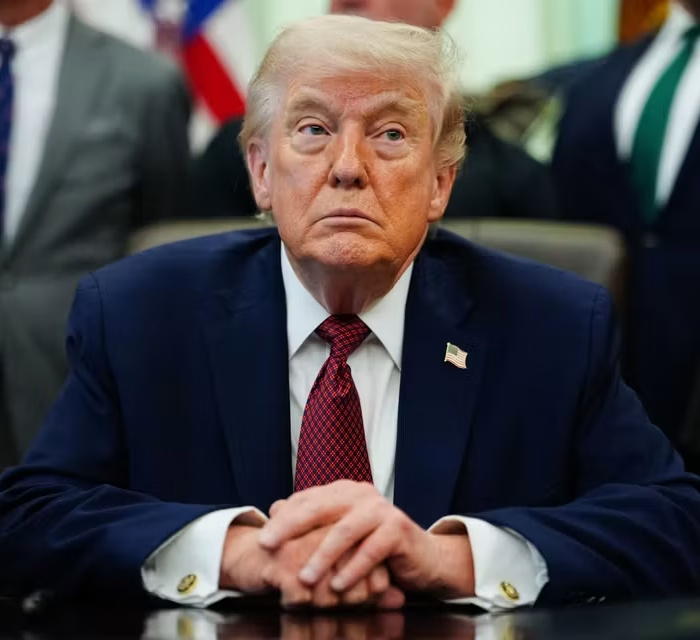
A tentative US-Iran deal aimed at ending months of conflict in the Middle East has emerged, with senior officials on both sides confirming the framework on Thursday. Yet the breakthrough carries a significant caveat: President Donald Trump and Iran’s leadership in Tehran are still reviewing the terms, meaning nothing is final.
The announcement came on the heels of a tense night in which American and Iranian forces traded drone and missile fire across the region. That exchange underscored just how fragile the ceasefire declared in April remains, even as diplomats work toward a more lasting resolution.
A Framework With Strict Conditions
Treasury Secretary Scott Bessent described the tentative agreement as multifaceted and emphasized that it still awaits Trump’s potential approval. He made clear the president was approaching the review with firm expectations, noting that Trump has several red lines and would not accept a bad deal.
According to Bessent, certain conditions must be met before any agreement can move forward. He said nothing would be on the table until Iran agrees to reopen the Strait of Hormuz, the vital waterway through which roughly 20 percent of the world’s oil flows. Beyond that, Iran would be required to hand over its highly enriched uranium and abandon any nuclear program.
These specific demands have proven to be major sticking points, with disagreements over uranium and Iran’s nuclear ambitions repeatedly derailing earlier provisional deals.
Economic Pressure Continues
Even as talks progress, the United States has maintained heavy financial pressure on Tehran. Bessent indicated the administration is continuing efforts to squeeze the Iranian regime economically, describing consequences that reportedly include unpaid military salaries and police officers failing to report for duty.
The pressure campaign extends to several fronts:
- A U.S. Navy maritime blockade has sharply reduced the flow of Iranian crude oil to global markets.
- The administration plans to restrict Iranian airlines’ access to landing spots, refueling, and ticket sales.
Bessent framed the strategy bluntly, stating that only a satisfactory outcome in negotiations would halt what he called the downward spiral facing Iran.
Overnight Military Clashes
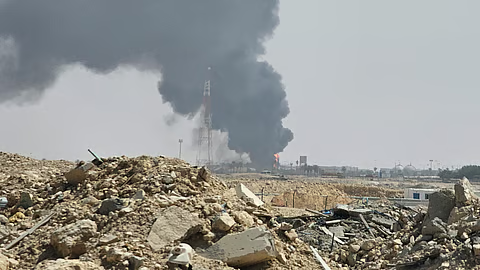
The diplomatic developments unfolded against a backdrop of active hostilities. Overnight, U.S. forces struck an Iranian launch site in Bandar Abbas along the Strait of Hormuz after shooting down five Iranian one-way attack drones, according to U.S. Central Command.
Military officials said the drones threatened shipping in the strait and that Iran had been preparing to launch a sixth. In response, Iran’s Islamic Revolutionary Guard Corps said it retaliated by firing at a U.S. air base in Kuwait, claiming the strike on Bandar Abbas had originated there.
The picture grew more complicated from there:
- It remained unclear exactly which U.S. base in Kuwait was targeted, though the country hosts a substantial American military presence.
- Central Command said Kuwaiti forces successfully intercepted an Iranian ballistic missile and condemned Tehran’s action.
Competing Narratives Over Who Started It
Each side offered a starkly different account of the clash. A U.S. official, speaking anonymously, characterized the American actions as measured, purely defensive, and intended to preserve the ceasefire. American military officials said they remained vigilant and measured while defending their forces from what they called unjustified Iranian aggression.
The IRGC told a different story, accusing the United States of firing first and warning of escalation if Iran were attacked again. In a statement, the Guard described its response as a serious warning and vowed that any repeat would draw a more decisive reaction, placing responsibility for the consequences squarely on what it called the aggressor.
This latest flare-up followed earlier exchanges in the week, including U.S. strikes on Monday against Iranian missile launch sites and boats that American officials said were laying mines in the strait.
The Sticking Points: Uranium and Frozen Assets
At the heart of the negotiations lie deep disagreements over Iran’s enriched uranium stockpiles and its nuclear program. Iran, for its part, is demanding sanctions relief and the release of billions of dollars in frozen sovereign funds.
A senior Iranian security official, Ali Bagheri Kani, told Russian state media that Iran’s assets must be returned fully and unconditionally. Trump struck a far less accommodating tone. When asked about the frozen funds, he said the United States controls money that Iran claims as its own and would keep that control until Tehran behaves properly and does what is right.
Trump’s Confident Posture
At a Cabinet meeting, Trump expressed confidence that he held maximum negotiating power and felt no pressure to rush into an agreement. He compared the current timeline favorably to past American conflicts, pointing out that wars in Vietnam, Korea, and Afghanistan stretched on for years while the current situation had lasted only months.
That framing carries political risk, however. Trump faces growing domestic discontent, including frustration over high gasoline prices, with midterm elections less than six months away. Despite this, he insisted he did not care about the midterms and dismissed any notion that Iran could simply outwait him.
Israel, Hezbollah, and Regional Complications
Trump’s efforts to close a deal are further tangled by broader regional dynamics, particularly his relationship with Israeli Prime Minister Benjamin Netanyahu, who has pushed for additional strikes.
Several factors are complicating the path to a comprehensive agreement:
- Trump reportedly pressed allies including Saudi Arabia and Qatar to normalize relations with Israel, seeking a diplomatic win for Netanyahu, though these allies have largely downplayed the idea.
- Ongoing fighting between Israel and the Iranian-backed group Hezbollah in Lebanon has added another layer of difficulty.
The violence in Lebanon intensified this week. The Israel Defense Forces conducted an airstrike near Beirut reportedly targeting a senior Hezbollah commander and struck multiple locations across southern Lebanon. Israel had earlier expanded the territory it considers combat zones, and a strike on a southern Beirut suburb killed three people, including a woman and two children, while injuring fifteen others, according to Lebanon’s health ministry.
Military officials from Israel and Lebanon are scheduled to meet at the Pentagon under U.S. supervision, with separate political talks expected the following week.
The Strait of Hormuz and Global Oil Prices
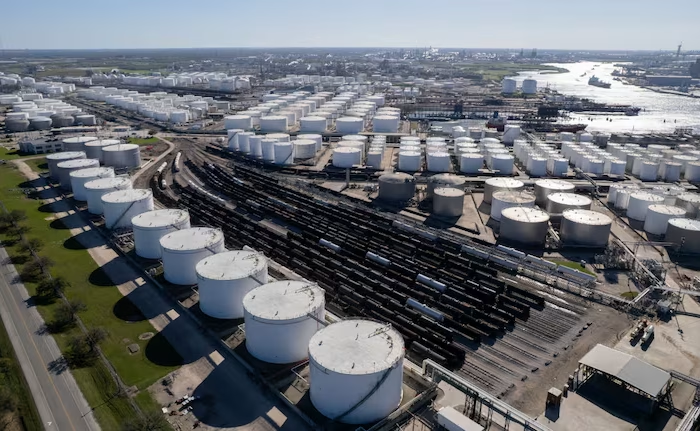
The absence of a comprehensive deal has carried real economic consequences worldwide. The effective closure of the Strait of Hormuz in recent months has driven a global spike in oil prices and pushed up gasoline costs significantly in the United States.
Tensions over the strait have grown especially heated. The Trump administration reacted furiously to Iran’s proposal to collect tolls from tankers passing through the waterway. Trump even threatened to “blow up” Oman, a key mediator, following reports that the nation was discussing jointly charging tolls with Iran.
In a defiant note, Trump downplayed American dependence on the strait altogether, declaring that the United States has so much of its own oil that it does not need the waterway or anything else from it, even as he continued to call for it to be reopened.
What Comes Next
For now, the fate of the US-Iran deal rests in the hands of two leaders weighing their options carefully. The framework represents real progress after months of conflict, but the strict conditions, ongoing military clashes, and tangled regional politics mean a final agreement is far from guaranteed.
Whether the tentative deal holds will depend on difficult compromises over uranium, frozen assets, and the reopening of the Strait of Hormuz. As negotiators continue their work and leaders deliberate, the coming days could determine whether the region moves toward peace or slips back into deeper confrontation.
Author