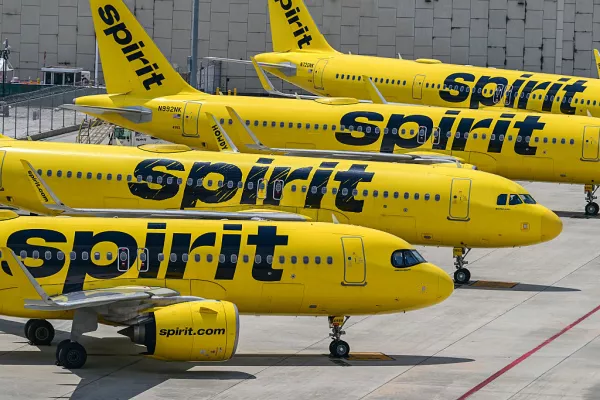
The Spirit Airlines aircraft future has become one of the most talked-about stories in aviation following the airline’s sudden shutdown. With 91 of its 114 planes left scattered across 26 airports, the question of what happens next to these bright yellow jets is now playing out in real time. Some have already begun the journey toward their next chapter, while others sit silently on tarmacs awaiting their fate.
A Sudden End to Spirit Airlines
Spirit Airlines abruptly ceased operations last week after a long and difficult struggle. The airline had been battered by two bankruptcies, soaring fuel prices, and a failed government bailout that ultimately sealed its fate. In what felt like an instant, around 17,000 employees lost their jobs, thousands of flights were canceled, and travelers were left stranded at airports across multiple regions.
The company had been struggling for years, never fully recovering from the travel slump caused by the COVID-19 pandemic. Spirit became the first U.S.-based airline to file for bankruptcy since American Airlines in 2011, and unlike its predecessors, it could not regain stability after emerging from Chapter 11 the first time. A second bankruptcy filing followed just months later, and a planned merger with JetBlue was blocked by federal regulators.
Fuel Prices Delivered the Final Blow
Just when Spirit’s leadership thought things were beginning to stabilize, the airline was hit with another major shock. Following the start of the war in Iran in February, jet fuel prices soared by nearly 70 percent. Spirit, already operating on razor-thin margins, had no financial cushion to absorb the impact.
The U.S. government attempted to step in with a rescue plan that would have given it 90 percent ownership of the airline. By May 1, however, the deal collapsed, and Spirit began preparing to wind down operations. According to the airline, its final flight — Flight NK1833 — departed Detroit Metro Airport for Dallas Fort Worth International Airport just before midnight, with operations officially ending around 3 a.m.
Stranded Travelers and Heartfelt Goodbyes
The closure created chaos for both passengers and employees. Travelers were left stranded across the United States, the Caribbean, and Latin America, while flight attendants and pilots had to find their way back to their home bases on other airlines. Some competing carriers offered limited-time discounted fares to assist stranded passengers, and Spirit has reported that most credit and debit card refunds have already been processed.
There were also emotional moments. Spirit captain Jon Jackson was scheduled to make his retirement flight on the morning of the shutdown but never got the chance. Instead, he and his pilot son boarded a Southwest Airlines flight to Baltimore. Once the captain of that Southwest flight learned of the situation, the airline gave Jackson a hero’s farewell — including a water cannon salute, champagne, and a cheering crowd upon arrival.
Where the 91 Spirit Planes Are Headed
At the time of its closure, Spirit operated 114 aircraft, all variants of the Airbus A320 and A321 families. Of those, 91 were grounded at 26 airports across the country. The remaining fleet had already been reduced as part of the airline’s restructuring efforts.
Reports indicate that 66 of Spirit’s aircraft were leased, while 28 were owned outright. An additional 20 owned planes were already earmarked for sale through a separate court agreement. Beyond the aircraft, Spirit also held 18 spare engines, maintenance facilities, an office building in Florida, and valuable airport gate positions and landing slots — including coveted spots at LaGuardia and Newark Liberty International.
A Liquidation With Plenty of Buyers
Spirit’s liquidation has opened a flood of opportunities for other airlines. Airbus is currently working through a backlog of more than 8,000 aircraft orders, meaning carriers wanting new planes might face years of waiting. Spirit’s stranded jets offer a far quicker path to expanding fleets.
However, getting these aircraft moved is not easy. Airports charge daily fees for parked planes, so creditors and lessors are racing to recover the aircraft before fees pile up. Roughly a dozen different lessors own the 66 leased aircraft, and each one is now navigating the recovery process.
Nomadic Aviation Group Takes the Lead
A specialized firm called Nomadic Aviation Group has been hired by six aircraft owners to ferry the planes away from their stranded locations. Founded in 2021, Nomadic specializes in moving aircraft for lessors, including delivery flights, repossessions, and storage transitions.
Interestingly, Nomadic has hired at least 20 former Spirit pilots to handle these ferry flights. The pilots fly the abandoned A320s and A321s to desert storage facilities at Phoenix Goodyear Airport and Pinal Airpark in Arizona. The arid climate of these locations is ideal for long-term aircraft storage, with low humidity and minimal corrosion ensuring the planes remain in good condition.
A Sentimental Final Flight for Some
For some former Spirit pilots, these ferry missions provide an emotional opportunity. Many are grateful for paid work during a time of sudden job loss, while others see it as one last chance to fly the yellow jets they grew so attached to.
The repossession process, however, is not always straightforward. Reports indicate that Nomadic’s pilots, often dressed in plain clothes, sometimes face confusion at airports where staff are unaware that the planes are being legally reclaimed. In some cases, airport workers have called police, mistaking the operation for an attempted theft.
Despite these challenges, the operation has been moving steadily. On May 4, three Spirit A321s were ferried from Houston, Fort Lauderdale, and Miami to Arizona. Six more were transferred the following day, and additional flights continue regularly.
Will You Fly on a Former Spirit Plane Again?
The future for many of these aircraft is far from over. Once stored, planes typically have their engines, windows, and ports covered to protect them from environmental wear. They then wait for new owners or lessees to take them on, often emerging later with fresh paint, new interiors, and a different airline’s livery.
Considering that the average age of Spirit’s fleet was just seven years, most of these aircraft have plenty of operational life remaining. Some, however, may end up being parted out, with engines and components being sold separately for use elsewhere.
Challenges Ahead for Creditors
Spirit’s creditors may face an unexpected hurdle in selling off the aircraft. The same fuel prices that contributed to the airline’s downfall could discourage other carriers from acquiring more planes right now. While Airbus’s massive backlog makes Spirit’s jets attractive in theory, airlines must weigh whether expanding fleets is wise during a period of high operating costs.
Most analysts believe the planes will eventually find new homes, though the process could take time.
Not All Airline Shutdowns End in Storage
It’s worth noting that desert storage isn’t the only outcome for shuttered airline fleets. When carriers like Trans World Airlines and Northwest Airlines were absorbed by larger competitors, many of their planes simply continued flying under new branding. Spirit’s fate, however, is closer to a complete liquidation, with assets being distributed across multiple buyers.
A Quiet Goodbye for the Yellow Jets
If you happen to spot one of Spirit’s iconic yellow planes flying overhead in the coming weeks, chances are it’s empty and headed to its new desert resting place. Eventually, many of those same aircraft will return to the skies — wearing new colors, new logos, and serving entirely new passengers under a different airline’s flag.
For former Spirit Airlines employees, the hope is that they too will find new homes in the aviation industry, much like the planes they once worked aboard. The Spirit Airlines aircraft future may be uncertain in some ways, but one thing is clear — these planes still have many miles left to fly.
Author