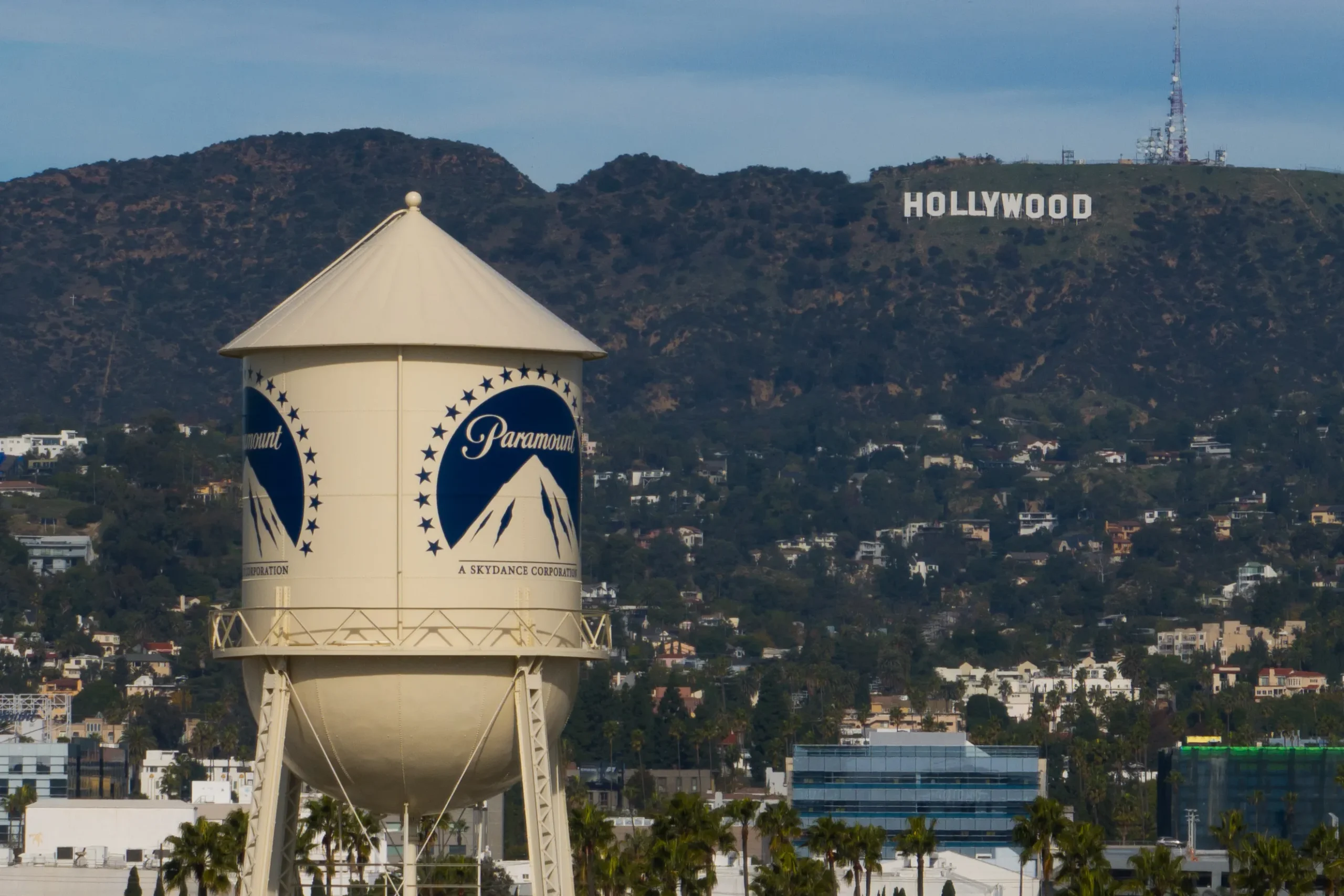
The Paramount-Warner Bros. merger has ignited one of the biggest legal battles Hollywood has seen in years, and the union representing film and television writers is now standing squarely in its path. Just one day after a dozen state attorneys general moved to stop the deal, the Writers Guild of America (WGA) launched its own legal challenge, determined to derail what could become the largest entertainment acquisition in recent memory.
A New Legal Roadblock for a $111 Billion Deal
On Tuesday, the WGA filed suit in the U.S. District Court for the Northern District of California, arguing that the proposed Paramount-Warner Bros. merger violates antitrust law. At the heart of the union’s argument is a simple but powerful concern: combining two century-old studios would create a single dominant buyer of film and television content, one with enough leverage to reshape wages and working conditions across the industry.
According to the complaint, if the deal goes through, the newly merged company would become the biggest purchaser of original film and television programming in the country. The union warns that this would wipe out meaningful competition from a studio that has shaped American entertainment for more than a hundred years.
The filing doesn’t mince words. It describes the merger as a direct threat to both the financial and creative wellbeing of the entertainment world, predicting lower pay for writers, weaker contract terms, and a shrinking pool of diverse projects.
Why Competition Matters for Writers
To understand the union’s concern, it helps to picture how the current system works. Right now, major studios compete for scripts and talent. That rivalry benefits writers directly, since they can attract multiple offers and use competing bids as leverage to negotiate better deals.
This competition creates ripple effects that extend far beyond individual paychecks:
- Studios chase originality to stand out from rivals, leading to more varied storytelling.
- A larger volume of projects gets greenlit as companies take creative risks.
- Audiences enjoy a wider, richer selection of films and shows.
The WGA argues that merging Paramount and Warner Bros. would shatter this delicate balance. With fewer buyers in the market, the combined company would have both the motivation and the muscle to cut costs by trimming writer wages and reducing output. The predictable result, the union says, is fewer jobs, smaller paychecks, and a more homogenized entertainment landscape for viewers.
The Numbers Behind the Case
The union’s argument leans heavily on market share data. It claims the merger would produce a company controlling more than 30 percent of the market, a threshold the Supreme Court has historically flagged as “presumptively anticompetitive.”
The WGA’s figures paint a striking picture of just how dominant the combined entity would be:
- Roughly 35 percent of film writing jobs between 2021 and 2024
- About 36 percent of television writing projects from 2022 to 2025
- Around 38 percent of overall deals between 2021 and 2024
In the union’s view, these numbers make the case for concern impossible to ignore.
Debt, Layoffs, and the Fear of Fewer Projects
Another major worry centers on money, specifically the enormous debt the merged company would carry. The WGA points to the roughly $79 billion in debt the new entity would take on, arguing that such a heavy financial burden creates a strong incentive to slash jobs and reduce production rather than grow it.
The union also raises an unsettling possibility: coordination among the industry’s biggest players. As the number of major studios shrinks, the WGA suggests it becomes easier for companies to quietly underbid on writers’ work, a practice that’s harder to detect and harder to stop in a heavily consolidated market.
The complaint also pushes back on optimistic promises from Paramount Skydance CEO David Ellison, who has said the combined company would release around 15 films a year theatrically and open new doors for creative talent. The union dismisses those assurances, arguing they ignore both historical patterns and the practical limits of an annual release schedule.
Paramount Responds
Paramount Skydance isn’t backing down. A company spokesperson reiterated its belief that the merger would ultimately strengthen Hollywood and expand opportunities for workers, promising more development slates, more greenlit series and films, and continued collaboration with the guild’s writers.
The company framed itself as a storytelling institution with genuine respect for the WGA, pointing to commitments made in its recently renewed collective bargaining agreement. It also argued that blocking the deal would only accelerate the industry’s decline and hand more power to large tech companies. Warner Bros. Discovery, named as a co-defendant in the suit, declined to comment.
A Union With a History of Big Fights
This lawsuit fits neatly into the WGA’s long track record of resisting corporate consolidation. Since the merger was first announced, the union has openly opposed it, with leaders speaking out at town halls and warning members about the potential fallout.
The guild is no stranger to high-stakes battles. In 2023, it waged a 148-day strike against major studios over sustainable pay, streaming-era working conditions, and the growing role of artificial intelligence. And back in 2019, it flexed serious muscle by rallying members to fire their talent agents en masse during a dispute over agency practices and packaging fees.
WGA West president Michele Mulroney summed up the union’s position clearly, warning that a successful Paramount takeover of Warner Bros. would create the single largest buyer of original film and television programming in the nation. She argued this would crush competition in an already shrinking industry, threatening both worker livelihoods and creative diversity, and praised the state attorneys general who filed their own challenge alongside the union.
The Bigger Picture
The fight over the Paramount-Warner Bros. merger is about far more than two studios joining forces. It’s a defining moment for the future of creative work in entertainment. As consolidation reshapes Hollywood, the outcome of this legal battle could set the tone for how much power any single company can hold over the writers, artists, and stories that fuel the industry. For now, the WGA has made its stance unmistakably clear: this deal, in its view, must be stopped.
Author