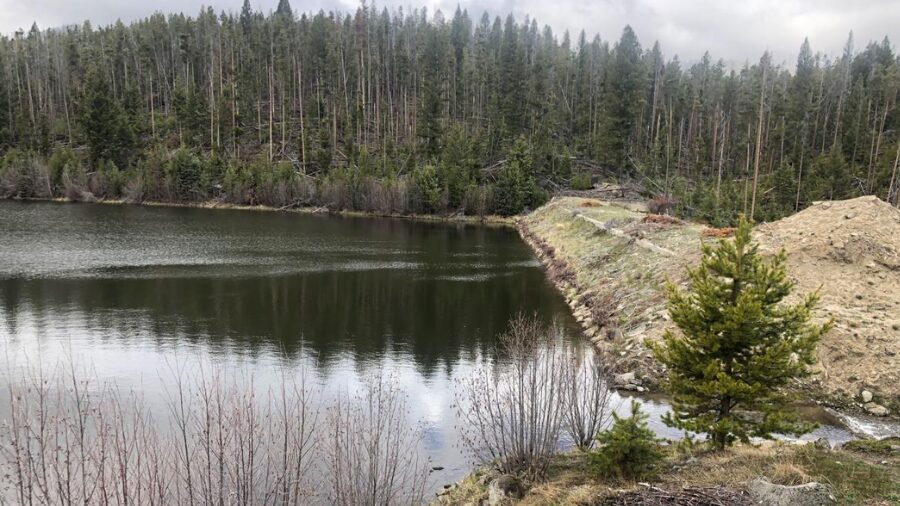
The roadless rule, a quarter-century-old protection covering some of the wildest terrain in the national forest system, is now on the chopping block. The administration announced Tuesday that it intends to strike the policy entirely, a move that could expose close to 45 million acres to road construction, drilling and timber harvesting.
What the Rule Actually Does
Adopted in 2001 during the final stretch of Bill Clinton’s second term, the Roadless Area Conservation Rule emerged from mounting alarm over logging practices in national forests that critics considered unsustainable.
Its function is simple. In designated roadless areas, no new roads get built. Because industrial-scale logging and resource extraction depend on road access, the prohibition effectively shields those tracts from heavy development without requiring a separate ban on each activity.
The US Forest Service, housed within the Department of Agriculture, filed the formal proposal to rescind the rule in full.
The Case for Repeal
Agriculture Secretary Brooke Rollins has been signaling this move since last summer, describing the existing rule as overly restrictive and calling it an absurd obstacle to development.
In announcing the proposal, she framed the issue around forest health and fire risk. Outdated restrictions, she argued, have placed tens of millions of forested acres beyond the reach of treatments that would improve conditions and reduce danger to nearby communities. The filing, she said, restores authority to local forest managers who understand their own landscapes best.
Forest Service chief Tom Schultz put it more bluntly, saying active forest management is not optional but essential. He cited figures indicating that more than forty percent of inventoried roadless areas, concentrated mostly in the West, carry high or very high wildfire hazard potential, while only five percent have received hazardous fuels reduction treatment since 2014.
The Case Against
Conservation groups rejected the wildfire rationale almost immediately, arguing it inverts the actual relationship between roads and fire.
Alex Craven, who manages forest campaigns for the Sierra Club, said blaming the roadless rule for worsening fire risk ignores both the evidence and the text of the rule itself. Roads, he noted, tend to produce more ignitions rather than fewer, since human activity follows access.
He also pushed back on the premise that the rule blocks fuel treatment work. Targeted actions to reduce hazardous fuels have always been permitted. What the rule prevents, in his framing, is using fire danger as justification for opening intact public forests to industrial development and new road networks.
Craven described the policy as the only barrier standing between much of the remaining wild national forest and industrial use, pointing to habitat value, clean air and water for millions of people, and the concentration of surviving old-growth stands.
Which Places Are at Risk
The affected areas stretch across wildly different landscapes and climates.
- Tongass National Forest in Alaska, the largest roadless area in the system
- Chugach National Forest, also in Alaska
- Tahoe National Forest in California
- Land along the Appalachian Trail corridor
- Forests across Oregon and North Carolina
The Tongass draws particular attention. It stores enormous quantities of carbon and supports populations of brown and black bears, wolves and bald eagles.
Emma Powell of the Alaska Wilderness League called the country’s last great backcountry forests something other than bargaining chips, describing the Tongass and Chugach as global treasures. She also made an economic argument that cuts against the development framing, noting that fisheries, tourism and outdoor recreation tied to those landscapes sustain thousands of jobs and generate billions of dollars in annual activity.
Concerns About Process
Beyond the substance, several groups questioned how the decision is being made.
Maggie Rabb, who leads the Southeast Alaska Conservation Council, argued that requirements under the National Environmental Policy Act are being handled as formalities to satisfy rather than genuine analysis. The underlying goal, in her view, is political: clearing what remains of intact old-growth forest.
The Natural Resources Defense Council urged supporters to file comments, warning that the proposal would expose tens of millions of acres to logging, drilling and road construction across some of the most recognizable public lands in the country.
The Permanence Problem
One argument surfaced repeatedly from opponents, and it concerns time rather than acreage.
Randi Spivak, public lands policy director at the Center for Biological Diversity, described the proposal as the largest reduction of public lands protection in American history and one that runs against public preference. Her central point was about reversibility. Once roads are cut for commercial logging and industrial work, she said, they do not go away.
That observation reflects a real asymmetry in land management. A regulation can be written, repealed and written again. A road system, along with the fragmentation, erosion and access it creates, persists on the landscape for generations regardless of which policy is in effect.
How to Weigh In
The public comment window closes on September 21.
Comment periods on major federal rules routinely draw enormous participation, and this one is likely to follow that pattern given the organized campaigns already underway. Agencies must consider substantive comments, though consideration does not obligate them to change course.
What Happens After
Rescinding a rule of this scale rarely ends at the agency level. Litigation is close to certain, with challenges likely to focus on whether environmental review requirements were satisfied and whether the stated justification holds up against the record.
Courts have blocked or delayed previous attempts to alter roadless protections, particularly in Alaska, and that history suggests the eventual outcome may be determined by judges rather than by the comment count.
For now, the roadless rule remains in force, and the fight over its future has only started.
Author