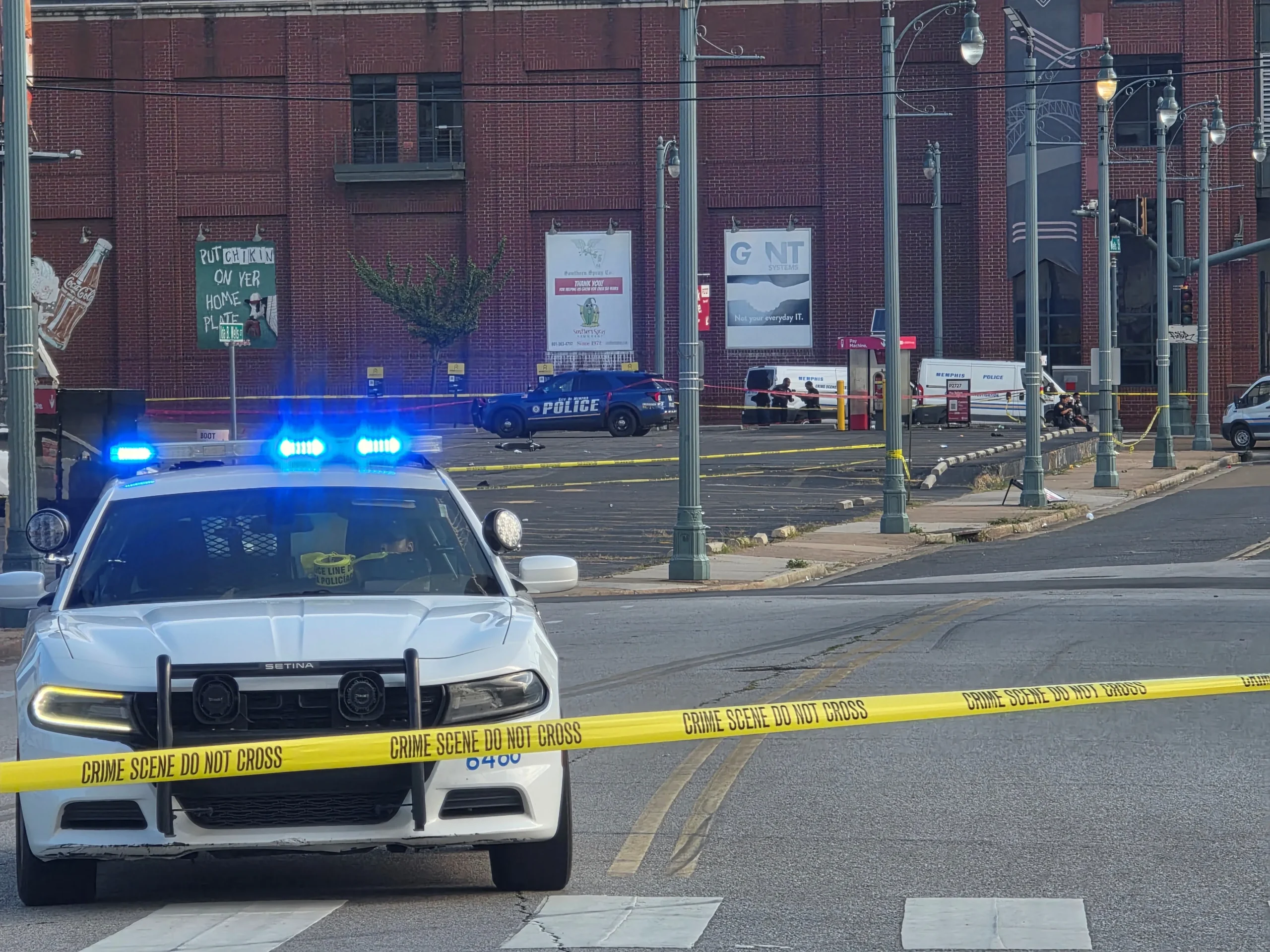
The latest Memphis National Guard shooting has ignited fresh scrutiny over the federal presence in the city, after soldiers fatally shot a 20-year-old man during an early morning patrol on Sunday. As a state investigation gets underway, the incident has reignited a heated debate about the deployment of military forces onto American city streets.
A Deadly Encounter Downtown
The tragedy unfolded in downtown Memphis while members of the Tennessee National Guard were patrolling as part of a task force established under President Donald Trump. The Tennessee Bureau of Investigation identified the man killed as Tyrin Johnson.
According to the bureau, which has taken charge of the investigation, the soldiers involved were assigned to the Memphis Safe Task Force. This unit brings together several federal agencies, local police, and the National Guard, and it was created through a presidential declaration back in September.
Memphis stands as one of several cities led by Democrats where Trump has stationed federal forces to advance his broader immigration and anti-crime objectives.
How the Shooting Happened
Based on the TBI’s preliminary account, the incident began when Memphis police pursued an armed man on foot after reports that he had fired shots early Sunday. National Guard soldiers stationed nearby joined the chase.
The bureau described a rapidly deteriorating situation. For reasons still under investigation, the encounter escalated, prompting two soldiers to open fire on Johnson, striking and killing him. Notably, no law enforcement personnel were injured.
Memphis police offered a similar timeline. Officers had responded to a report of gunfire downtown and spotted a man carrying a weapon who then fled. As both police and Guard members pursued him, the man reportedly turned toward the soldiers with his weapon, at which point they discharged their firearms. He was pronounced dead at the scene.
A Family in Mourning
Behind the official statements lies a family grappling with devastating loss. Terracle Nelson, a 46-year-old cousin of Johnson, told reporters that relatives learned he had been shot twice in the chest.
Another relative, Evaniel Johnson, painted a picture of a young man with a promising future. He shared that Tyrin was the father of a small child, was preparing to take the helm of the family construction business, and had a deep passion for making music.
Evaniel expressed a desire to withhold judgment until investigators release their findings and any available video footage. His words conveyed profound grief, noting that Tyrin still had so much life ahead of him and that he would never get to enjoy what the family had been building together. He described the pain as something no grandparent should ever have to bear.
Limits of the Investigation
The TBI has stated it will keep the state attorney general’s office updated as its probe continues. However, the bureau clarified that it will not determine whether the soldiers’ actions were justified, nor will it identify the Guard members involved.
The investigation itself was requested by the attorney general’s office, according to TBI spokesperson Kim Wheeler-Elder. Citing the ongoing nature of the case, the bureau declined to offer further details.
When approached, the White House directed all inquiries about the investigation to the task force, whose communications fall under the U.S. Marshals. White House spokeswoman Abigail Jackson defended the operation, asserting that the task force in both Memphis and Washington, D.C., has contributed to declining crime, the removal of dangerous criminals, the recovery of missing children, and the seizure of illegal weapons.
Crime Trends Tell a Complex Story
The deployment’s justification rests heavily on Memphis’s crime reputation. In recent years, the city recorded some of the highest violent crime rates in the entire country.
Yet the picture had already been shifting before the shooting. Consider these developments:
- In January, the Memphis Police Department reported a significant drop in crime during 2025.
- The city logged fewer than 200 homicides that year, a figure not seen since 2019.
- An analysis by the Council on Criminal Justice found continued declines across most crime categories through 2025, mirroring trends in other large cities.
Meanwhile, the Memphis Safe Task Force has been highly active. According to Brady McCarron of the U.S. Marshals Service, the task force has made 10,791 total arrests for a range of alleged offenses.
A Troubling Pattern of Fatalities
Sunday’s shooting was not an isolated event. It followed two other fatal shootings involving task force members earlier in the year.
In May, Drug Enforcement Administration agents shot 41-year-old Darrin Pigram while serving a warrant. He later died at the hospital, with the agency stating he had drawn a gun on the agents.
Just a week later, Jonah Neal was fatally shot by a Homeland Security special agent inside his home, where multiple weapons were reportedly found. As of June, the TBI was still investigating whether the agent fired the fatal shot or whether Neal died from a self-inflicted stab wound.
Aggressive Tactics and Public Fear
The task force’s approach was clear from the outset. When federal patrols began last October, White House deputy chief of staff Stephen Miller urged members to “police aggressively.” At the announcement, he declared them “unleashed” and warned that gang members had no idea how ruthless the task force would be.
That rhetoric has fueled anxiety in a city where 63% of residents are Black. Many have voiced fears of harassment and expressed concern about trading high crime for excessive policing.
The controversy has spilled into the courts:
- Opponents filed a lawsuit seeking to halt the deployment. A judge blocked it last October, but that ruling was overturned on appeal.
- The American Civil Liberties Union has sued both state and federal governments, alleging that people attempting to document the task force’s activities face retaliation.
In the ACLU’s filing, individuals described accounts of intimidation and, in some cases, violence directed at those recording the task force’s operations.
Final Thoughts
The death of Tyrin Johnson has become the latest flashpoint in an increasingly contentious chapter for Memphis. On one side, federal officials tout falling crime and thousands of arrests as evidence of success. On the other, residents and civil rights advocates warn of overreach, fear, and mounting casualties.
As the TBI continues its investigation, Johnson’s family waits for answers, holding onto memories of a young father and aspiring musician whose future was cut short. Whether this shooting prompts renewed challenges to the federal deployment remains to be seen, but for now, Memphis finds itself once again at the center of a national reckoning over safety, accountability, and the proper role of military forces in American communities.
Author