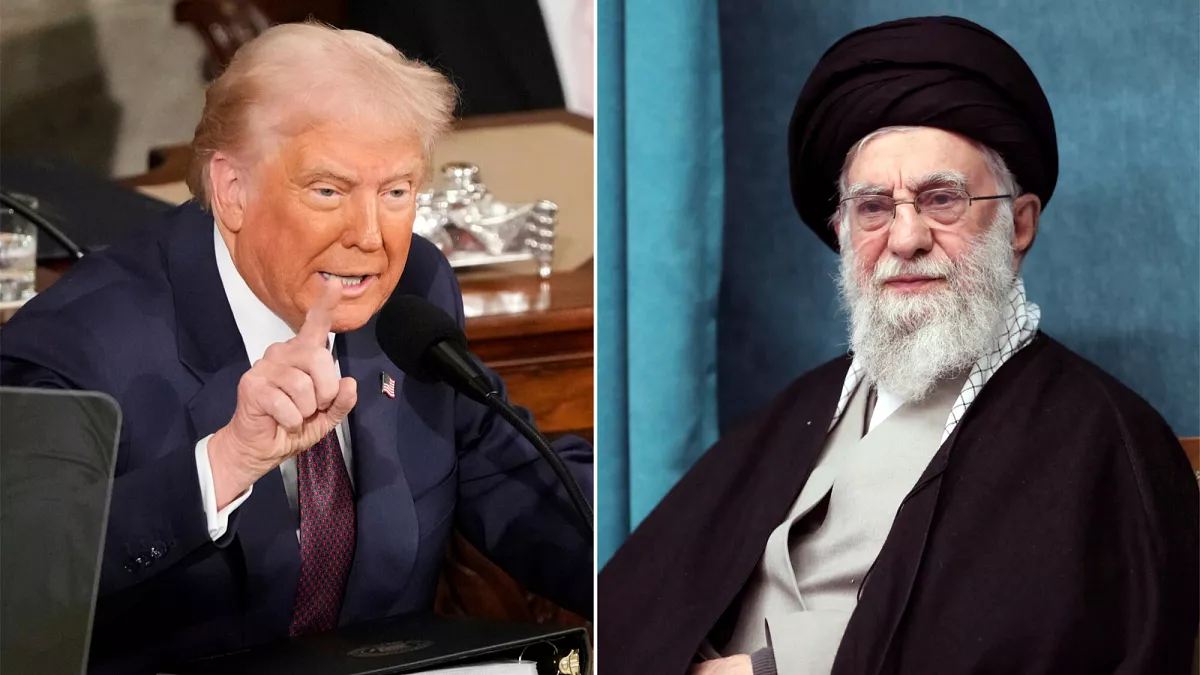
The future of Iran nuclear negotiations hangs in a delicate balance after Tehran issued a sharp warning to Washington. Iranian Foreign Minister Abbas Araghchi made it clear that no discussions toward a final agreement will move forward as long as the United States continues to issue threats, setting the stage for a tense diplomatic standoff.
A Firm Message From Tehran
Araghchi’s remarks came in direct response to renewed pressure from US President Donald Trump. Just hours earlier, Trump had reignited warnings of potential military action, declaring that America would either strike a deal with Iran or, in his words, “finish the job.”
The foreign minister’s position signals that Iran is unwilling to be bullied to the negotiating table. His message drew a firm line: dialogue cannot begin under the shadow of intimidation. This exchange highlights the deep mistrust and hostility that continue to define relations between the two nations.
Trump’s Blunt Warnings
Speaking to reporters in the Oval Office, Trump delivered a series of forceful statements that left little room for ambiguity. His comments painted a picture of a president determined to prevent Iran from acquiring nuclear capabilities, by force if necessary.
Among the key points Trump made were the following:
- He insisted that concessions had already been secured and that Iran must uphold them, emphasizing there would be no nuclear weapon. He referred to the enriched material as “nuclear dust” that the US was in the process of obtaining.
- Trump claimed his sole motivation was ensuring Iran never possesses a nuclear weapon. While denying he sought regime change, he acknowledged that two Iranian regimes had already fallen, expressing cautious hope that a third might prove more reasonable.
- He boasted about what he described as an unprecedented naval blockade, asserting that no ship had passed through for two months before it was eased amid hopes of reaching a deal.
Perhaps most striking was his declaration that the US would prevail one way or another. Trump stated bluntly that America would either make a deal or complete its military objective, adding that finishing the job would not be difficult.
Threats of Devastating Force
Trump didn’t stop at general warnings. He detailed the destructive capabilities the US could unleash, framing a deal as the preferable option primarily to spare civilian lives.
He mentioned a desire to avoid affecting Iran’s population of 91 million people, yet simultaneously described how quickly American forces could dismantle the country’s infrastructure. According to Trump, the US could destroy bridges within an hour and knock out energy supplies and major power plants in a fraction of an afternoon.
He also pointed to Iran’s economic struggles, claiming the country had lost access to its wealth. Trump asserted that America could eliminate Iran’s electricity and power-generating facilities almost instantly, suggesting the Iranian leadership was fully aware of this reality.
A Nation in Mourning
Against this backdrop of geopolitical tension, Iran is simultaneously grappling with profound grief. Funeral prayers for the country’s slain Supreme Leader, Ayatollah Ali Khamenei, along with members of his family, are underway in the holy city of Qom.
The solemn ceremonies have drawn significant attention, not only for the mourning itself but for a conspicuous absence that has sparked public curiosity and speculation.
The Mystery of Mojtaba’s Absence
One notable figure missing from the public mourning has raised eyebrows across Iran. Mojtaba Khamenei, a prominent member of the ruling family, has not appeared at the ceremonies, and officials have attributed his absence to an ongoing threat of assassination.
His disappearance from public view stands in sharp contrast to the visible presence of other family members. Ali Khamenei’s sons Mostafa, Meysam, and Masoud all attended the week-long period of public mourning for their father. Additionally, numerous political leaders and foreign dignitaries were present, making Mojtaba’s absence all the more conspicuous.
This has fueled rumors about the severity of injuries he may have suffered in the attack that claimed his father’s life. The uncertainty surrounding his condition has become a topic of quiet concern among ordinary citizens.
Public Anxiety Over National Security
For many Iranians, the situation reflects a deeper unease about the state of their country. A 26-year-old attendee named Masoumeh, present at the funeral in Tehran, offered a poignant reflection on how much has changed.
He observed that his country is no longer the Iran of the past, where leaders appeared openly in public. While he dismissed Mojtaba’s absence as irrelevant in one sense, he suggested that a public appearance would have symbolized the nation’s security. Its absence, he felt, indicated that the former sense of safety no longer prevailed.
Masoumeh added that the late supreme leader had embodied Iran’s strength, underscoring the emotional and symbolic weight of the loss the country now faces.
Turmoil Beyond Iran’s Borders
The tensions surrounding Iran are unfolding amid broader instability across the region. Several developments have added to the volatile atmosphere.
The UK’s maritime agency reported that an unknown projectile struck a tanker off the coast of Oman, sparking a fire. Fortunately, no casualties were reported in the incident, though it added to concerns about maritime security in the area.
Meanwhile, significant shifts are occurring in Gaza. Hamas announced that it will no longer govern the territory, clearing the way for a technocratic committee to assume control. This development comes as Israeli forces continue carrying out deadly attacks on the Palestinian territory as well as on Lebanon, where violence persists despite ceasefire efforts.
What Lies Ahead
The standoff between Iran and the United States remains fraught with danger. Trump’s ultimatum, demanding either a deal or facing military consequences, leaves little middle ground, while Araghchi’s refusal to negotiate under threat suggests neither side is prepared to back down easily.
As Iran mourns its fallen leader and questions swirl about the security of its ruling family, the pressure from Washington shows no signs of easing. The coming weeks could prove pivotal in determining whether diplomacy prevails or whether the region descends further into conflict.
Final Thoughts
The current crisis captures the immense challenges facing Iran on multiple fronts. Internally, the nation confronts grief, uncertainty, and anxiety about its security following the loss of its supreme leader. Externally, it faces relentless pressure and explicit threats from a US president determined to prevent it from obtaining nuclear weapons.
Araghchi’s warning that talks cannot proceed amid threats reflects a fundamental impasse. With Trump equally insistent on his terms, the path forward remains deeply uncertain. For now, the world watches closely, aware that the decisions made in the days ahead could carry profound consequences not just for Iran and the United States, but for the stability of the entire Middle East.
Author