A China submarine missile test in the Pacific Ocean has ignited a wave of criticism from across the region, with New Zealand and Australia leading the charge in condemning what they view as a threat to peace and stability. The unusual military exercise, carried out on Monday, has thrust Beijing’s growing nuclear capabilities back into the international spotlight.
What Actually Happened
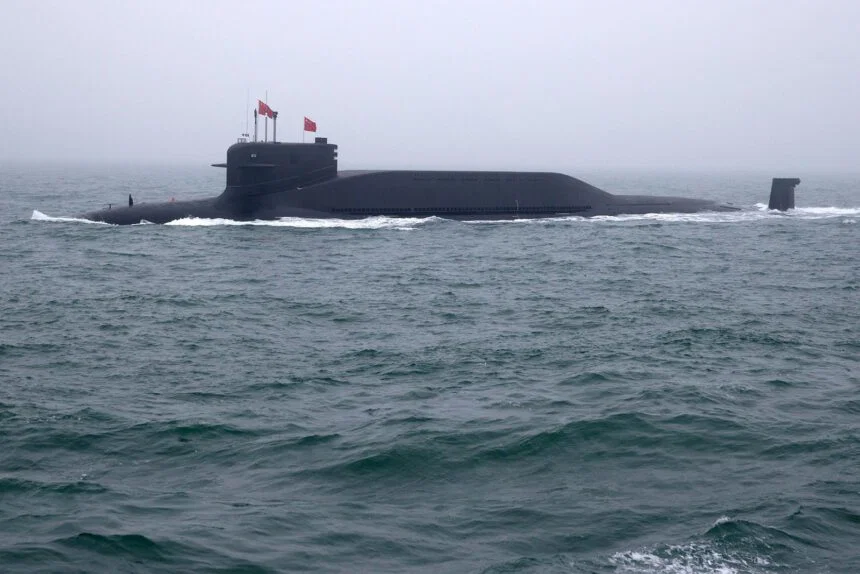
According to Chinese military officials, a People’s Liberation Army Navy submarine launched a strategic missile carrying a dummy warhead into designated waters of the Pacific Ocean. The projectile reportedly landed with precision in the targeted zone.
Senior Capt. Wang Xuemeng, speaking on behalf of the PLA Navy, sought to downplay the significance of the launch. He characterized it as a routine component of China’s annual military training schedule and insisted that relevant nations had been notified beforehand.
Wang further emphasized that the operation complied with international law and standard practice, stressing that it was not aimed at any particular country or objective. Despite these reassurances, the test has clearly rattled several nations throughout the Pacific.
A Missile That Crossed Sensitive Waters
The path of the missile only added to regional anxieties. A source familiar with the situation indicated that the projectile traveled over the exclusive economic zones of several island nations, including the Federated States of Micronesia, Nauru, Kiribati, and Tuvalu. It ultimately landed near the boundary between the economic zones of either Kiribati or Tuvalu.
The United States also kept a close watch on the event. The State Department confirmed it had monitored the launch, describing the weapon as a nuclear-capable but unarmed intercontinental-range ballistic missile.
Washington did not mince words in its response. Officials expressed deep concern over what they called Beijing’s rapid and secretive nuclear weapons expansion, warning that it poses a significant worry for both the region and the wider world. The US urged China to participate in meaningful arms control discussions.
Understanding China’s Submarine Arsenal
Notably, Beijing declined to specify which type of missile was tested. However, some context helps illuminate the capabilities involved.
The PLA Navy currently operates two varieties of submarine-launched ballistic missiles:
- The JL-2, an earlier-generation weapon
- The JL-3, which possesses enough range to strike the continental United States from waters near China, including the South China Sea
China’s primary ballistic-missile submarine is the Type 094, also referred to as the Jin class, and the country maintains a fleet of six such vessels. Beijing rarely discloses details about its missile tests, but records indicate the JL-3 was first tested in 2018, followed by another test the subsequent year.
Regional Leaders Voice Strong Objections
The reaction from neighboring countries was swift and pointed. New Zealand’s Minister of Foreign Affairs, Winston Peters, highlighted a particularly troubling aspect of the test: the missile was fired into waters covered by the South Pacific Nuclear Free Zone.
This zone was established in 1986 through the Treaty of Rarotonga, and China signed two of its key protocols in 1987. Those protocols carry important commitments:
- Protocol II calls on signatories to refrain from using or threatening to use nuclear weapons against nations or territories within the zone.
- Protocol III prohibits nuclear testing within the designated area.
Peters explained that China had informed New Zealand of its plans to launch the long-range missile into the South Pacific. He described the development as both unwelcome and concerning, emphasizing that neither New Zealand nor its Pacific neighbors have any interest in seeing the region used as a testing ground for missile technology.
Australia and Others Weigh In
Australia joined the chorus of criticism. Foreign Minister Penny Wong labeled the test destabilizing to the region, framing it within the broader context of China’s rapid military expansion. She noted that this buildup lacks the transparency and reassurance about intentions that the region expects, leaving it to Beijing to clarify its purposes.
The concerns extended beyond the immediate Pacific neighbors. A Japanese government statement voiced serious apprehension about China’s increasingly active military operations and called on Beijing to reconsider conducting ballistic missile tests.
Taiwan, the self-governing island that China has vowed to bring under its control by force if necessary, also condemned the launch. Presidential spokesperson Karen Kuo remarked that Beijing’s actions had generated unease throughout the region and underscored what she characterized as China’s increasingly evident ambitions to expand its influence in the Western Pacific.
Putting the Test in Perspective
While the reactions were sharp, it’s worth acknowledging that missile testing is a common practice among nuclear-armed nations. Peters himself recalled that the current test evoked memories of 2024, when the PLA conducted a similar intercontinental ballistic missile launch in the region.
Several other major powers have carried out comparable exercises recently:
- The US Navy conducted four tests of its Trident submarine-launched ballistic missile off the coast of Florida last September.
- India tested a submarine-launched ballistic missile in December.
- Russia conducted its own SLBM test the previous October.
These examples illustrate that such demonstrations of capability are far from unique to China. Nevertheless, the location and circumstances of Beijing’s test amplified regional concerns.
China’s Expanding Nuclear Ambitions
The test fits into a larger pattern of military growth. China has been steadily building up its fleet of nuclear-powered submarines as part of a broader effort to strengthen its overall nuclear forces.
This latest launch follows a notable precedent. In September 2024, China tested an intercontinental ballistic missile in the Pacific, firing a nuclear-capable DF-31B missile from Hainan Island in the South China Sea into open waters near French Polynesia. Remarkably, that event marked China’s first test of an ICBM into the open ocean in 44 years.
According to a US Defense Department report, China typically conducts its missile tests within its own borders. The report highlighted that in December 2024, Beijing launched several ICBMs in rapid succession from a training base in the country’s western region, demonstrating an ability to quickly deploy multiple silo-based missiles. The assessment noted that the PLA regards such tests as a viable option for medium-to-high intensity nuclear deterrence operations.
Final Thoughts
The rare submarine-launched missile test has clearly touched a nerve across the Pacific, drawing rebukes from New Zealand, Australia, Japan, and Taiwan alike. While China insists the exercise was routine and lawful, the decision to fire a missile into a nuclear-free zone has raised uncomfortable questions about Beijing’s intentions and its commitment to regional stability.
As China continues to expand its nuclear and submarine capabilities, its Pacific neighbors are watching with growing unease. The demand for greater transparency and meaningful arms control dialogue is likely to intensify in the days ahead. For now, the test serves as a stark reminder of the shifting balance of power in the Western Pacific and the delicate diplomacy required to maintain peace in an increasingly tense region.
Author