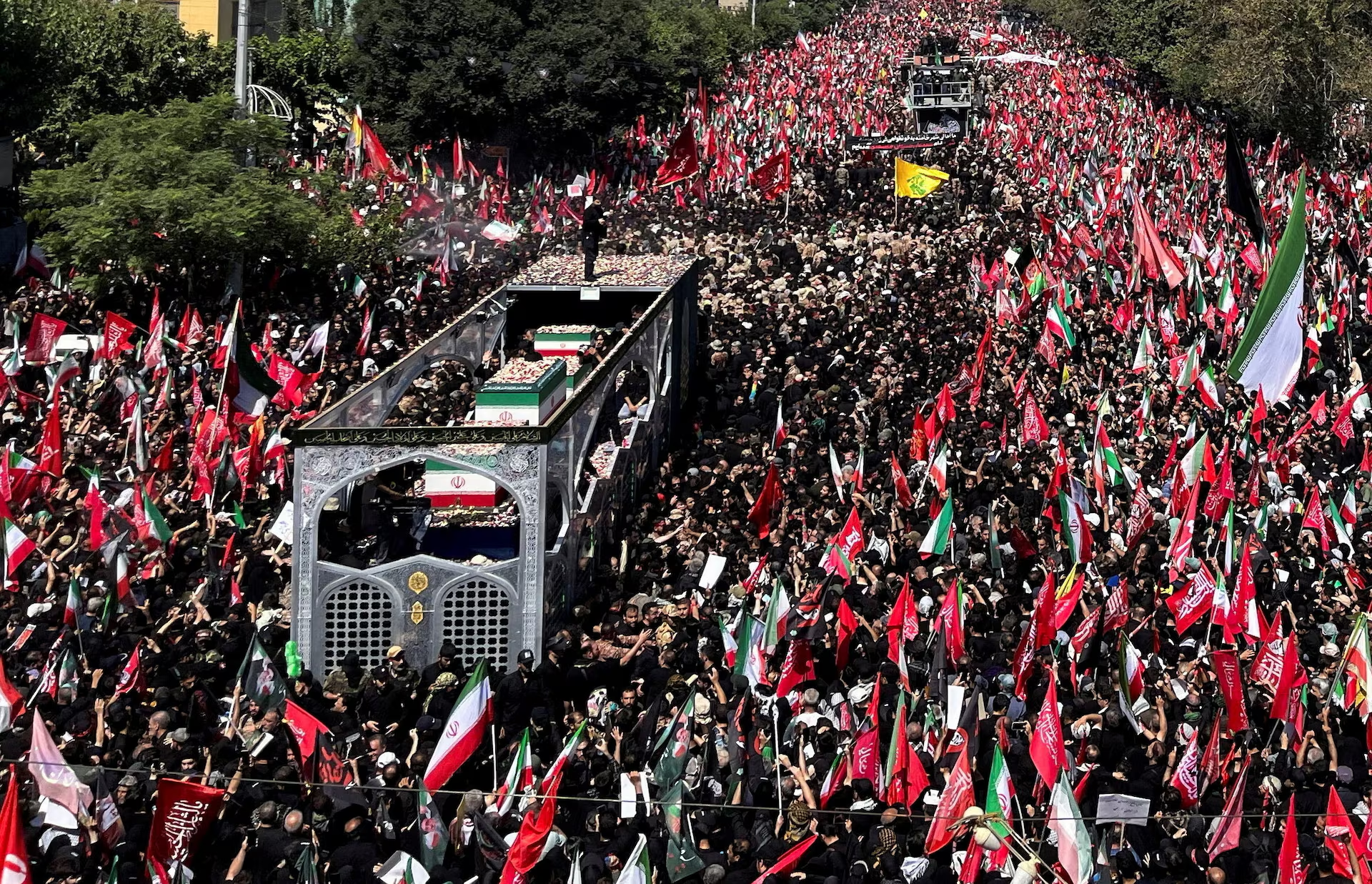
The Khamenei funeral procession transformed Tehran into a sea of black on Monday, as enormous crowds of grieving Iranians flooded the capital to honor their late Supreme Leader. Amid the sorrow, the atmosphere carried an unmistakable undercurrent of anger, with countless mourners openly calling for revenge against the United States and its president.
A Nation Says Farewell
Dressed in black from head to toe, mourners poured into the streets of Tehran to take part in the procession honoring Ayatollah Ali Khamenei. The late leader’s flag-draped coffin was displayed prominently, accompanied by the caskets of family members who perished on February 28 in an airstrike that marked the beginning of the war launched by Israel and the United States.
The coffins rested aboard a truck elaborately decorated to resemble the ornate grating that traditionally surrounds the shrine of an imam. This symbolic presentation underscored the reverence with which Khamenei was regarded by his followers.
Iran’s theocratic leadership actively encouraged the massive turnout, viewing it as a powerful demonstration of national unity and strength. The timing proved especially significant, coming as the Islamic Republic engages in delicate negotiations with the United States over a lasting conclusion to the war.
An Overwhelming Show of Numbers
The scale of the gathering was staggering. Aerial footage broadcast on Iranian state television captured a vast crowd extending from Tehran’s Azadi Square, whose name translates to Freedom Square, stretching for kilometers down a wide multilane thoroughfare.
Observers noted that the turnout appeared to surpass even the enormous crowd that assembled in 2020 for the funeral of Revolutionary Guard General Qassem Soleimani, an event that had drawn more than a million people.
As the truck inched slowly along the route, authorities refrained from providing an immediate estimate of the crowd size. Throughout the procession, participants held aloft placards, banners, and signs, many bearing messages calling for the death of the American president.
Voices of Grief and Vengeance
For those in attendance, the day was steeped in profound emotion. One mourner, Fatima Hassan, captured the prevailing sentiment, describing it as an extremely difficult day. She explained that the crowds had not gathered merely to bid farewell but rather to demand revenge, vowing that vengeance would indeed be taken.
The devotion of the mourners manifested in various traditional practices:
- People reached out to touch the truck carrying the coffins.
- Some tossed scarves and other personal items toward attendants, hoping they would brush against the casket, a gesture widely regarded in Iran as a blessing.
- Attendants, several positioned atop fire truck ladders, sprayed mist over the crowds to provide relief from the heat.
The intensity of emotion was palpable. A tearful Maryam Alizadeh reflected on the moment, noting that it marked the last time she would see her leader and that her generation had lived alongside him for decades.
Managing the Massive Crowd
The sheer size of the assembly presented genuine safety challenges. Authorities appeared visibly concerned about the risks posed by such a dense throng lining the procession route.
Officials broadcast instructions over loudspeakers, urging attendees to walk slowly, avoid pushing, and remain along the edges of the street. These measures aimed to prevent dangerous overcrowding as the emotional multitude pressed forward to pay their respects.
A Lengthy Final Journey
The coffins undertook a substantial journey through Tehran’s streets, a procession spanning roughly 12 hours as it made its way toward Mehrabad International Airport. Later that day, Khamenei’s casket was flown to Qom, the revered Shiite seminary city, where he was set to be honored on Tuesday.
The mourning period has brought much of the country to a standstill. Authorities shut down streets, closed airspace, and suspended daily life to accommodate the observances. The mourning began Saturday and will conclude Thursday, when Khamenei is laid to rest at the Imam Reza shrine in Mashhad, the city of his birth. The Supreme Leader was 86 years old at the time of his death.
Escalating Calls Against Trump
As the funeral proceedings unfolded over several days, the demands for retribution grew increasingly vocal. Mourners and their signs called for the killing of both President Donald Trump and Israeli Prime Minister Benjamin Netanyahu.
Such displays appeared once again along Monday’s procession route, including an effigy of Trump depicted being hanged. One mourner, Sahar Zaraatgar, articulated the collective resolve, declaring that Khamenei’s path would continue and that the assembled crowds would carry it forward with determination, promising eventual revenge against both the United States and Israel.
These threats are not new to American authorities. For years, US federal officials have monitored Iranian threats directed at Trump and other members of his administration. This vigilance stems from Trump’s decision to order the 2020 killing of Soleimani, who commanded the elite Quds Force. While Iran has consistently denied plotting to assassinate Trump, hardline propaganda has long implied that he remained a target.
Diplomacy on Pause
The funeral coincided with a critical juncture in international negotiations. The United States remains eager to advance talks with Iran, pursuing several key objectives:
- Fully reopening the Strait of Hormuz, a vital passage for global energy
- Scaling back Tehran’s contested nuclear program
- Securing a permanent end to the war
However, these discussions appear to be suspended until after the burial concludes. The funeral itself served partly as a display of unity, occurring as Iran demands a degree of control over the strategically crucial strait, which it closed during the conflict.
The path forward remains fraught with obstacles. The United States has rejected Iran’s demands regarding the waterway, and the two sides remain divided on numerous other contentious issues, including the nuclear program and the ongoing conflict between Israel and the Iran-backed group Hezbollah in Lebanon.
The Mystery of the New Leader
Adding intrigue to the proceedings is the conspicuous absence of Iran’s newly designated Supreme Leader, Ayatollah Mojtaba Khamenei. Despite the multi-day ceremonies, he has yet to make any appearance.
Mojtaba is believed to be in hiding, reportedly having sustained injuries in the very airstrike that claimed his father’s life. His absence has fueled speculation and concern about both his condition and the stability of Iran’s leadership transition.
The caution surrounding him is understandable given recent events. During the height of the war, before an April ceasefire took hold, Israel targeted senior Iranian figures, in at least one instance likely exploiting a public appearance to determine their location. Israel has also issued threats against the younger Khamenei, making his continued concealment a matter of survival.
Final Thoughts
The funeral procession for Ayatollah Ali Khamenei represented far more than a moment of mourning. It became a stage for demonstrating national resolve, channeling grief into calls for vengeance, and signaling Iran’s defiance amid tense negotiations with the West.
As the country prepares to lay its longtime leader to rest, the questions surrounding its future loom large. With diplomacy stalled, a new leader in hiding, and emotions running high, Iran stands at a pivotal crossroads. The coming days will reveal whether the unity displayed in Tehran’s streets translates into a coherent path forward, or whether the tensions simmering beneath the surface will shape a more turbulent chapter ahead.
Author