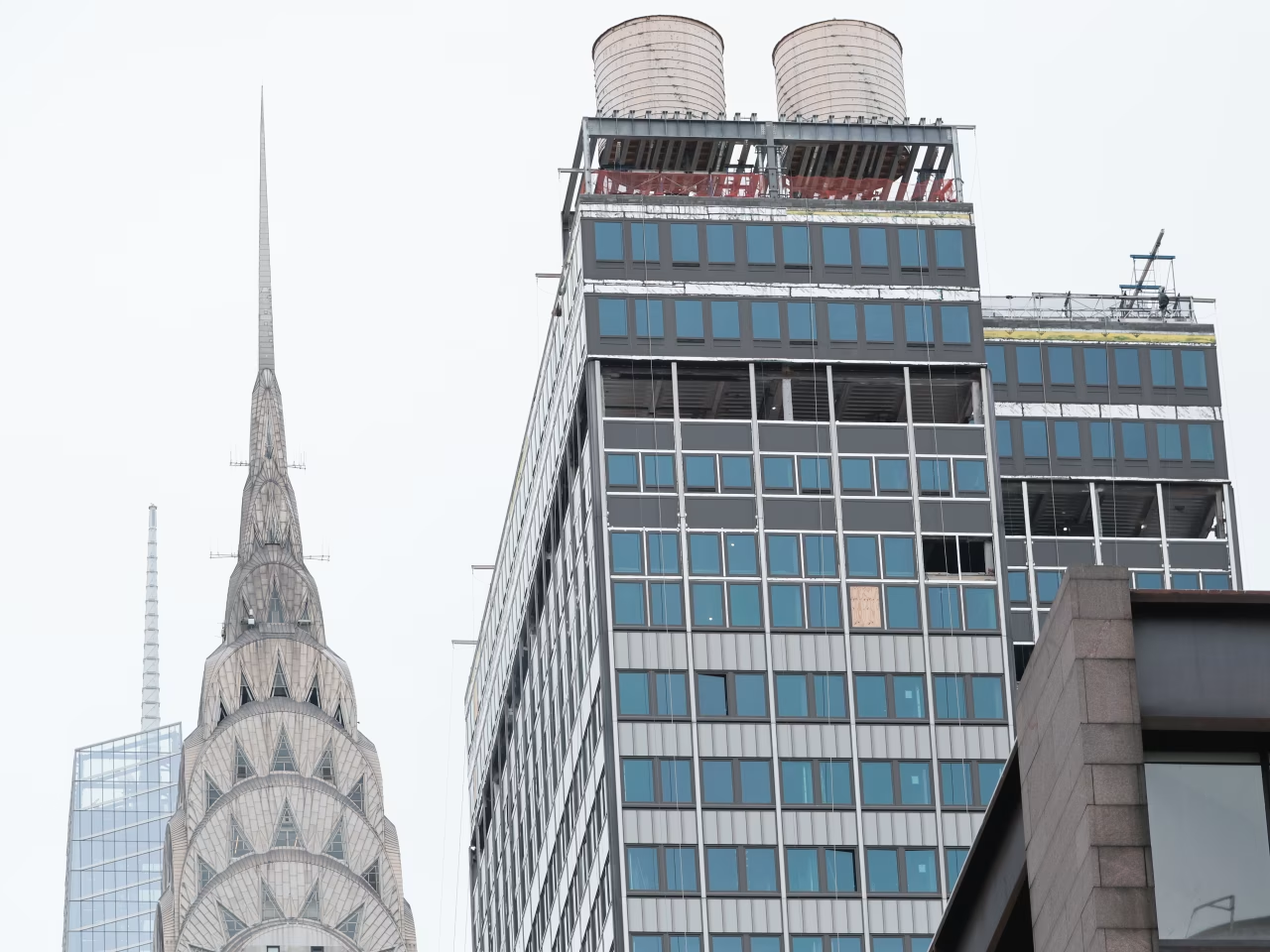
Crews Shore Up Midtown Building as Developer Reassures Investors
Work to stabilize a Midtown Manhattan high-rise continued Thursday, with crews adding more temporary steel supports to the structure that became dangerously destabilized earlier in the week. As the Midtown building shoring effort expanded across additional floors, the project’s developer moved to reassure investors that the emergency would not derail the ambitious construction timeline.
A Landmark Conversion in Crisis
The 37-story high-rise, once the headquarters of Pfizer, was poised to become the largest office-to-apartment conversion in the United States. That milestone was thrown into jeopardy on Tuesday when two columns on the 21st floor buckled.
The failure triggered a major emergency response. Hundreds of people in surrounding buildings were evacuated, traffic was shut down, and crews scrambled to prevent the structure from partially collapsing.
Expanding the Stabilization Effort
By Thursday, the New York City Department of Buildings reported significant progress in securing the building. According to the department, crews had installed “temporary shoring” on every floor from the ninth floor up to the underside of the roof, and steel columns had been placed throughout the building to reinforce the original supports.
Notably, the reinforcements extended well beyond the site of the initial damage. City officials did not immediately explain why support was added on floors beyond where the columns first buckled. The cause of the failure also remains unknown, and the Buildings Department said its investigation is ongoing.
Reassuring Nervous Investors
Even as the investigation continues, the project’s developer has worked to keep stakeholders calm. Nathan Berman, founder of MetroLoft, one of the building’s developers, has been in contact with investors since Tuesday.
According to two people familiar with the discussions who requested anonymity due to the sensitivity of the matter, Berman has assured investors that the project will still be completed on schedule in 2027, with only relatively minor delays. While MetroLoft declined to comment on those talks, a spokeswoman confirmed an earlier Bloomberg News report that the developer plans to rebuild 15 floors of the building.
A Busy, Noisy Worksite
The scene on Thursday reflected the intensity of the effort. The site was far more active than the day before, with banging echoing from the upper floors down to the street as workers hauled in additional steel reinforcements.
Structural experts offered a cautiously optimistic view of the temporary fix. Dr. Dan Linzell, dean of the School of Engineering at Worcester Polytechnic Institute, said the hollow steel supports added to the building appeared to be “very, very strong in compression” and would likely hold the necessary weight until a permanent solution is in place.
A Delicate Repair Ahead
Replacing the damaged columns, however, will be no simple task. Dr. Linzell described the process as delicate and tedious, explaining the general sequence involved:
- The shoring is used to jack up the floor around a compromised column.
- The load is taken off that column so it can be removed.
- A new column is installed in its place.
- Crews then move on and repeat the process for the next column.
With multiple columns potentially involved, he noted, this amounts to a significant undertaking. Berman has said he expects the delay to last only a few weeks, and Dr. Linzell acknowledged that timeline isn’t impossible if MetroLoft has the resources to pull it off.
A Shadow Over Office Conversions
The incident has cast doubt over the broader concept of converting office buildings into housing. Such conversions have accelerated in recent years and have been embraced by public officials and the real estate industry as a smart way to repurpose old, underused offices and deliver much-needed housing.
Mark Levine, the New York City comptroller who has championed office conversions and announced plans to invest pension funds in such projects, acknowledged the panic the incident stirred among New Yorkers. Still, he urged people not to be frightened of these projects, calling them “one of the bright spots” in the city’s approach to housing. He stressed the importance of reassuring the public that officials have figured out what went wrong and why.
A Worker’s Firsthand Account
The human drama of Tuesday morning came into sharp focus through the account of Sean Dow, a member of Steamfitters Local 638, one of two unions on the project. Speaking at a news conference across the street from the former Pfizer building as light rain fell, Dow described the moment things went wrong.
He said he had been sent to the 22nd floor to work on fire suppression when he noticed cracks in the concrete floor. Walking down to the 21st floor, he found a group of general contractors gathered around a bent column. Dow took a photo and sent it to his foreman, and together they decided the building needed to be evacuated.
He then ran down to the fifth floor, where he knew colleagues were working, and urged everyone he encountered to get out. Video verified from that day showed twisted and bent metal framing, including a column bent so severely it appeared on the verge of snapping. Reflecting on the experience, Dow said it was something entirely new to him, adding that he had never seen anything like it.
The Bottom Line
The Midtown building shoring operation represents a race to stabilize a high-profile project that was meant to symbolize the promise of office-to-apartment conversions. With temporary supports now in place, an investigation underway, and the developer pledging to stay on schedule, the coming weeks will test whether the damage can be repaired quickly and whether public confidence in such conversions can be restored. For now, the former Pfizer building stands as both a cautionary tale and a test case for the future of urban housing.
Author