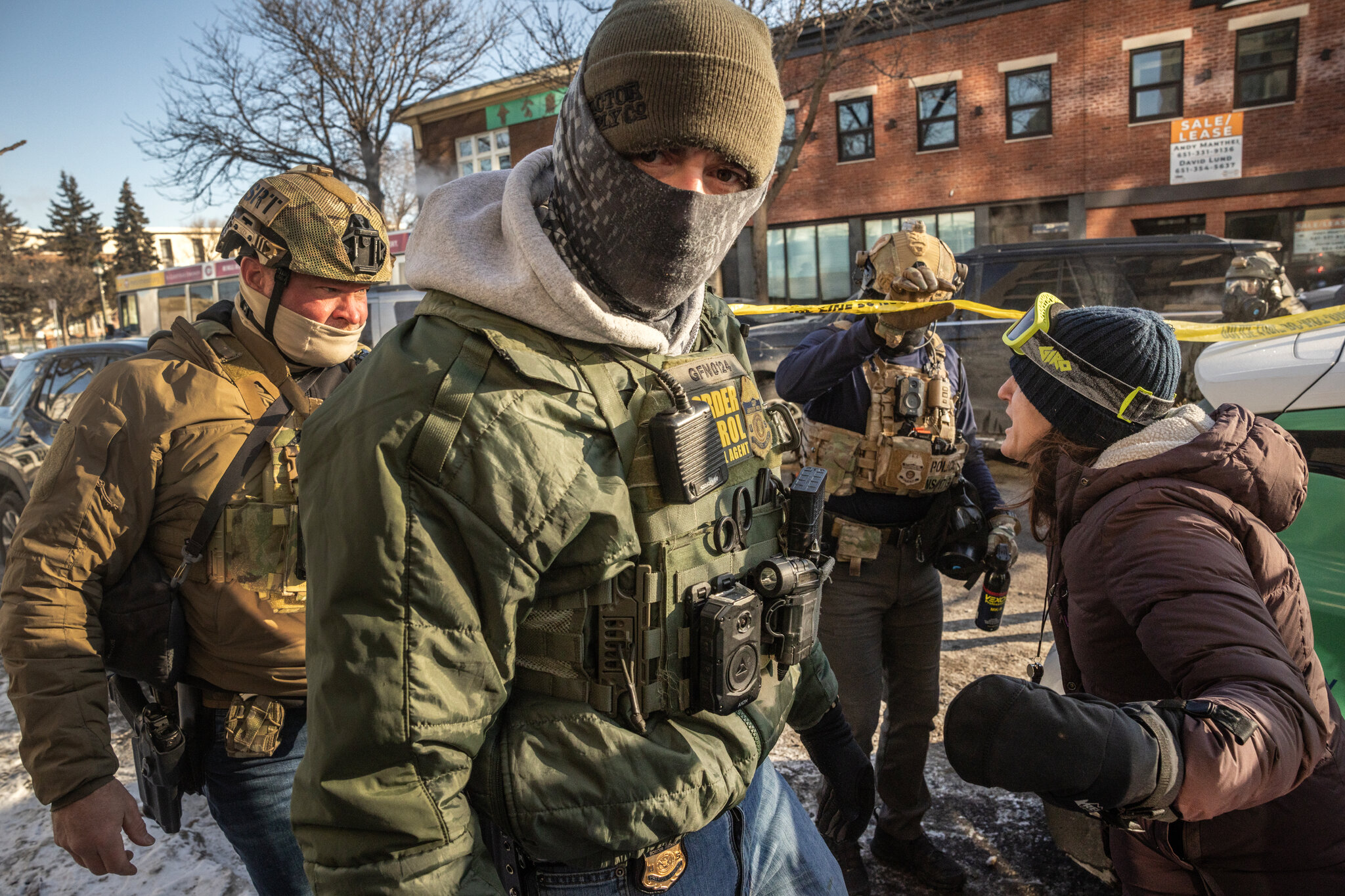
ICE body cameras were supposed to be standard equipment months ago, yet one of the nation’s most controversial law enforcement agencies is still operating largely without them, even as its officers rack up a growing death toll. Despite public promises, a dedicated $20 million in funding, and mounting scrutiny, ICE agents were not wearing body cameras during two recent fatal shootings, reigniting urgent questions about accountability and transparency.
Two Deaths in Less Than a Week
In the span of just six days, U.S. Immigration and Customs Enforcement officers killed two men during traffic stops, and in both cases, no body camera captured what happened.
The first death occurred in the early morning hours of July 7 in Houston, when officers attempted to pull over Lorenzo Salgado Araujo, a 52-year-old Mexican national and construction worker who was father to three U.S. citizens. According to ICE, Salgado Araujo ignored commands and then used his vehicle as a weapon in an attempt to run over an agent, who then fired in self-defense. Witnesses riding in the car with him flatly rejected that version of events, calling the agency’s account false through their attorney. ICE later admitted it had mistaken him for someone else.
Six days later, on July 13, an ICE officer fatally shot Joan Sebastian Guerrero in Biddeford, Maine. Officers said they saw him leave the home of a person with a removal order and tried to stop him. Homeland Security Secretary Markwayne Mullin initially claimed Guerrero had “weaponized” his vehicle, though a later ICE statement said the agent fired after Guerrero attempted to flee, citing fears for public safety.
Both shootings sparked protests, and in their aftermath, the Trump administration issued an order on July 14 aimed at limiting ICE traffic stops.
A Promise Made, Then Broken
The absence of cameras is especially glaring because ICE had already committed to using them. The agency issued a policy on February 19 requiring body cameras during immigration enforcement activities. That pledge itself followed the January killings of two U.S. citizens, Renee Good and Alex Pretti, by federal officers in Minneapolis.
At the time, then-DHS Secretary Kristi Noem promised that DHS law enforcement nationwide would begin wearing body cameras. Officials had branded Good and Pretti as “domestic terrorists,” but witness accounts and bystander videos contradicted those claims.
So why weren’t the cameras there when it mattered? DHS officials blamed what they called “back-to-back Democrat shutdowns” for delaying the rollout. Maine Republican Senator Susan Collins echoed that explanation, calling it extremely unfortunate that the officer in the Maine shooting wasn’t equipped with a camera while faulting Democrats for the delay.
Critics Call the Excuse a “Total Lie”
That justification has drawn fierce pushback from experts and lawmakers alike, who point out a glaring contradiction: ICE kept operating throughout the shutdown.
David Hernandez, an immigration enforcement researcher at Mount Holyoke College, dismissed the shutdown explanation outright, noting that ICE was among the agencies that continued functioning and that Congress had already allocated billions to it beforehand. He argued the real motive is self-protection, describing an agency that lacks the capacity to make arrests without resorting to violence.
Houston-area Democratic Representative Sylvia Garcia called the shutdown excuse “ludicrous,” pointing out that ICE received $20 million specifically for body cameras and that Noem had pledged back in February to send them to the field. Notably, DHS did not respond to questions about how the shutdown could have affected ICE at all, given that the agency remained funded while others under DHS, such as the TSA, went without money.
How Body Cameras Became a Standard
Body cameras have become closely tied to police accountability over the past decade. They can either confirm an officer’s account or expose wrongdoing, making them a powerful tool for transparency.
Their widespread adoption followed national outrage over police misconduct, particularly the 2014 shooting of Michael Brown in Ferguson, Missouri, which helped ignite the Black Lives Matter movement. The Obama administration then directed $75 million toward body cameras for agencies across the country.
ICE itself started equipping officers with cameras in 2021, with Houston among the first cities to use them. The Biden administration ordered federal agencies to adopt the technology in 2022, and by 2024 roughly 1,000 ICE officers across five cities were using them. That momentum stalled abruptly when Trump rescinded the order shortly after taking office.
How Many Officers Actually Have Them?
The numbers reveal just how limited the rollout remains. In March, former acting ICE chief Todd Lyons told Congress that only about 3,000 of the agency’s 13,000 officers were using body cameras, less than a quarter.
The agency’s size has since grown, with ICE announcing plans in January to expand to 22,000 officers. On July 14, DHS said more than half of ICE field offices had received cameras and that the rest would get them within 60 days.
Democratic Representative Bennie G. Thompson blasted the sluggish pace as “truly shameful,” arguing that ICE has enormous resources yet still deploys agents without cameras. He accused the agency of deliberately dragging its feet, saying it had possessed cameras for months without deploying them, signaling that ICE believes it is above oversight.
When Footage Tells a Different Story
The stakes of missing footage become clear in cases where video did exist. Emmanuel Mauleón, a University of Minnesota Law School professor, argued that ICE avoids cameras precisely to shield itself, since the only first-person account of a shooting often belongs to the person who was killed. Without video, he said, the agency has far more freedom to shape the narrative, calling it a pattern rather than mere cynicism.
That pattern was on full display in the case of Marimar Martinez, a Chicago woman shot by a Border Patrol agent in October. Prosecutors initially claimed she had rammed agents with her car and charged her with assaulting a federal officer. But body camera footage, captured by another officer in the vehicle, told a different story: agent Charles Exum veered sharply into her before exiting and shooting her. The charges were eventually dropped as evidence mounted in her favor.
Her attorney, Chris Parente, a former assistant U.S. attorney, said the footage offered a revealing look at the officers’ mentality but stressed that the deeper problem is a lack of accountability. He argued that without consequences, the behavior of these agents will never change, drawing a comparison to the sweeping reforms that followed the prosecution of former Minneapolis officer Derek Chauvin after George Floyd’s murder.
The Bottom Line
The debate over ICE body cameras is about far more than equipment. It’s about whether one of the country’s most heavily funded and aggressive law enforcement agencies will be held to the same standards of transparency expected of police everywhere else. As deaths mount and footage remains conveniently absent, critics warn that the lack of accountability isn’t an accident, but a choice.
Author