Iraq’s PM Walks a Tightrope: Honoring Khamenei One Week, Dining With Trump the Next
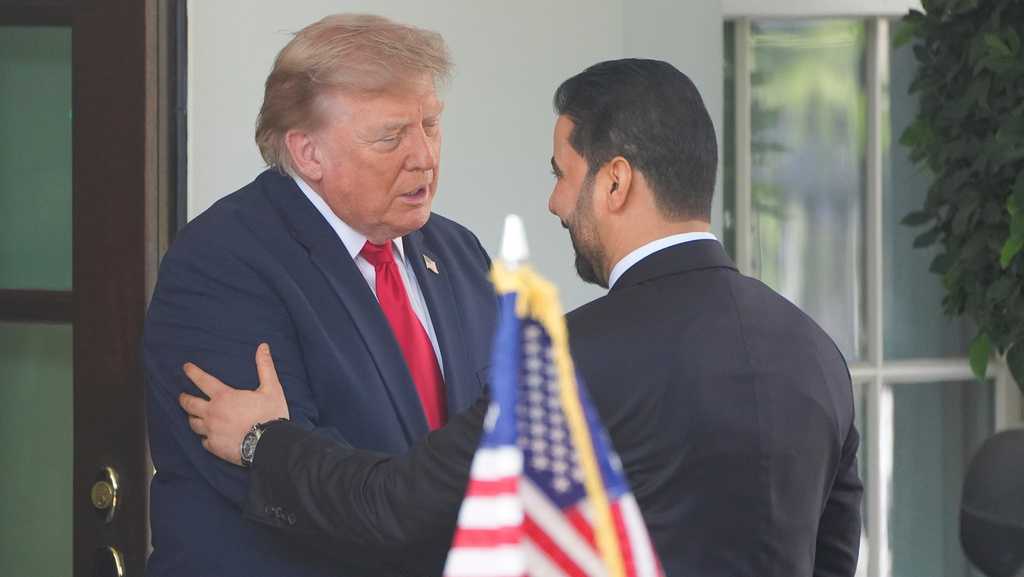
The recent Iraqi Prime Minister Trump meeting captured a striking diplomatic balancing act in stark relief. Just one week after attending the funeral procession of Iran’s supreme leader, Iraqi Prime Minister Ali al-Zaidi found himself shaking hands in the Oval Office with the very man who ordered that leader’s killing. The remarkable sequence of events underscores the precarious position Iraq occupies between two powerful and often opposing forces.
A Delicate Balancing Act
For Zaidi, the challenge is nothing new. Like every Iraqi prime minister over the past two decades, he must carefully manage strategic relationships with both Washington and Tehran.
That balancing act becomes exponentially harder when the two sides are actively engaged in conflict. With the United States and Iran exchanging fire, Zaidi’s ability to maintain ties with both has been put to an extraordinary test.
A Diplomatic Win for the White House
From the administration’s perspective, the meeting represented a significant achievement. The White House viewed Tuesday’s sit-down with President Trump as a major victory.
U.S. envoy to Iraq Tom Barrack had spent several weeks working to secure Zaidi’s visit. The trip was intended to send a clear signal that the new Iraqi government is gravitating toward the United States while distancing itself from Iran.
Who Is Ali al-Zaidi?
At 40 years old, Zaidi brings an unconventional background to the role. A businessman-turned-politician, he took office in May following a prolonged period of political deadlock in Iraq.
He emerged as a compromise candidate, earning backing from both Shiite political factions and the Trump administration. The White House saw him as a preferable alternative to his opponent, former Prime Minister Nouri al-Maliki, largely because Zaidi was not viewed as dependent on Tehran’s support.
Zaidi entered office with ambitious pledges, including:
- Curbing corruption, an effort he began pursuing in his very first days
- Reining in Iran-backed militias, a more delicate matter he has approached with greater caution
The Extraordinary Sequence of Events
The intrigue surrounding Zaidi’s diplomacy came into sharp focus over the course of a single week. He participated in the funeral procession of Iran’s former Supreme Leader Ali Khamenei in the holy city of Najaf in Iraq.
Then, in a remarkable pivot, he traveled to the White House to meet the very U.S. president who had ordered Khamenei’s killing in the opening strike of the war. The juxtaposition of these two events perfectly illustrates the tightrope Iraq’s leader must walk.
Defying Iranian Pressure
Behind the scenes, the decision to visit Washington was far from straightforward. Two U.S. officials revealed that the Iranians had pressed Zaidi and his team not to make his first overseas trip as prime minister to the American capital.
Despite that pressure, Zaidi remained firm in his desire to meet with President Trump. U.S. officials interpreted his insistence as a sign that he is serious about pursuing an “Iraq first” agenda, one that pivots toward the United States and away from Iran.
Trump’s Warm Praise
President Trump did not hold back in his enthusiasm for the Iraqi leader, even adding an unplanned lunch to their meeting. His remarks were notably effusive.
Trump described Zaidi as a fantastic new champion, praising him as a great fighter and a great fan of America. He called him a strong leader and predicted that Zaidi would remain in his position for a long time to come.
A Powerful Image
Perhaps the most telling moment came as Zaidi sat beside Trump in front of the cameras. For several minutes, the president spoke about continuing strikes and imposing a naval blockade on Iran, all while the Iraqi leader remained seated at his side.
Notably, Zaidi himself did not mention Iran. Instead, he focused his remarks on more constructive themes, including:
- Strengthening economic ties with the United States
- Completing the withdrawal of U.S. troops from Iraq in September
- Working to disarm militias
- Ensuring that all weapons in the country fall under Iraqi state authority
A U.S. official emphasized the significance of the optics, noting that Zaidi’s willingness to sit beside Trump as the president discussed Iran was a powerful image. It demonstrated the seriousness of his intent to align with the United States despite Iranian opposition.
The Militia Question
One of the central issues in Zaidi’s discussions with both Trump and Secretary of Defense Pete Hegseth was the disarmament of Iranian-backed Shia militias in Iraq. This remains a particularly sensitive and consequential topic.
U.S. officials expressed hope that the visit marks a first step toward Zaidi acting on his commitments to disarm these groups. However, given the delicate domestic and regional dynamics involved, this is an area where the prime minister has proceeded with visible caution.
What to Watch Going Forward
The success or failure of Zaidi’s balancing act may hinge on how he handles the militia disarmament question in the months ahead. It represents both a test of his commitment to the United States and a potential flashpoint in his relationship with Iran.
For now, the Iraqi prime minister has sent a clear signal of his intentions, choosing to stand alongside Trump even as the president spoke openly about military action against Iran. Whether he can translate that symbolic gesture into concrete action, all while avoiding a rupture with Tehran, remains one of the most closely watched questions in Middle East diplomacy.
As Iraq navigates this fraught moment, Zaidi’s every move will be scrutinized by both Washington and Tehran. His ability to maintain his footing on this diplomatic tightrope could shape not only his own political future but also the broader trajectory of Iraq’s role in an increasingly volatile region.
Author