Volunteer Firefighter Suspected of Igniting Devastating France Forest Fire
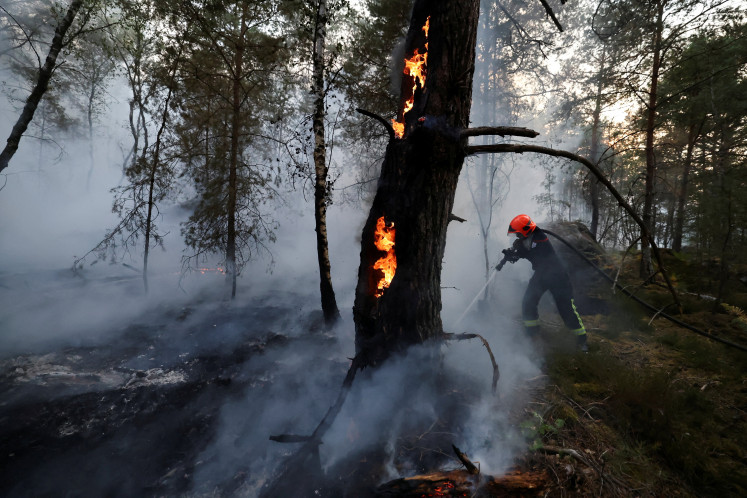
A France forest fire that scorched thousands of acres and forced roughly a thousand people from their homes has taken a startling turn, with a volunteer firefighter now suspected of starting the blaze. The revelation has shocked the nation and drawn a firm warning from President Emmanuel Macron, who vowed there would be no mercy for those responsible.
The case underscores a painful irony — that someone entrusted with fighting fires may have set one — while also highlighting a broader crisis of wildfires sweeping across a rapidly warming Europe.
A Firefighter Under Suspicion
French officials have placed a volunteer firefighter under formal investigation on suspicion of igniting the fire in a forest south of Paris. The 18-year-old is one of at least six people questioned in connection with the Fontainebleau blaze.
According to prosecutor Diane Ngomsik, the young man initially confessed to setting fire to twigs using a lighter and petrol, only to later retract that admission. He isn’t the only one facing scrutiny. Reports indicate a second 18-year-old man has also been placed under formal investigation — a step in French criminal procedure that can lead to formal charges and, potentially, a trial down the line.
For a country already on edge over a punishing fire season, the possibility that a firefighter helped start the flames has added a disturbing dimension to the story.
The Scale of the Damage
The Fontainebleau fire has left a significant mark on one of France’s most treasured landscapes. Since igniting last Sunday, the blaze has burned through more than 2,000 hectares — roughly 5,000 acres — and prompted the evacuation of about 1,000 people.
Its impact rippled well beyond the forest itself. The fire partially shut down the country’s main north-south motorway, disrupting a key artery of French travel. And while crews have managed to contain the flames, the fire has not yet been fully extinguished.
The location makes the loss especially poignant. The forest is home to the Palace and Park of Fontainebleau, a UNESCO World Heritage site since 1981, adding cultural stakes to the environmental destruction.
Macron’s Firm Response
President Macron traveled to the affected area on Thursday, where he struck a resolute tone. He made clear there would be no leniency for arsonists, signaling that authorities intend to pursue those responsible aggressively.
Macron also offered some perspective on the toll and the silver lining. He noted that about 10% of the forest had burned, while hailing the fact that there had been no victims so far. Even amid the devastation, the absence of casualties stood out as a rare piece of good news.
But the president didn’t shy away from the larger picture. He observed that France had not seen so many fires since World War Two — a sobering benchmark that placed the current crisis in historical context.
A Nation Ablaze
The Fontainebleau fire is far from an isolated event. France has registered nearly 11,000 fires since the beginning of the year, a staggering figure that reflects just how strained the country’s landscape and emergency services have become.
Like much of Europe, France has been battered by a series of unusual heatwaves that have created ideal conditions for wildfires to ignite and spread. The relentless heat has turned forests and grasslands into tinderboxes, leaving little margin for error whether a fire starts by accident, negligence, or deliberate act.
The Climate Connection
Behind the surge in fires lies a warming planet, and Europe sits at the sharp edge of that trend. According to the Copernicus climate service, Europe is the fastest-warming continent, heating up at twice the global average.
That accelerated warming is reshaping the continent’s summers in tangible and dangerous ways:
- More frequent and intense heatwaves
- Growing pressure on Europe’s water supplies
- More destructive and harder-to-control wildfires
The record-breaking temperatures across Europe this summer have translated directly into major fires well beyond France’s borders.
Fires Across Europe
France’s struggle is part of a wider emergency gripping the continent. The most devastating toll has emerged in Spain, where record heat has fueled major wildfires that have killed at least 13 people.
The crisis has reached northern regions too. In the United Kingdom, firefighters have been fighting to contain what officials described as a large-scale wildfire spreading across more than two miles of dry land in the Cairngorms National Park in northeastern Scotland.
Together, these blazes paint a picture of a continent increasingly vulnerable to fire, with even traditionally cooler areas no longer immune.
The Bigger Picture
The Fontainebleau fire brings together several threads that define this moment for Europe — human responsibility, environmental fragility, and the mounting pressures of climate change.
Several realities stand out from the crisis:
- Individual actions, whether reckless or deliberate, can unleash enormous destruction when conditions are dry
- Cherished cultural landmarks like Fontainebleau are now on the front line of climate risk
- A warming continent faces longer, fiercer fire seasons that stretch emergency resources thin
- The problem is continental in scope, striking countries from Spain to Scotland
Looking Ahead
As investigators work to determine exactly how the Fontainebleau fire began, the case will test France’s resolve to hold arsonists accountable, just as Macron promised. But the individual investigation, however significant, is only one part of a far larger challenge.
With nearly 11,000 fires already recorded this year and a warming climate steadily raising the stakes, France and its neighbors face a future in which such disasters may become more common rather than less. The flames at Fontainebleau may soon be extinguished, but the conditions that allowed them to spread so ferociously show no sign of cooling. For a continent heating faster than any other, the hard work of adaptation, prevention, and vigilance is only beginning.
Author