Iran Accuses US of Striking Civilian Infrastructure as War Reignites
The war between the United States and Iran has entered a dangerous new phase, with Tehran accusing Washington of deliberately striking civilian infrastructure in its latest wave of airstrikes. As peace talks lie in ruins, the escalating conflict is now threatening not just lives on the ground, but the stability of global energy supplies.
The mounting accusations, verified damage, and warnings from international bodies paint a picture of a confrontation spiraling with alarming speed.
Bridges, Airports, and a Railway Station Hit
Iranian state media and provincial authorities say the recent US strikes have targeted a range of civilian sites. According to their accounts, bridges, a train station, and an airport were among the locations hit during the latest bombardment.
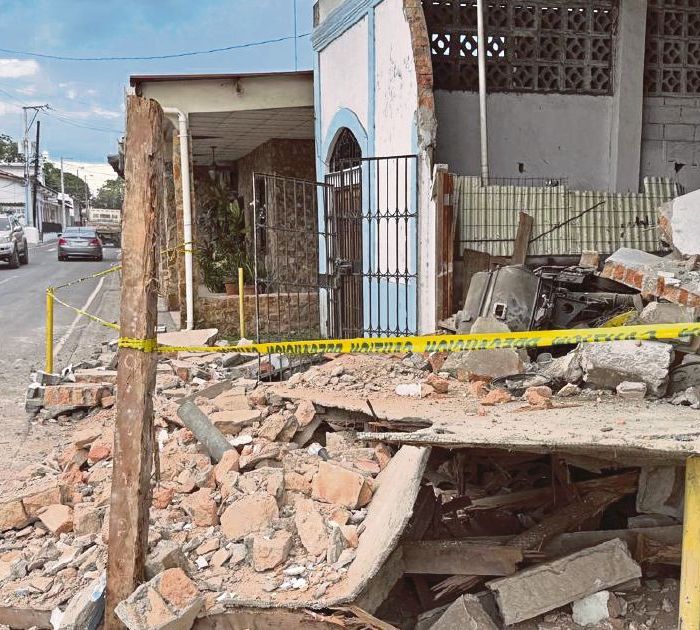
Specifically, Iranian officials reported that on Thursday night, strikes struck Iranshahr Airport in the country’s southeast, a railway station, and six bridges in Hormozgan province. Provincial authorities in Hormozgan said seven people were killed in the attacks.
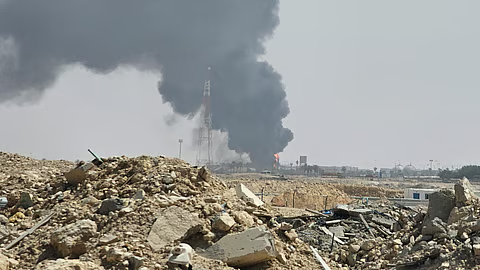
Independent verification lends weight to at least part of these claims. BBC Verify confirmed an attack on one bridge in Hormozgan province, corroborating footage of damage to the Gariveh Bridge. Night videos showed a ball of flames erupting atop the structure, while daylight images revealed a crumbled stretch of road surrounded by rubble where the bridge had broken apart.
Washington’s Measured Response
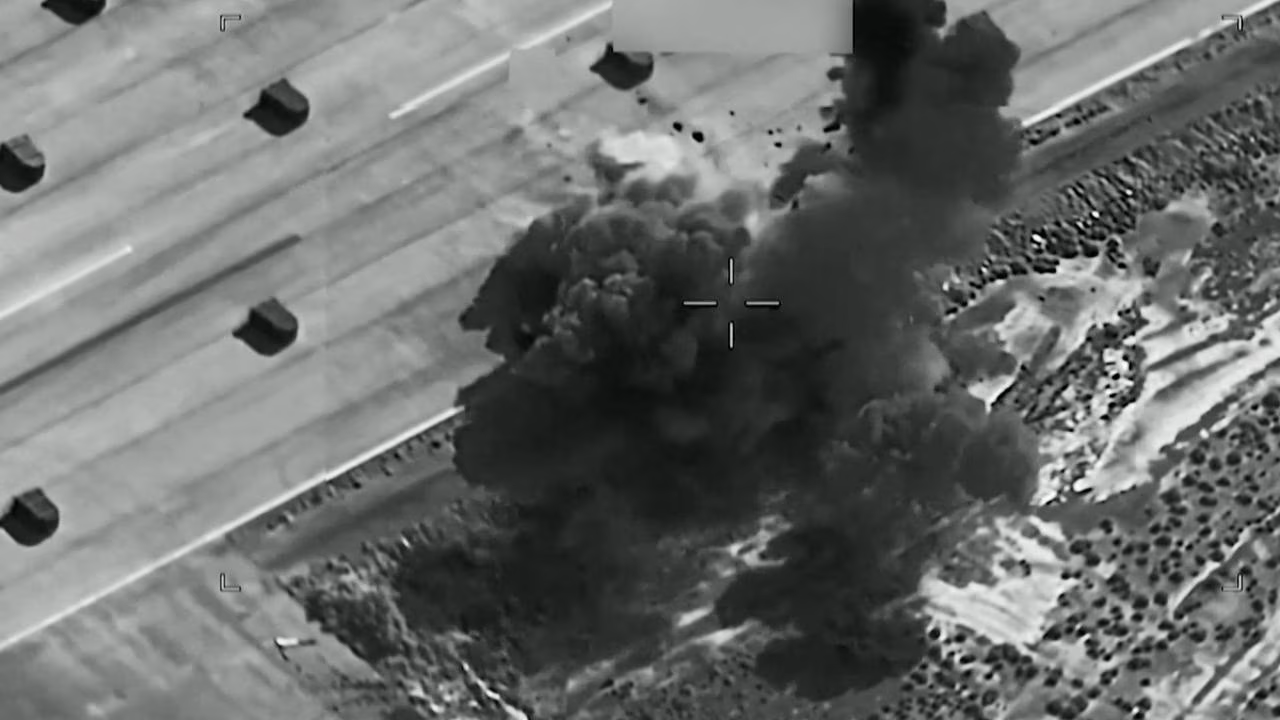
The US military has been notably reserved in describing its targets. US Central Command, known as Centcom, declined to provide a list of what it hit, saying only that the attacks were intended to further degrade Iranian military capabilities.
When pressed for further comment on the specific allegations, Centcom said it had nothing to add to its earlier statement. This marks the sixth consecutive night that US forces have carried out airstrikes against Iranian targets, underscoring the relentless pace of the campaign.
The strategy behind the strikes traces back to President Donald Trump, who has threatened to hit Iranian bridges and power stations as a means of pressuring Tehran back to the negotiating table. The war itself began on February 28 with US and Israeli attacks, which prompted Iran to retaliate against Israel as well as US targets and allies across the Gulf.
Accusations of War Crimes
The nature of the targets has raised serious legal and ethical alarms. Back in April, when Trump first said the US would bomb civilian infrastructure in Iran, including bridges and power plants, the response from international authorities was swift.
UN human rights chief Volker Türk warned at the time that deliberately attacking civilians and civilian infrastructure constitutes a war crime. That warning now hangs heavily over the current campaign, as verified damage to bridges and reports of civilian deaths appear to align with the very actions Türk cautioned against.
The gap between Iran’s detailed accusations and Washington’s vague acknowledgments leaves the full picture unclear, but the verified strikes suggest the concerns are far from hypothetical.
Iran Strikes Back Across the Region
Tehran has not absorbed the attacks passively. In response to the latest US strikes, Iran’s Revolutionary Guard Corps claimed to have launched retaliatory operations across the region.
According to the IRGC, its forces struck several targets, including:
- US maritime surveillance radar sites in Oman
- Targets in Kuwait and Bahrain
- A US special operations command center at al-Tanf in Syria
The claims remain partly unverified, as neither Syria nor the US commented on the alleged strike in Syria. However, Kuwaiti authorities did confirm real damage, saying the Iranian strikes had hit power generation and water desalination stations — a sign that the conflict’s civilian toll is spreading beyond Iran’s borders.
A Looming Energy Crisis
Perhaps the most far-reaching consequence unfolds at sea. As the attacks escalate, the Strait of Hormuz — a critical waterway off Iran’s coast that Tehran has effectively blocked throughout the war — has remained shut.
The stakes could hardly be higher. A fifth of the world’s oil and liquefied natural gas once transited through the strait, making its closure a potential shock to the global economy. The head of the International Energy Agency, Fatih Birol, voiced deep concern about the implications for energy supplies worldwide.
Birol warned that the world should be worried, adding that he shared that worry personally if the situation failed to improve within the coming weeks. His caution signals just how quickly a regional war can ripple outward into everyday economic life across the globe.
How the Ceasefire Collapsed
The current violence follows the breakdown of a fragile attempt at peace. The US and Iran agreed to stop fighting in June to allow talks aimed at ending the war.
For a time, that ceasefire largely held, though not without friction. There were Iranian attacks on oil tankers meant to force compliance with Tehran’s demand that ships seek authorization to cross the Strait of Hormuz, followed by US strikes against Iran in response.
Ultimately, the diplomacy faltered. The talks appeared to make no headway, and Trump declared the ceasefire over last week. Since then, the situation has deteriorated further. In addition to resuming strikes on Iranian sites, the US has re-imposed a naval blockade of Iranian ports, tightening the pressure on Tehran.
Danger on the Water
The maritime dimension of the conflict continues to generate incidents. On Friday, the UK Maritime Trade Operations reported that a tanker had been hit by an unknown projectile while sailing near Khasab in Oman the previous day.
Fortunately, all crew members were reported safe. Still, the strike adds to a growing pattern of threats to commercial shipping in the region, reinforcing fears that the waters around Iran have become perilous for civilian vessels caught up in the broader hostilities.
The Bigger Picture
Taken together, the events of recent days reveal a conflict expanding across multiple fronts and carrying consequences far beyond the battlefield. Several dangerous dynamics now converge:
- Verified strikes on civilian infrastructure raise serious war crime concerns
- Iran’s retaliation is spreading damage to neighboring Gulf states
- A closed Strait of Hormuz threatens global oil and gas supplies
- A collapsed ceasefire has removed any near-term path to de-escalation
Looking Ahead
With airstrikes continuing night after night and both sides showing little appetite for restraint, the war between the US and Iran appears locked in a cycle of escalation. The accusations of striking civilian targets, combined with mounting civilian casualties and regional spillover, make the prospect of renewed talks seem increasingly distant.
For now, the world watches a conflict that grows more perilous by the day — one where the destruction of bridges and the shutdown of a vital waterway serve as stark reminders that the costs of this war reach far beyond Iran’s borders. Whether diplomacy can be revived before the energy crisis Birol fears takes hold remains one of the most urgent questions hanging over the weeks ahead.
Author