Title
Can Manchester’s Playbook Fix Britain? Andy Burnham Is About to Find Out
Focus Keyword
Andy Burnham prime minister
SEO Tags
Andy Burnham prime minister, Manchester economic revival, UK economy 2026, Labour Party leadership, Manchesterism, Greater Manchester mayor, Factory International Aviva Studios, UK productivity crisis, Bee Network buses, Keir Starmer replacement, British political instability
Article
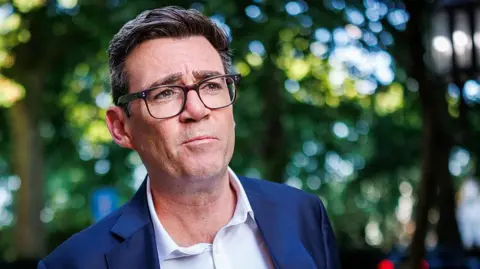
Andy Burnham becomes prime minister on Monday, inheriting a country that has run through six leaders in a decade and shows every sign of exhaustion.
Britain’s economy is stagnating. Public services are stretched thin. Living standards have improved at a crawl for years. Political churn has stopped feeling like a crisis and started feeling like the default condition.
Burnham’s pitch is that he can change the mood before he changes the numbers. He has promised the country a new era of possibility — and he arrives with an actual case study behind him.
The Man Replacing Keir Starmer
Burnham takes over as Labour leader and, with it, the premiership. He’ll be the UK’s seventh prime minister in ten years.
The contrast with his predecessor is the first thing people mention. Where Starmer struggled to project warmth, Burnham communicates easily. He’s funny in an unpolished, dad-joke sort of way. His smart-casual wardrobe reads as approachable rather than staged.
None of that is trivial in a country where public trust in politicians has eroded badly.
He’s not an outsider, though. Burnham spent years as a member of parliament and served in cabinet before leaving Westminster for Manchester in 2017. Nine years as mayor of Greater Manchester followed.
Now he wants to export what he calls “Manchesterism” — a business-friendly, locally empowered version of social democracy — to London and the rest of the country. Launching his third leadership bid in 16 years last month, he said he intended to give Britain the circuit breaker it needs.
What Actually Happened in Manchester
The claim rests on real performance. Under Burnham’s mayoralty, Greater Manchester’s economy grew at roughly twice the national rate.
More striking is how the city feels to people who left and came back.
Lucy Ellison, a 33-year-old café manager, spent 12 years working in hospitality in the United States and Amsterdam before returning two years ago. She describes the Manchester she found as unrecognizable from the one she grew up in — a different city entirely, full of quirky wine shops and independent bakeries that simply didn’t exist before.
That hospitality boom has created room for local businesses to scale. Emma Thackray started the soda and kombucha brand Hip Pop in her kitchen in 2019, selling at markets across northern England. It’s now stocked in most major UK supermarkets and sold in several European countries. Her stated ambition is to build a global brand from the heart of Manchester.
Condé Nast Traveller named the city Britain’s brightest food destination last month.
A City That Rebuilt Its Own Confidence
On Deansgate, artist Helen Davies works in a shop front on a series called “Love Notes to Manchester,” described in the window as a tribute to a place she keeps falling for.
Nearby, painted steps lead up to Deansgate Mews, where young professionals eat lunch outdoors and work on laptops — many of them recent arrivals from London, drawn by lower costs without a corresponding drop in quality of life. J.P. Morgan opened its first Manchester office in 2023.
Ten minutes away sits Aviva Studios, a cultural venue that opened the same year and currently hosts a major Ai Weiwei exhibition. It represents Britain’s largest cultural investment since London’s Tate Modern opened at the turn of the century.
Fraser Millward left a 20-year career in London’s theater and live events industry in 2021 to work as a technician for Factory International, which runs Aviva. His assessment is blunt: Manchester has an energy unlike anywhere else in the UK.
The Decline That Came First
This wasn’t always the story.
Manchester powered Britain’s industrial revolution in the 19th century. By the 1980s it was in what Richard Leese — who led Manchester City Council from 1996 to 2021 — described as almost terminal decline.
The recovery took decades and followed a plan. Leese points to sustained partnerships between business and government aimed at investing in infrastructure, skills, and education. A major rebuild of the city center followed the 1996 IRA bombing that damaged large sections of it.
One factor separates Manchester sharply from the national picture: stability. Labour has held an overwhelming local majority for most of that period, allowing consistent long-term direction rather than reversal every few years.
John McGrath, chief executive of Factory International, made the point directly — that Manchester has demonstrated across cultural policy and other areas that long-term thinking is essential.
The results are measurable. Manchester now draws more overseas investment than any UK city outside London and ranks among Europe’s top 15 cities for investment.
The city has also mined its own past effectively. Old warehouses and factories became apartments and co-working spaces. Factory International borrowed its name from Factory Records, the label that launched Joy Division and ran the Haçienda nightclub — where apartments now stand.
Burnham’s Specific Contribution
Manchester’s revival began roughly 30 years before Burnham arrived, and he doesn’t claim otherwise.
His clearest legacy is transport. He overhauled a patchy public transport system, most visibly through the yellow “Bee” bus network. Taking control of the buses meant overcoming sustained resistance from private operators and took years to complete — experience that suggests he understands how slowly structural change actually moves.
The Case Against Optimism
Not everyone is convinced this transfers to the national level.
The uneven results are the first problem. Parts of Greater Manchester never joined the recovery, and the region still carries relatively high deprivation compared to the national average.
Time is the second. Burnham may have only three years before a general election that must be held by mid-August 2029. Manchester’s turnaround took three decades.
Money is the third. Weak public finances will constrain his ability to pursue reindustrialization, social housing construction, or greater public control of utilities — the policies at the center of his growth agenda. A ballooning welfare bill and rising youth unemployment compete for the same limited resources.
Paul Dales, chief UK economist at Capital Economics, offered a pointed critique this week, writing that his firm was not encouraged by Burnham’s economic plan and calling his diagnosis narrow.
Dales argued that Burnham locates the problem in insufficient local government power and insufficient central government control — factors he considers minor contributors to Britain’s actual difficulties. The real issues, in his view, are low investment and low savings producing weak productivity growth, alongside a labour force that isn’t growing fast enough in size or quality.
The Case for It
Leese sees something the economic models miss.
He identifies confidence as a genuine input rather than a byproduct, arguing that cities which believe they can accomplish things actually do accomplish them.
His criticism of the outgoing government is sharp on exactly this point. Starmer and finance minister Rachel Reeves were elected promising a bright future, he said, then spent six months explaining how bad everything was.
Economists have made a similar observation — that the government squandered the optimism following the 2024 election, damaging business confidence and suppressing investment as a result.
Leese’s defense of Burnham’s approach is that hope isn’t decoration. Messages about a positive future, he argues, are an essential component of giving people confidence that a better future exists at all.
What Burnham Is Really Betting On
The wager underneath all of this is that Manchester’s lesson is psychological as much as economic.
The city recovered through infrastructure, education, and patient investment — but also, in Leese’s telling, through regaining its self-belief and the sustained work of several thousand people over many years.
Burnham has three years and empty coffers to attempt something similar across an entire country.
A weary Britain is about to find out whether that’s enough.
Author